Full story
Contrasting Moral Frameworks in Global Discourse
According to a report by Organiser Weekly, the Western world has historically positioned itself as a global custodian of moral values across a wide spectrum of international issues. These areas include human rights, freedom of expression, environmental protection, climate change mitigation, sustainable development, and nuclear non-proliferation. The publication asserts that this self-positioning has long been a defining feature of Western geopolitical identity.
However, the report argues that this claimed moral superiority is frequently challenged when these ideals are measured against actual political and social conduct within Western societies. The article states that discrepancies between stated ideals and real-world actions have repeatedly come to light, suggesting a pattern of double standards. This contradiction, according to the text, is no longer limited to foreign policy or global geopolitics but has extended into domestic ideological landscapes.
The report highlights a specific trend described as a "growing ideological convergence" within Western societies. This convergence is characterized by an alignment between left-liberal thought and radical jihadist politics. The publication claims that this merging of ideologies is actively shaping how core values are interpreted in the West. These values include freedom, pluralism, secularism, religious liberty, and inclusivity. The text suggests that this shift is redefining the boundaries of acceptable discourse and behavior.
Shifting Standards on Expression and Dissent
The article posits that the acceptability of an idea, organization, or individual in Western societies is increasingly determined by their alignment with prevailing ideological narratives. This represents a departure from what the report describes as the historical American view of democracy. Historically, freedom of expression and the right to dissent were presented as foundational features of civilizational identity.
The report suggests that this traditional framework is being replaced by a system where conformity to specific ideological narratives dictates public acceptability. The text argues that this shift impacts how dissent is viewed and managed within democratic societies that have long projected themselves as champions of pluralism.
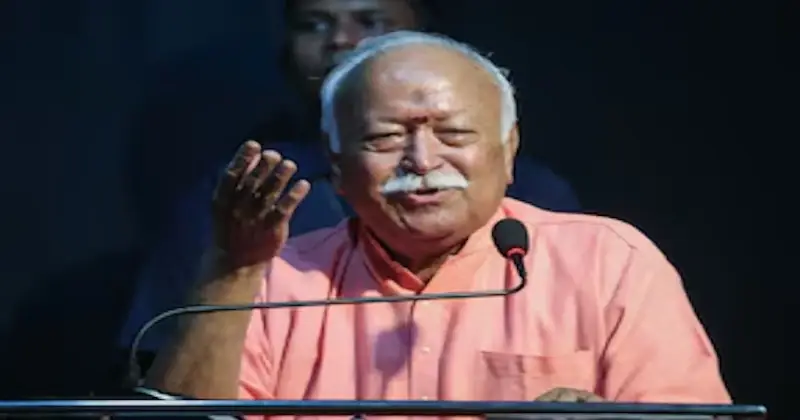
To illustrate this changing discourse, the report cites the case of Dr. Mohan Bhagwat, the Sarsanghchalak of the Rashtriya Swayamsevak Sangh (RSS). The publication notes that there was significant opposition to Dr. Bhagwat’s address at an event in New York. This opposition is presented by the source as a telling example of the evolving Western discourse on freedom of expression and ideological conformity.
The Universal Oneness Celebration in New York
The specific event referenced in the report is the "Universal Oneness Celebration." This event took place at Madison Square Garden in New York on August 29, 2026. The stated objective of the program was to promote dialogue and unity among diverse religious and cultural communities. The event aimed to foster interfaith dialogue, peaceful coexistence, and the message of universal oneness, a concept rooted in the Indian philosophical tradition of Vasudhaiva Kutumbakam.
The report details that Dr. Bhagwat’s address at this venue faced opposition. While the article does not provide specific names of the opposing groups or detailed legal outcomes, it emphasizes the existence of this resistance as a key data point in its broader argument about ideological shifts.
The publication raises a central question regarding these events: in societies that have long projected themselves as the foremost champions of freedom of expression and pluralism, who decides the limits of the right to dissent and on what basis? The report implies that the opposition to Dr. Bhagwat’s participation serves as a manifestation of this larger question.
Ideological Ecosystems and Global Values
The article contrasts the concept of Vasudhaiva Kutumbakam, or universal oneness, with what it describes as the "ideological ecosystem" present in Western nations. The report argues that the West’s claim to moral leadership is undermined by its internal handling of ideological diversity.
According to the text, the convergence of left-liberal and radical jihadist viewpoints creates a unique environment where traditional definitions of secularism and religious liberty are reinterpreted. This reinterpretation affects how different cultural and religious groups are received in public spaces. The report suggests that this dynamic challenges the notion of the West as a neutral arbiter of global moral standards.
The publication notes that the contradiction between the West’s projected image and its internal conduct is becoming increasingly visible. This visibility is not just a matter of foreign policy criticism but reflects deeper societal changes in how values are enforced and interpreted.
The report concludes by framing the Universal Oneness Celebration as more than just an event; it is presented as a case study in the tension between universalist philosophical concepts and specific ideological constraints. The article suggests that the debate over Dr. Bhagwat’s address highlights the ongoing struggle to define the boundaries of free expression in a changing global landscape.
The source material does not provide responses from the organizers of the opposition or from Western government officials regarding the event. The narrative remains focused on the critique of Western ideological trends as presented by Organiser Weekly. The report maintains that the discrepancy between the West’s self-image and its actions regarding freedom of expression is a critical issue for global discourse.