

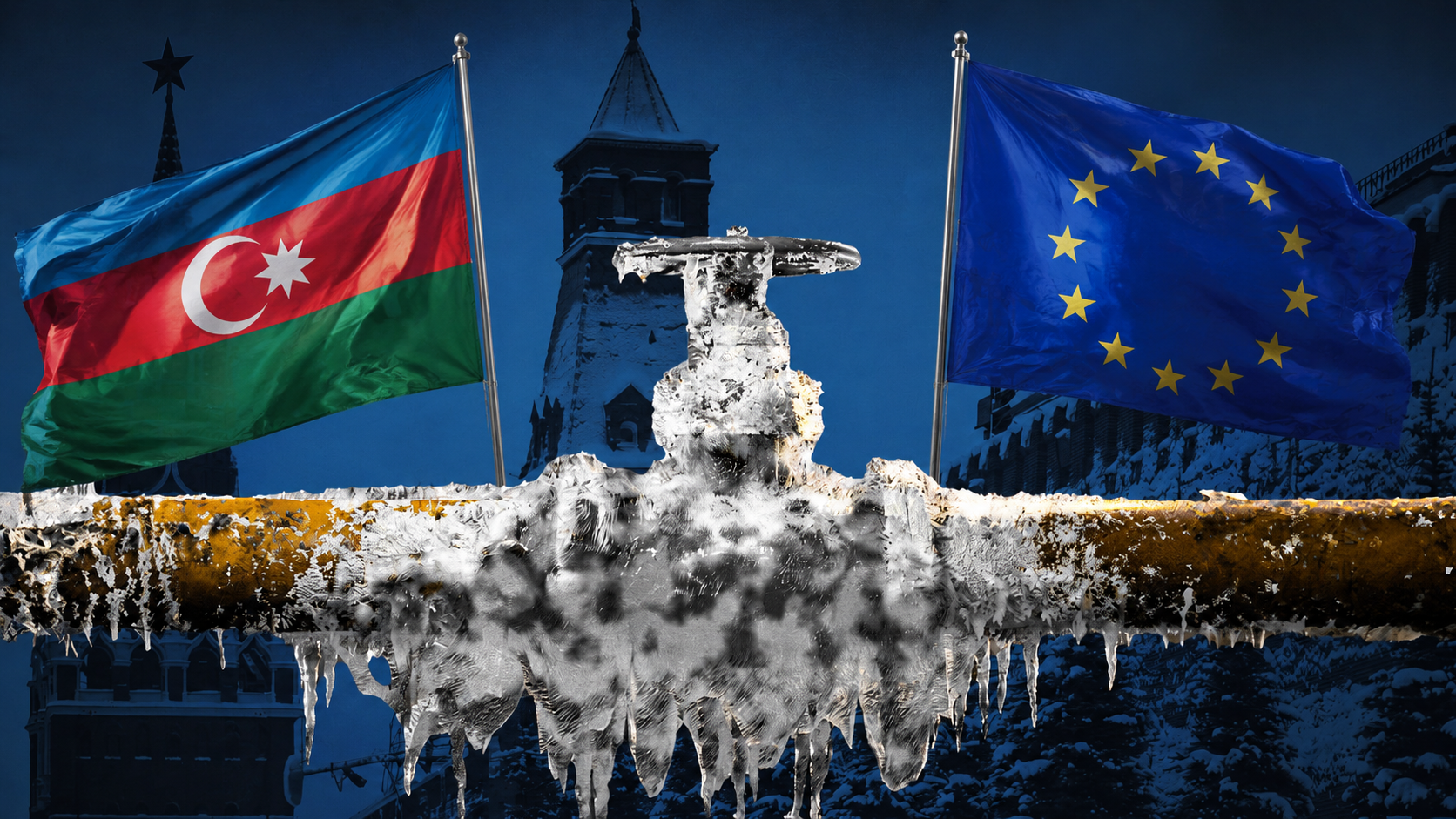

Europe's Shifting Energy Landscape and Azerbaijan's Growing Role
Europe's ongoing efforts to diversify its energy sources and enhance security are increasingly focusing on Azerbaijan as a pivotal partner. Amid evolving geopolitical dynamics and persistent market volatilities, the Caspian nation's natural gas reserves are being re-evaluated as a significant component of the European Union's long-term energy strategy. This strategic pivot reflects a broader continental ambition to secure stable and reliable energy supplies from multiple sources, reducing dependence on any single provider.
Current European Gas Market Conditions
The European natural gas market continues to exhibit a complex interplay of factors influencing prices and supply stability. Recent data indicates that prices at the Dutch Title Transfer Facility (TTF), a key European benchmark, are hovering near €50 per megawatt-hour (MWh). These price levels, while fluctuating, underscore the continued sensitivity of the market to supply-demand balances and geopolitical events. Concurrently, gas storage levels across the EU are reported to be at approximately 36% of capacity. Maintaining adequate storage is crucial for managing seasonal demand peaks and providing a buffer against potential supply disruptions, making the current levels a point of ongoing focus for energy policymakers.
Adding to the strategic urgency for diversification is the impending full implementation of a Russian energy ban, which is anticipated to take full effect by 2027. This timeline necessitates the rapid development and expansion of alternative supply routes and sources to mitigate potential supply deficits and price spikes, ensuring the EU's energy resilience in the coming years. The move away from Russian energy has accelerated the search for new and expanded partnerships.
Geopolitical Factors Influencing Global Energy Flows
Global energy markets are also being shaped by significant geopolitical developments that can impact supply chains and pricing. The Strait of Hormuz, a critical chokepoint for a substantial portion of the world's oil and liquefied natural gas (LNG) shipments, is currently reported as closed. Such closures can have far-reaching implications for global energy supply chains, potentially redirecting trade flows and impacting prices across various energy commodities. While the immediate impact on European gas supply from Azerbaijan via existing pipelines is indirect, the broader global energy landscape is interconnected. Disruptions in key maritime routes contribute to overall market uncertainty and reinforce the imperative for secure, land-based supply routes, such as those offered by the Southern Gas Corridor.
Azerbaijan's Current Contribution to EU Gas Supply
Azerbaijan currently plays a notable role in the European Union's gas supply, providing approximately 6% of the bloc's total natural gas imports. This supply is primarily facilitated through the Southern Gas Corridor (SGC), a complex network of pipelines designed to transport natural gas from the Caspian Sea to Europe. The SGC, which became fully operational at the end of 2020, represents a significant investment in energy infrastructure and a strategic achievement in diversifying Europe's energy sources.
The corridor comprises three main segments: the South Caucasus Pipeline (SCP) which transports gas across Azerbaijan and Georgia; the Trans-Anatolian Pipeline (TANAP) which crosses Turkey; and the Trans-Adriatic Pipeline (TAP) which brings gas from Turkey through Greece and Albania to Italy. The TAP pipeline currently has an annual capacity of 10 billion cubic meters (bcm), with provisions for future expansion. This existing infrastructure has been instrumental in delivering Azerbaijani gas to markets in Italy, Greece, and Bulgaria, with potential for further distribution to other European countries via interconnectors.
The establishment of the SGC was a multi-decade project involving numerous international agreements and substantial financial commitments, demonstrating the long-term vision behind strengthening energy ties between Azerbaijan and Europe. The reliable flow of gas through this corridor has positioned Azerbaijan as a credible and consistent supplier for a portion of Europe's energy needs.
Discussions on Doubling Azerbaijani Gas Supply
Against the backdrop of Europe's pressing energy security imperatives, a significant question has emerged from multiple European capitals, including Berlin, Rome, and Bratislava, alongside Baku: how quickly can Azerbaijan's gas supply to the EU be doubled to reach 12% of the bloc's total imports? This query reflects a shared strategic interest in enhancing the volume of gas flowing through the Southern Gas Corridor, recognizing its established infrastructure and potential for growth.
Intergovernmental discussions between European Union officials and Azerbaijani counterparts have reportedly focused on the technical, financial, and logistical aspects required to achieve such an increase. Achieving a doubling of supply would necessitate a multi-faceted approach. One primary avenue for potential expansion involves optimizing the existing infrastructure of the Southern Gas Corridor. While the Trans-Adriatic Pipeline (TAP) currently operates at an annual capacity of 10 billion cubic meters (bcm), its design allows for a potential future expansion to 20 bcm per year through the addition of new compressor stations and other technical upgrades. Similar expansion capabilities are noted within the Trans-Anatolian Pipeline (TANAP), which could also see its capacity increased.
Beyond optimizing existing pipelines, the feasibility of adding new parallel pipeline segments or entirely new infrastructure could be considered for a substantial and sustained increase in supply. Such projects would require extensive planning, environmental impact assessments, and significant capital investment from both public and private sectors. Crucially, any substantial increase in export volumes would also depend on significant investment in upstream production in Azerbaijan. This includes the development of new gas fields and enhancing output from existing ones to ensure a consistent and growing supply to meet increased European demand. The Shah Deniz field, a cornerstone of Azerbaijani gas production, continues to be a key source, but further exploration and development would be essential.
The pursuit of this expansion is driven by the EU's strategic need for diversification and Azerbaijan's role as an established energy partner. Realizing a doubling of supply is a complex undertaking that would necessitate substantial investment, detailed engineering studies, coordinated regulatory frameworks among all transit and recipient countries, and robust long-term commercial agreements. The timeline for such an expansion would depend on the speed of these preparatory phases and the execution of necessary infrastructure upgrades and upstream development projects.
Officials from the involved nations have emphasized the importance of long-term contracts and stable investment environments to underpin such large-scale energy projects. The ongoing discussions aim to establish a clear roadmap for enhancing the energy partnership, contributing to Europe's long-term energy resilience and security in the global energy market.