

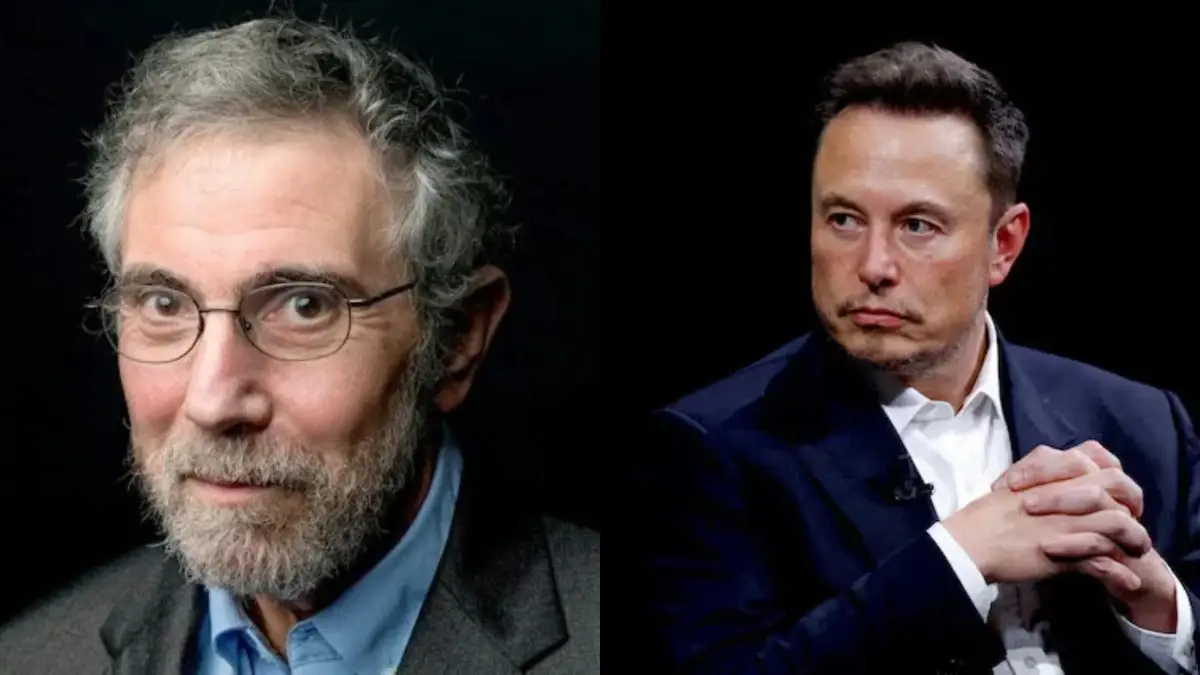

Krugman Challenges Private Authority Over Military Infrastructure
Nobel Prize-winning economist Paul Krugman has asserted that control of the Starlink satellite network should be removed from Elon Musk, arguing that no private individual should possess the power to influence a nation’s security.
In a recent post on his Substack platform, Krugman characterized Starlink as a vital military asset. He stated that decisions regarding its use should be governed by foreign policy and national security considerations rather than the discretion of a private company owner.
Krugman contended that allowing Musk to determine Ukraine’s access to Starlink grants him direct influence over the conflict between Ukraine and Russia. He argued that this responsibility should reside with governmental authorities rather than private entities.
"No private individual should, or indeed even have the capability to, make national security policy," Krugman wrote, according to The CSR Journal.
The economist compared Starlink’s role in modern warfare to military equipment provided by defense contractors like Lockheed Martin. He suggested that private ownership should not enable individuals to make decisions that undermine national security interests.
Disputes Over Service Restrictions and Military Use
Krugman’s critique follows a Wall Street Journal article discussing Musk’s alleged involvement in disruptions of Starlink services in Ukraine during its conflict with Russia.
Musk acknowledged that he restricted Starlink services, accusing the Ukrainian military of breaching service terms. He claimed the military was reportedly using the network for offensive drone strikes, which violates the agreement.
Ukraine has maintained that it uses Starlink solely for defensive operations. Kyiv asserted that recent service interruptions have hindered its military efforts for over a week.
Krugman warned that Ukraine’s reliance on Starlink could jeopardize its operational capabilities. He noted that decisions made by Musk could directly impact Ukraine’s ability to defend itself against Russian forces.
Musk Defends SpaceX Policy and Distinguishes Services
Musk defended SpaceX’s stance on October 25 via X, arguing that the Ukrainian military misused a civilian commercial service for purposes not permitted under its terms of service.
He clarified the distinction between Starlink and Starshield, noting that the latter is governed by the US government. This clarification was intended to delineate which assets fall under direct state control versus private commercial operation.
Musk acknowledged Starlink’s critical role in Ukraine’s defense as the only system resistant to jamming or destruction. He warned that the Ukrainian front line would be severely compromised if services were terminated.
Strategic Implications for Regional Connectivity
The debate over Starlink’s control highlights broader strategic shifts in satellite communications, particularly regarding availability in hostile territories. Starlink is not currently available in Russia, a gap that Moscow is reportedly attempting to fill by developing its own satellite communication system.
This domestic development aims to compete directly with both Starlink and Starshield, signaling an intensifying race for orbital infrastructure dominance. The absence of Starlink in Russia underscores the geopolitical fragmentation of global connectivity resources.
Since the onset of the conflict in 2022, Starlink has been pivotal in maintaining Ukraine’s connectivity after missile strikes and cyberattacks damaged its digital infrastructure. This historical context frames Krugman’s argument that the network’s stability is too critical to be left to private discretion during active warfare.