


Uncut Footage Reveals Autonomous and Teleoperated Operations
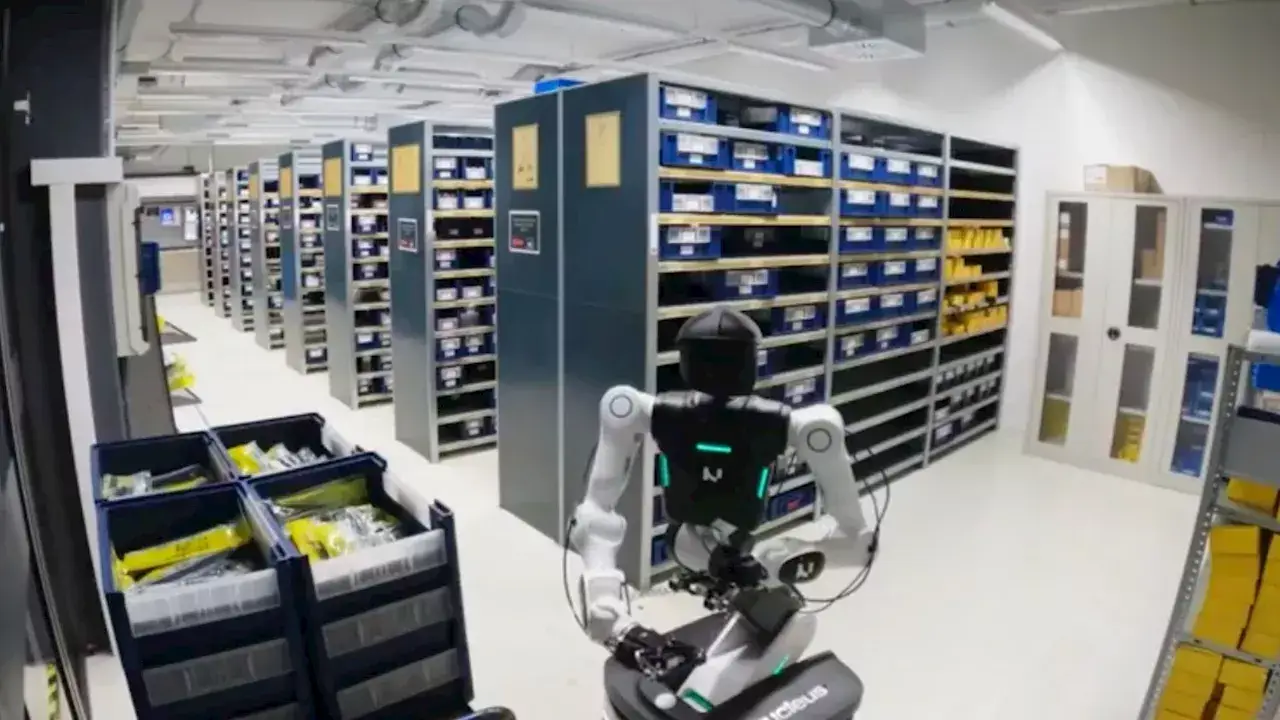
Nucleus has released nearly two hours of uncut video footage documenting its humanoid robot performing routine factory tasks. The company shared the recording on October 2, 2026, providing a detailed look at the robot's capabilities in an industrial environment.
In an update posted on October 1, Nucleus founder and CEO Melvin Schwarz released the footage to demonstrate the system's performance over an extended period. The video captures the robot executing work without cuts, offering viewers a continuous view of the operation rather than a curated selection of successful moments.
According to the company, the demonstration was approximately 60 percent autonomous and 40 percent teleoperated. Nucleus did not specify the methodology used to calculate these percentages or how the distinction between autonomous and teleoperated actions was measured within the two-hour timeframe.
The footage includes instances of hesitation and human interventions alongside successful operations. Schwarz noted that the recording reflects the reality of the robot's current performance, acknowledging that it still relies on significant human assistance during tasks.
Shift to Extended Shifts and Specific Industrial Applications
Beyond the two-hour demonstration, Nucleus reported that it is now regularly running four-to-six-hour shifts where the robot completes a job from start to finish. Schwarz stated on X that these extended operations combine autonomous operation with human assistance.
The company identified several current applications for its system within factory settings. These tasks include parts picking, shelf loading, product handling, and cart transport. The release of the uncut video serves as evidence of the robot's ability to sustain these specific activities over long durations.
AI Architecture and Data Feedback Loop
Nucleus described its underlying AI architecture as a system designed to improve through continuous deployment. The architecture records multiple data points during operation, including visual observations, robot motion, contact signals, human corrections, and task outcomes.
The company stated that this collected data is used to create a feedback loop between deployment and autonomy. This process allows the system to utilize information gathered during both autonomous and teleoperated phases to refine its models for future tasks.