Full story
AOC Addresses Scrutiny Over Colleagues' Past Rhetoric
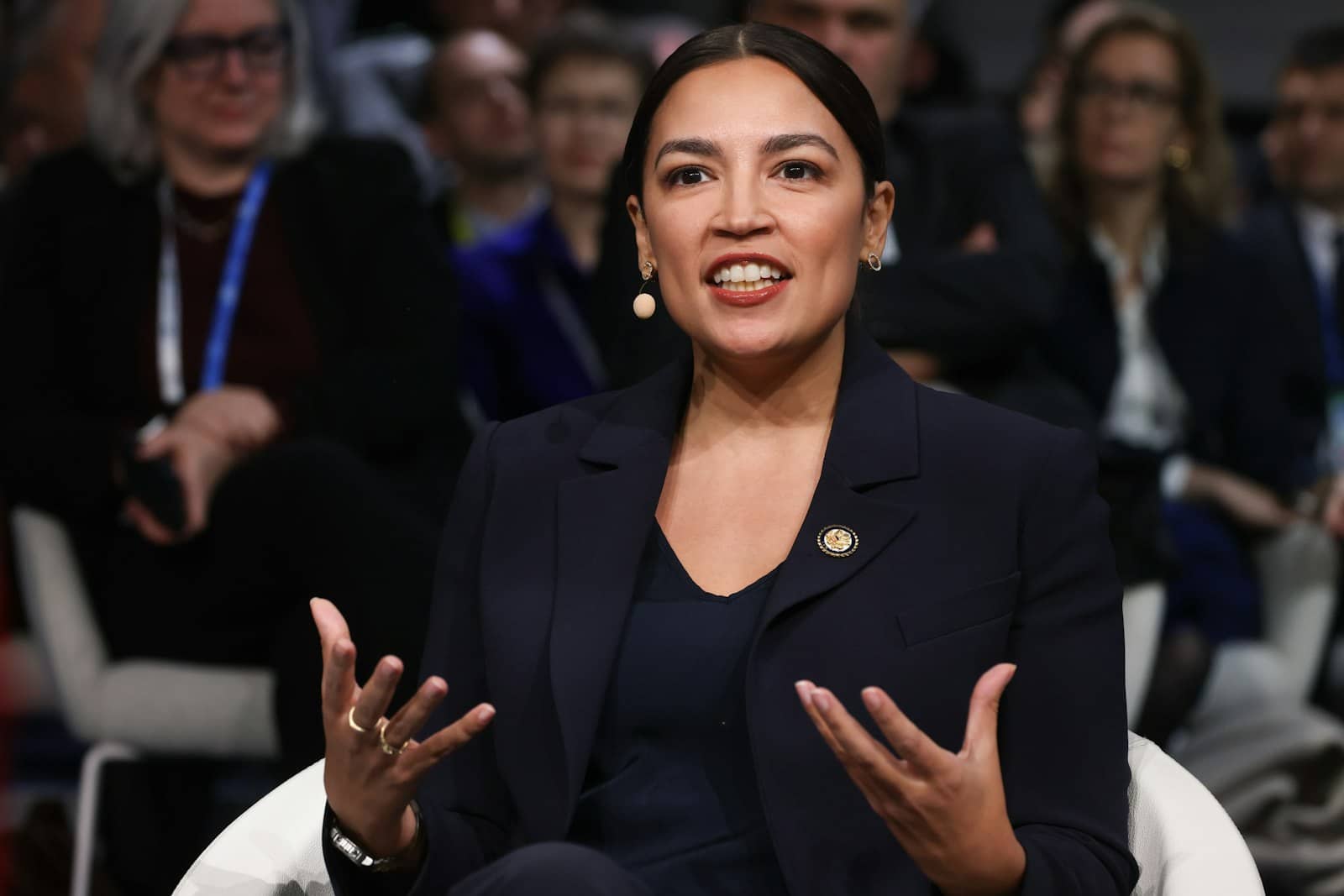
During a Sunday appearance on ABC’s This Week, Representative Alexandria Ocasio-Cortez addressed questions regarding the past political positions of State Representative Francesca Hong. Hong, identified in reports as a frontrunner in the upcoming Democratic Wisconsin gubernatorial primary, has faced public scrutiny over tweets she authored in 2020. Those posts included calls to defund and abolish police departments and advocated for ceasing the celebration of Thanksgiving. Reports indicate that Hong no longer holds these specific stances.
When asked about Hong’s previous positions during the interview, Ocasio-Cortez referenced a phrase attributed to a local city councilman. She stated, "I have a local city councilman that has this saying, ‘Woke One was crazy,’" speaking with a smile. The comment prompted laughter from anchor Jonathan Karl. Following this remark, the congresswoman explained that a significant number of politicians and activists have moved away from the rhetoric that was prevalent six years prior.
Defining the 'Woke 1.0' Era
Ocasio-Cortez argued that the concept of "Woke One" lacks a clear definition. She stated that it would be almost impossible to define such a specific time, era, or set of political positions. Despite the difficulty in defining the term, she characterized the events associated with this period as "crazy—crazy awesome." This description suggests a view that the chaos of the discourse resulted in positive outcomes, according to her assessment.
The commentary surrounding these remarks suggests that if Ocasio-Cortez intends to pursue election to the presidency in 2028, she may need to distance herself from the term "Woke One." This potential distancing would align with broader electoral strategies and how the public understands the label. The article posits that her comments highlight a duality within progressive politics: the necessity of a strong movement pushing essential but currently unpopular ideas, alongside the need for politicians focused on popular ideas to win elections and gain power. These two tasks are described as separate functions not accomplished by the same individuals.
Historical Origins and Evolution of the Term
The origins of the term "woke" are subject to debate, though a general consensus exists regarding its early usage. Black activists in the 20th century first used the term as a call for African-Americans to remain vigilant in the fight against racism. The word became more frequently invoked by both Black people and non-Black supporters of the Black Lives Matter movement during the early 2010s.
By the early 2020s, the usage of the word shifted. Conservatives and some individuals on the center-left and left began using the term to mock activists and their positions. This evolution from a call for vigilance to a tool for mockery marks a significant change in the linguistic landscape surrounding progressive activism.
Counter-Perspectives on Progressive Activism
Critics of Ocasio-Cortez’s remarks argue that her characterization overlooks positive developments associated with the era. The commentary asserts that early progressive activism delivered significant benefits to the nation, contradicting the notion that it was merely negative or chaotic. Specifically, the article points to movements such as Me Too and Black Lives Matter as examples of these positive outcomes.
The author suggests that Ocasio-Cortez’s remarks ignore the tangible impacts of these movements. While Ocasio-Cortez described the era as "crazy awesome," the counter-perspective emphasizes the concrete benefits delivered by activists during that time. This divergence highlights the tension between political branding and the historical record of social movements.
The discussion remains focused on how past activism is interpreted in contemporary political discourse. As politicians navigate their public images, the legacy of early 2020s activism continues to be a subject of debate. The contrast between Ocasio-Cortez’s dismissal of the era’s definability and the assertion of its positive contributions underscores the complex nature of progressive political history.