

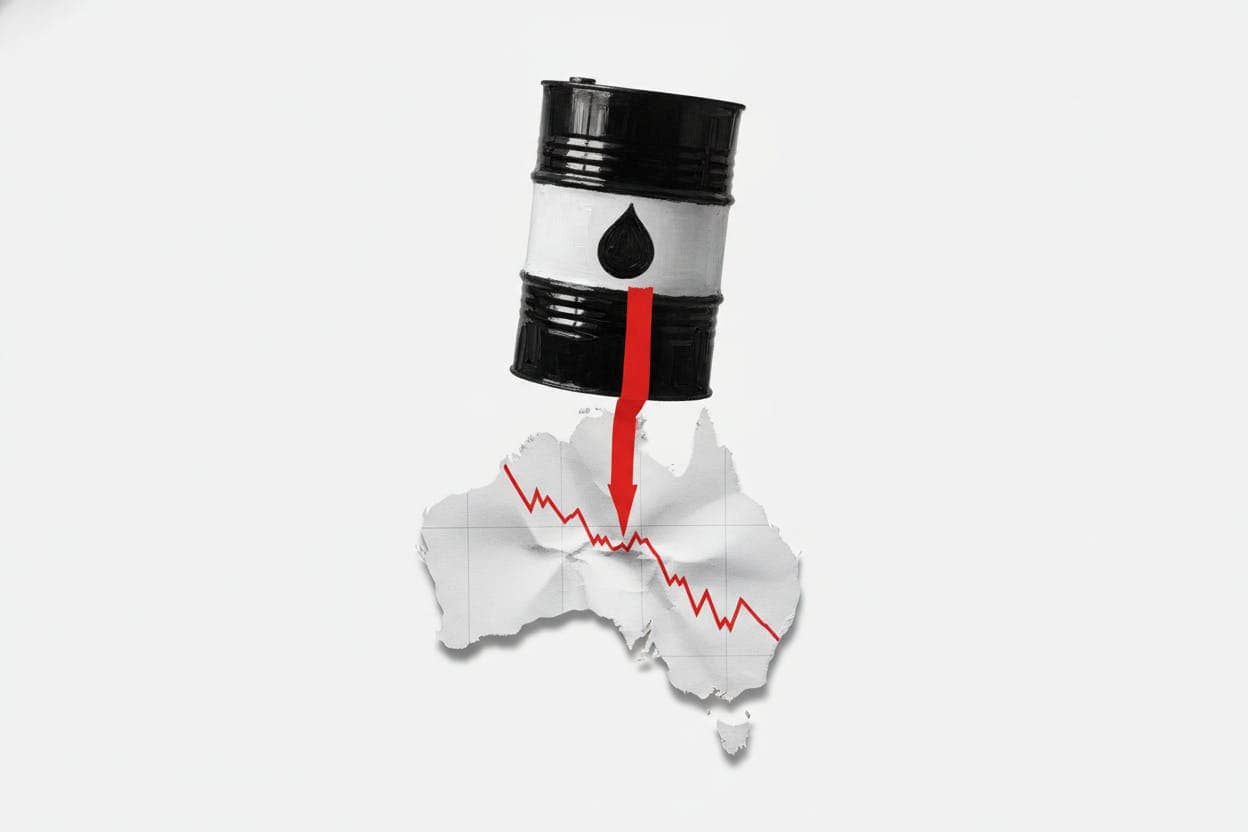

Global Markets React to Rising Energy Costs
Australian equities are facing downward pressure following a significant increase in global oil prices. According to market reports, oil prices surged more than 4% to reach five-week highs, a move that has immediately reverberated through international financial markets. This sharp rise in energy costs has been primarily driven by renewed tensions between the United States and Iran, coupled with growing concerns regarding the security and stability of vital global supply routes, most notably the Strait of Hormuz.
The Strait of Hormuz, a narrow waterway situated between the Persian Gulf and the Gulf of Oman, is a critical chokepoint for global oil shipments. Any perceived threat to its navigability or the flow of oil through it can trigger substantial market anxiety and lead to rapid price escalations, as seen in the recent surge. The geopolitical friction involving major oil-producing regions and key transit points underscores the fragility of global energy supply chains and their susceptibility to political developments.
The surge in oil prices has set a cautious tone for financial markets globally, indicating a broad-based investor apprehension. Overnight, US stock indexes experienced notable declines, with the S&P 500 falling 0.7% and the Nasdaq dropping 1%. These movements in American markets often serve as a bellwether for global sentiment and frequently influence trading patterns in the Asia-Pacific region, including Australia, as investors adjust their portfolios in anticipation of similar local reactions.
Analysts indicate that Australian shares looked set to open lower as a direct result of the oil jump, reflecting the immediate transmission of global energy shocks to local equity valuations. The rapid increase in fuel costs has prompted market participants to anticipate a chain reaction affecting corporate profits across various sectors and significantly altering inflation expectations, which in turn influences central bank policy outlooks.
Impact on Investor Sentiment and Risk Appetite
The sudden escalation in oil prices tends to heighten risk aversion among investors. When geopolitical risks intensify and commodity prices become volatile, market participants often shift away from riskier assets like equities towards safer havens. This flight to safety can lead to broad market sell-offs, even in sectors not directly exposed to oil, as overall market liquidity and confidence are affected. The interconnectedness of global financial systems means that a significant event in one commodity market can trigger a ripple effect across asset classes and geographies.
Economic Implications for Australian Businesses
Rising oil prices can lead to increased inflation and reduced corporate profits, particularly impacting transport-reliant and consumer-focused companies. For businesses heavily dependent on fuel, such as airlines, logistics firms, and agricultural enterprises, higher oil prices translate directly into increased operational costs. These elevated expenses can erode profit margins if companies are unable to fully pass on the costs to consumers, or if competitive pressures prevent them from doing so.
When oil prices rise rapidly due to geopolitical risk, markets begin to assess the potential for higher near-term inflation across the broader economy. Energy is a fundamental input for almost all goods and services, meaning that an increase in its cost can quickly permeate through supply chains, leading to higher prices for consumers. This phenomenon can dampen consumer spending, as households find their discretionary income reduced by higher fuel and utility bills, further impacting consumer-focused businesses like retail and hospitality.
Inflationary Pressures and Interest Rate Outlook
This inflationary pressure also significantly influences interest rate expectations. Central banks, including Australia's, are mandated to maintain price stability. If traders decide that price pressures could persist, they often reset their expectations for how long central banks will keep interest rates high, or even anticipate further rate hikes. Higher interest rates can weigh heavily on stock valuations because future earnings are worth less when discounted at higher rates, making current equity prices appear less attractive to investors.
The prospect of prolonged high interest rates can also increase borrowing costs for businesses, potentially stifling investment and expansion plans. For consumers, higher rates mean increased mortgage payments and loan costs, further tightening household budgets and reducing overall economic activity. The combination of geopolitical tension and rising energy costs has thus created a complex environment for equity valuations across the region, demanding careful consideration from investors regarding both macroeconomic trends and company-specific fundamentals.
Domestic Data to Watch for Economic Direction
Australia’s upcoming national accounts data will provide further insight into the economic outlook and its potential impact on markets. The release of this crucial data is scheduled for 11:30 am Sydney time, and it is anticipated to offer a fresh perspective on the nation's economic health amidst global headwinds.
The national accounts print typically includes key indicators such as Gross Domestic Product (GDP), household consumption, business investment, and international trade figures. This data offers a fresh read on whether economic growth is cooling or holding up against the backdrop of persistent inflation and higher interest rates. For markets, oil’s more-than-4% jump makes this domestic data release a significant test, as it will be scrutinized for any signs of resilience or vulnerability in the face of external shocks.
A more-than-4% move in oil prices can change the macro conversation quickly because energy costs feed directly into what households and businesses expect to pay for goods and services. If the national accounts data shows signs of weakening growth alongside elevated inflation, it could present a challenging scenario for policymakers and investors alike, potentially leading to concerns about stagflation. Conversely, strong growth figures might suggest the economy is better positioned to absorb the energy price shock, though inflation concerns would likely persist.
Investors are closely watching how these external energy shocks interact with local economic indicators to determine the direction of Australian equities in the coming sessions. The interplay between global commodity price volatility, domestic economic performance, and central bank policy expectations will be critical in shaping market sentiment and investment decisions in the near term.