

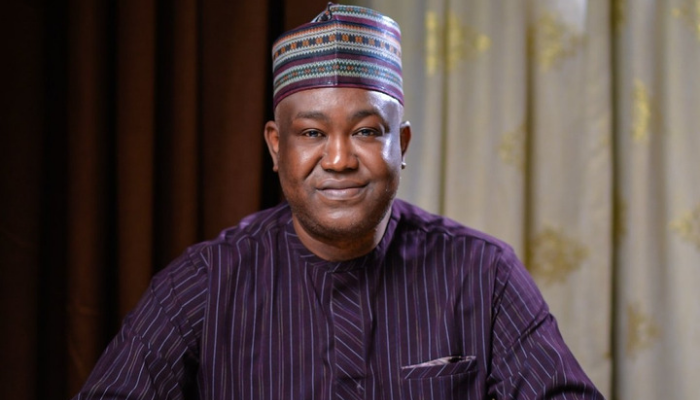

Olawepo-Hashim's Assessment of President Tinubu's Public Address
Dr. Gbenga Olawepo-Hashim, a prominent political figure in Nigeria, serving as the presidential candidate for the Accord Party and also as the Co-Chairman of the Movement for Democratic Renewal, has publicly articulated profound concern regarding recent statements attributed to President Bola Tinubu. These particular comments, which have drawn significant attention, were made during a high-profile meeting between the President and a delegation of Catholic Bishops, held at the State House in Abuja. Olawepo-Hashim's dual roles as a former presidential aspirant and a leader in a movement dedicated to democratic principles lend considerable weight to his observations on national leadership and governance.
A Shift in Perceived Demeanor
In a detailed statement widely reported by Vanguard News, Olawepo-Hashim took care to clarify the precise nature of his emotional response to President Tinubu's public communication. He emphasized that his predominant reaction was one of profound sadness, rather than the anger that might typically arise from political opposition. To ensure a comprehensive understanding of the President's address, Olawepo-Hashim revealed that he had listened to recordings of the remarks not just once, but "over and over again," meticulously analyzing both the content and the underlying tone. This rigorous, repeated review process, he explained, was crucial in shaping his distinct impression regarding the character and implications of the President's communication.
Recounting his meticulous review, Olawepo-Hashim directly quoted his own reflection: "I listened to the recording over and over again." He then delivered a stark observation, stating, "That was not the Bola Tinubu I knew between 2018 and 2021, I left deeply concerned." This assertion highlights a perceived significant divergence in character or demeanor. Olawepo-Hashim elaborated that the individual whose voice and message he heard during the recent engagement with the Catholic Bishops appeared "markedly different" from the Bola Tinubu he had personally interacted with and observed on numerous occasions throughout the three-year period between 2018 and 2021. This perceived transformation, he implied, was the root cause of his deep concern.
Human Concern Over Political Criticism
Further underscoring the nature of his concern, Olawepo-Hashim explicitly stated that his interest in the matter transcended typical political rivalries, being fundamentally "human rather than political." He consciously drew a distinction between his own measured response and the reactions of other citizens or political stakeholders who might have responded with anger or partisan criticism towards the President's statements. Rather than expressing indignation, Olawepo-Hashim articulated a profound sense of pity for the President and, by extension, a deep worry for the broader implications concerning the nation's leadership and its future trajectory.
Call for Assistance and Democratic Safeguards
The Urgency of "Genuine Help"
In a crucial clarification, Olawepo-Hashim explicitly stated that his observations were not intended as a medical diagnosis, thereby avoiding any professional medical assessment. Nevertheless, he suggested that the President's discernible mode of public communication during the meeting with the Catholic Bishops conveyed a strong impression of a potential requirement for assistance. He articulated this impression directly, stating, "The President’s public communication gives me the impression that he may require genuine help." This statement, coming from a seasoned political figure, underscored a concern that went beyond policy disagreements, touching upon the very capacity and well-being of the nation's leader.
Upholding Electoral Integrity in 2027
Moving beyond his immediate assessment of the President's current public demeanor, Olawepo-Hashim also issued a significant warning concerning Nigeria's prospective political landscape. He firmly asserted that the general elections slated for 2027 are critically important and must, under no circumstances, fall below the democratic standards that were notably established and upheld during the 2015 elections. This declaration serves as a powerful reminder of the benchmarks set for electoral transparency and fairness. His statement unequivocally underscores a deep-seated focus on preserving and enhancing institutional integrity, ensuring robust democratic processes, and safeguarding the credibility of future electoral cycles in the nation.
The remarks by Olawepo-Hashim highlight a divergence in perspective among political figures regarding the conduct of the current administration. By framing his criticism through the lens of concern for the President's well-being and the nation's democratic health, he has positioned his critique as rooted in civic responsibility rather than partisan opposition.
The meeting with Catholic Bishops at the State House remains the focal point of these recent political discussions. The content of that meeting, as interpreted by Olawepo-Hashim, has sparked a broader conversation about leadership communication and its impact on public perception. His call for genuine help for the President, coupled with his demand for high democratic standards in 2027, presents a dual focus on immediate leadership concerns and long-term political stability.
As Nigeria approaches its next electoral cycle, statements from key political actors like Olawepo-Hashim are being closely monitored. His assertion that the 2027 elections must meet or exceed the benchmarks set in 2015 provides a measurable criterion for evaluating future democratic processes. The contrast he draws between the President's past demeanor and current public appearances serves as a basis for his ongoing concerns about national governance.
Olawepo-Hashim’s position reflects a specific viewpoint within the political spectrum, emphasizing empathy alongside rigorous expectations for democratic conduct. His role as both a presidential candidate and a co-chairman of a democratic renewal movement lends weight to his observations regarding the state of leadership in Nigeria. The ongoing discourse surrounding these remarks continues to influence public debate on the quality of governance and the readiness of political institutions.