

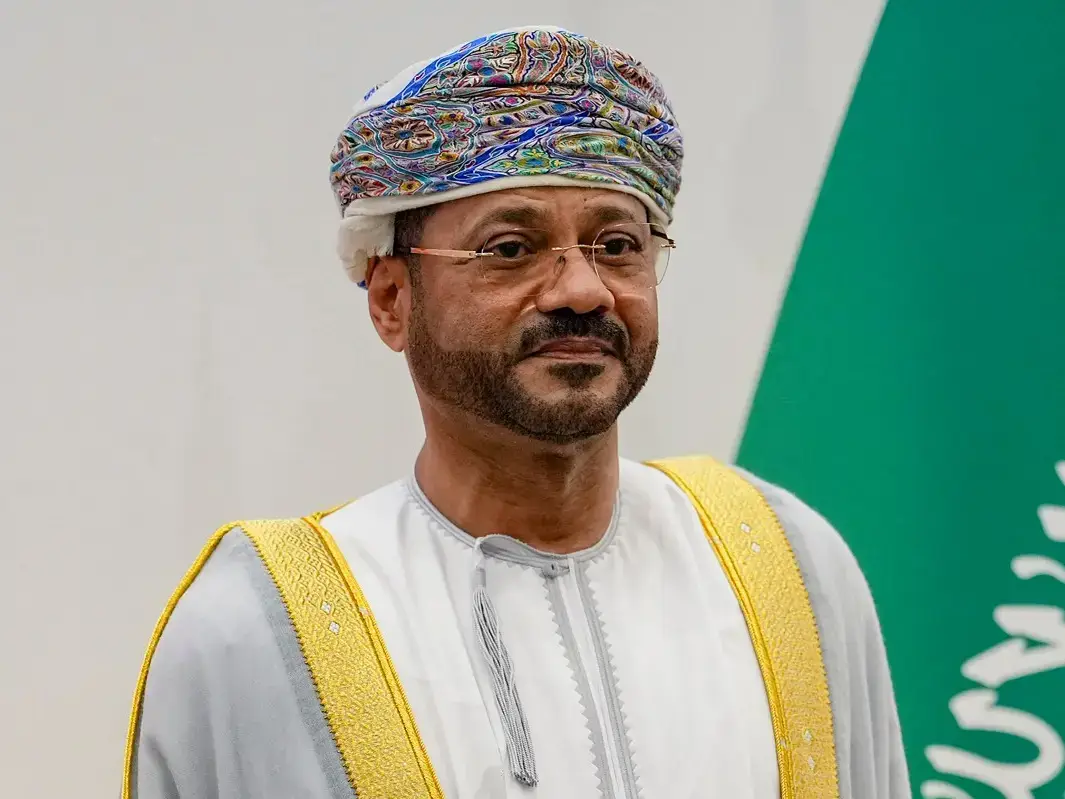

Albusaidi Challenges Regional Security Narrative in Le Monde
Oman’s Foreign Minister Sayyid Badr Albusaidi has publicly rejected the longstanding diplomatic strategy aimed at limiting Iranian influence, describing it as a fabricated justification for increasing military presence in the Persian Gulf. In an opinion piece published July 14, 2026, in the French newspaper Le Monde, Albusaidi asserted that the decade-long policy of "containing Iran" constituted a "false narrative." He argued that this specific framing was utilized as a pretext to militarize the region, leading to significant strategic and financial consequences for Gulf states.
The foreign minister’s commentary represents a sharp critique of current regional security architectures. Albusaidi described the ongoing conflict in the area as a "disaster" that has failed to achieve its stated objectives. He noted that the conflict lacks a United Nations mandate, a detail he highlighted to underscore the legitimacy concerns surrounding the current military posture in the region. According to his assessment, the perceived threat from Iran was never existential, yet it served as the primary driver for extensive defense expansions.
Financial and Strategic Costs of Containment Policy
Albusaidi detailed the tangible outcomes of the containment strategy in his op-ed. He stated that the narrative of an Iranian threat resulted in an unchecked increase in regional defense spending. This financial burden was accompanied by a structural shift in military deployment, specifically the expansion of United States military bases within the Gulf states.
The foreign minister pointed to a heavy reliance on long-range, forward-deployed military presence as a direct result of these policies. He emphasized that all these developments imposed immense financial costs on the region. By linking the security architecture directly to the "false narrative" of containment, Albusaidi suggested that the resources devoted to this strategy were misallocated given the actual nature of the threat.
Diplomatic Efforts and Calls for Architectural Overhaul
Following the publication of his article, Albusaidi continued to advocate for a different approach to regional stability. He called for an overhaul of the current security architecture, urging instead for the establishment of an inclusive security framework for the Persian Gulf. This proposed framework stands in contrast to the exclusive, containment-based model he criticized.
These diplomatic positions were reinforced by recent high-level meetings involving Albusaidi and other regional leaders. On June 25, 2026, the foreign minister participated in a gathering in Manama with the foreign ministers of the Gulf Cooperation Council (GCC) member states and the US Secretary of State. During this engagement, discussions centered on the security issues outlined in his subsequent op-ed.
The timing of the Le Monde article, published shortly after the June 25 meeting, aligns with Oman’s broader diplomatic efforts to reshape perceptions of regional threats. By characterizing the decade-long policy as a falsehood, Albusaidi is challenging both internal GCC consensus and external alliances that have relied on the containment narrative for strategic planning.
Implications for Regional Security Frameworks
The foreign minister’s arguments touch upon the fundamental structure of Gulf security. By labeling the threat as non-existential, he undermines the primary justification for the expansion of US bases and the surge in defense budgets. His call for an inclusive framework suggests a move toward diplomatic engagement rather than military deterrence as the primary tool for stability.
Albusaidi’s critique highlights the divergence between Oman’s foreign policy stance and the more confrontational approaches adopted by other regional actors. While he attributes the militarization to a specific narrative failure, his remarks invite scrutiny of the long-term sustainability of the current defense spending levels. The op-ed serves as a formal record of Oman’s position that the existing security model is both financially draining and strategically flawed.
The response from other parties to these claims has not been detailed in the immediate source material, leaving the focus on Albusaidi’s articulated views. His statements provide a clear alternative vision for the Persian Gulf, one that prioritizes inclusive frameworks over the containment policies that have defined regional interactions for the past ten years.