


Labor’s Policy Direction Under Scrutiny
Sean Kelly, in a commentary published on August 31, has voiced significant concerns regarding the current trajectory of the Australian Labor Party (ALP). While there is a prevailing sentiment and general acceptance that Labor is very likely to secure a victory in the next federal election, Kelly suggests that this assumption might be premature. He argues that if the government's policy outcomes continue to diverge from public sentiment and expectations, Labor’s political standing could be significantly impacted.
Kelly specifically highlighted the Western Australia GST deal as an example of what he considers 'bad policy.' He challenged Prime Minister Anthony Albanese’s stated belief that 'if policies are right, the politics will look after itself.' According to Kelly, this principle may not hold true in practice, particularly if the Prime Minister continues to make decisions that are perceived as being at odds with the electorate. Such a divergence, Kelly warned, could place the Labor government’s incumbency at considerable risk by the time the next federal election is called.
Gambling Reforms and Public Sentiment
Further illustrating his point on policy missteps, Kelly drew attention to the government's approach to gambling reforms. He noted that despite comprehensive recommendations put forth by the late Labor stalwart Peta Murphy – totaling 31 proposed reforms – the administration chose to accept only three. Kelly suggested that by severely limiting the scope of these reforms, the Prime Minister has acted against what he perceives as the wishes of the majority of voters. This decision, he argued, adds another layer of potential political vulnerability for the ruling party, reinforcing the idea that policy decisions, even well-intentioned ones, can alienate segments of the electorate and undermine public trust.
The Enduring Appeal of One Nation
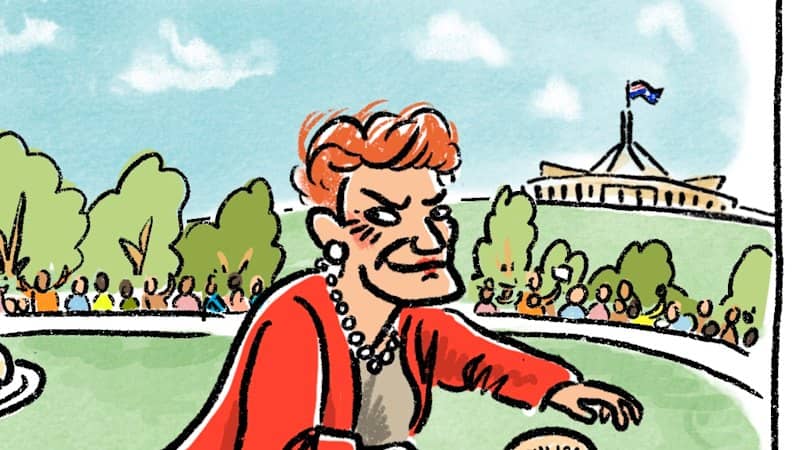
Amidst the scrutiny of Labor's policy choices, attention has also been drawn to the persistent rise of Pauline Hanson’s One Nation party. Mark Porter, writing from New Lambton, offered a distinct perspective on the nationalist party's growth, suggesting that its ascent is not easily halted by specific policy counter-arguments, including those related to immigration. Porter observed that One Nation continues to attract votes from individuals who are deeply disappointed and disaffected with the current political landscape, a sentiment that appears to transcend specific policy platforms.
Despite this successful attraction of voters, Porter contended that One Nation does not, in fact, possess policies that are either coherent or consistent. This lack of a clear and stable policy framework, however, has not prevented the party from gaining traction among a segment of the population looking for alternatives. Porter, nonetheless, predicted that the party's eventual decline would be swift once voters come to the realization that they have been 'deceived and exploited' by its rhetoric and promises, implying that the party's appeal might be more emotional than policy-driven.
Assessing Governance Beyond Political Skirmishes
Peter Nash, contributing from Fairlight, underscored a crucial aspect of political evaluation: the importance of assessing a government based on its substantive performance rather than focusing solely on political maneuvering or partisan conflict. Nash commended Sean Kelly for attempting to redirect public and media attention towards a more fundamental question: 'is Labor governing properly?' This shift, Nash argued, is vital for a more accurate understanding of the political climate.
Nash advocated for a significant change in media coverage, urging journalists to prioritize an examination of policy substance over what he termed 'political brawling and 'gotcha' moments.' He implied that a deeper, more analytical scrutiny of governance and policy implementation, rather than superficial political skirmishes, would provide clearer and more meaningful insights into the genuine political risks and challenges confronting the current administration. Such an approach, he suggested, would better serve the electorate by offering a more comprehensive picture of the government's effectiveness and its alignment with public needs.
Electoral Landscape and Future Uncertainties
The convergence of these expert viewpoints paints a complex picture of the current Australian political environment, highlighting a potential disconnect between perceived political stability and underlying voter sentiment. Prime Minister Anthony Albanese’s confidence in the alignment of sound policy and positive political outcomes is a cornerstone of his administration's approach. However, critics like Sean Kelly argue that specific governmental decisions – notably the Western Australia GST deal and the limited adoption of gambling reforms – may actively undermine this confidence and erode public trust.
Simultaneously, the continued ability of One Nation to attract voters, even in the absence of a consistent policy platform, signals a broader and perhaps growing dissatisfaction among various segments of the electorate. This disaffection, fueled by a sense of disappointment with mainstream politics, presents a significant challenge to established parties. While there remains an expectation that Labor is likely to win the next election, the current discourse suggests that this outcome is far from a foregone conclusion. The interplay between specific policy controversies, a disaffected voter base, and calls for more substantive governance analysis indicates that incumbency for the Labor government is not a guaranteed outcome in the upcoming federal election, making the political landscape increasingly uncertain.