


Pakistan Opposition Parties Agree to Joint Parliamentary Bloc
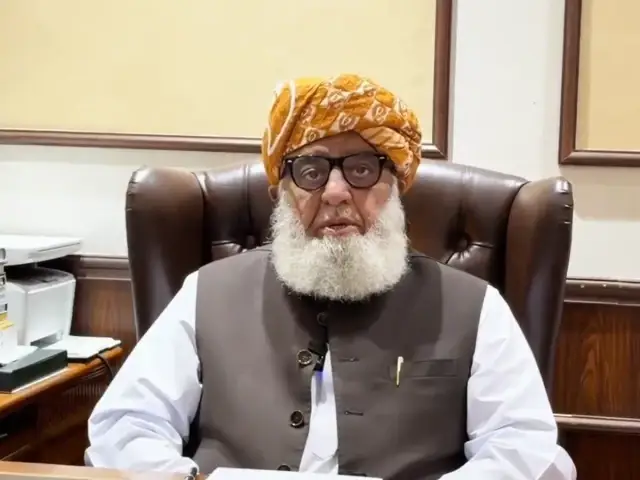
\nOpposition parties in Pakistan have formally agreed to establish a joint opposition within Parliament, signaling a concerted effort to challenge the government on pressing national issues. This significant announcement followed a late-night meeting of prominent opposition leaders at the residence of Jamiat Ulema-e-Islam-Fazl (JUI-F) chief Maulana Fazlur Rehman in Islamabad on Friday.
\nMaulana Fazlur Rehman, addressing the media after the gathering, articulated the alliance's primary objectives. He stated that the newly formed bloc aims to play a more effective and unified role in confronting several critical challenges currently facing the country. These challenges, as outlined by Rehman, include a worsening law and order situation, growing difficulties concerning the government's authority or 'writ,' and a perceived lack of preparedness to deal with national crises. The formation of this joint parliamentary front is intended to consolidate opposition voices and strategies on these key fronts.
\n\nKey Leaders Convene to Forge Alliance
\nThe pivotal meeting brought together a diverse group of key figures from various opposition factions, underscoring the broad-based nature of the new alliance. Among the attendees were National Assembly Opposition Leader Mahmood Khan Achakzai and Senate Opposition Leader Allama Raja Nasir Abbas, representing their respective parliamentary roles. Leaders from Pakistan Tehreek-e-Insaf (PTI), a significant opposition force, were also present, with their delegation including Secretary General Salman Akram Raja, Asad Qaiser, and Junaid Akbar.
\nThe host party, JUI-F, was represented by a broader group of its parliamentarians and senior leaders, demonstrating its central role in facilitating this unity. Their presence included Maulana Abdul Ghafoor Haideri, Senators Kamran Murtaza and Maulana Abdul Wasay, and Engineer Ziaur Rehman. This collective gathering of influential political figures highlights the seriousness of the opposition's intent to present a united front against the incumbent government's policies and governance.
\n\nThreats of International Legal Action and a Two-Phase Strategy
\nDuring a joint press conference held immediately after the meeting, National Assembly Opposition Leader Mahmood Khan Achakzai issued a stark warning regarding the government's actions. He emphatically stated that the opposition would not hesitate to approach international courts if they were "forced" to do so, indicating a potential escalation of their grievances beyond national legal frameworks.
\nSalman Akram Raja, the PTI Secretary General, provided further insights into the alliance's operational strategy, outlining a two-phase approach to their political engagement. He clarified that while the initial and current phase of the coalition involves consolidating and uniting their efforts inside Parliament, the group intends to significantly expand its activities in the future. According to Akram Raja, this "next phase" will see the alliance transition its politics from the legislative chambers to direct public engagement, taking its message and mobilization efforts to the streets.
\n\nRahul Gandhi's Strategy Signals Shift in Indian Opposition Tactics
\nIn a separate yet thematically resonant development within South Asian politics, political analysis suggests that Rahul Gandhi's recent engagement in "street politics" is being interpreted as a clear signal of a new playbook for the opposition in India. This strategic shift indicates a deliberate move away from solely parliamentary or institutional frameworks towards more direct public engagement and grassroots mobilization.
\nGandhi's adoption of street-level activism emphasizes a different method of exerting political pressure, focusing on direct interaction with citizens and public demonstrations to convey political messages and build momentum. This approach aims to bypass traditional media filters and institutional barriers, seeking to connect directly with the electorate and articulate grievances outside the formal structures of governance.
\n\nEvolving Opposition Mobilization Across the Region
\nThe developments in Pakistan, with the formation of a joint parliamentary opposition, and the strategic shifts noted in India, exemplified by Rahul Gandhi's street politics, collectively highlight a broader trend of opposition groups across South Asia re-evaluating and diversifying their methods of political engagement. Both instances reflect a calculated effort to enhance their effectiveness in challenging ruling governments and holding them accountable.
\nIn Islamabad, the agreement to establish a joint opposition within Parliament represents a consolidation of legislative forces. This initial phase focuses on leveraging parliamentary procedures and debates to challenge the government's authority on specific issues such as law and order, governmental writ, and crisis management. The stated intention to eventually move towards street politics indicates a planned escalation, where parliamentary pressure would be complemented by public agitation.
\nConversely, the focus on Rahul Gandhi's activities in India points to a more immediate emphasis on direct public outreach. While the Pakistani alliance has outlined a phased approach—starting with parliamentary coordination and then moving toward street-level politics—the Indian context underscores the symbolic and practical weight of "street politics" as a distinct and primary tactical choice for opposition mobilization.
\n\nImplications for the Political Landscape
\nThe agreement in Pakistan underscores the opposition's intent to coordinate robust responses to what they perceive as governmental failures and a decline in administrative efficacy. By establishing a joint bloc, leaders like Maulana Fazlur Rehman, Mahmood Khan Achakzai, and those from PTI aim to amplify their collective voice, ensuring their critiques of the current administration resonate more powerfully both within and outside Parliament.
\nSimilarly, the characterization of Rahul Gandhi's actions as a "new playbook" suggests that opposition groups across the region may be increasingly adopting more assertive, direct, or even unconventional methods to challenge established political norms and power structures. These strategic moves reflect a calculated effort to reshape the dynamics of political discourse, enhance public accountability, and potentially alter the balance of power in their respective countries by engaging citizens more directly in the political process."\n```