


Mixed Signals From Presidency Fuel Opposition Uncertainty
Nigeria's opposition camp is navigating a period of profound uncertainty and disarray as it sets its sights on the 2027 general elections. This pervasive confusion is intricately linked to a series of inconsistent messages emanating from President Bola Tinubu concerning the recent Osun State governorship election. Political observers and analysts are keenly noting the lack of a clear, unified stance from the presidency, which has left various opposition stakeholders grappling with how to strategically position themselves for the upcoming electoral cycle. The ambiguity from the nation's highest office creates a volatile environment, making it challenging for opposition parties to forge cohesive strategies or predict future political landscapes.
Reports from political analysts monitoring the situation indicate that President Tinubu’s communications and administrative actions regarding the Osun poll have failed to present a coherent or unified front. This absence of a singular, unambiguous narrative from the federal government has sown seeds of doubt and distrust across different factions within the opposition. Leaders and party officials are now questioning the reliability of potential alliances and the efficacy of their planned maneuvers. The urgency of this situation is particularly acute as the 2027 election timeline steadily approaches, compelling party officials to seek definitive guidance on how to interpret the federal government’s perceived stance on state-level electoral outcomes and what precedents these outcomes might set for national contests.
Osun Election Outcome Sparks Internal Criticism
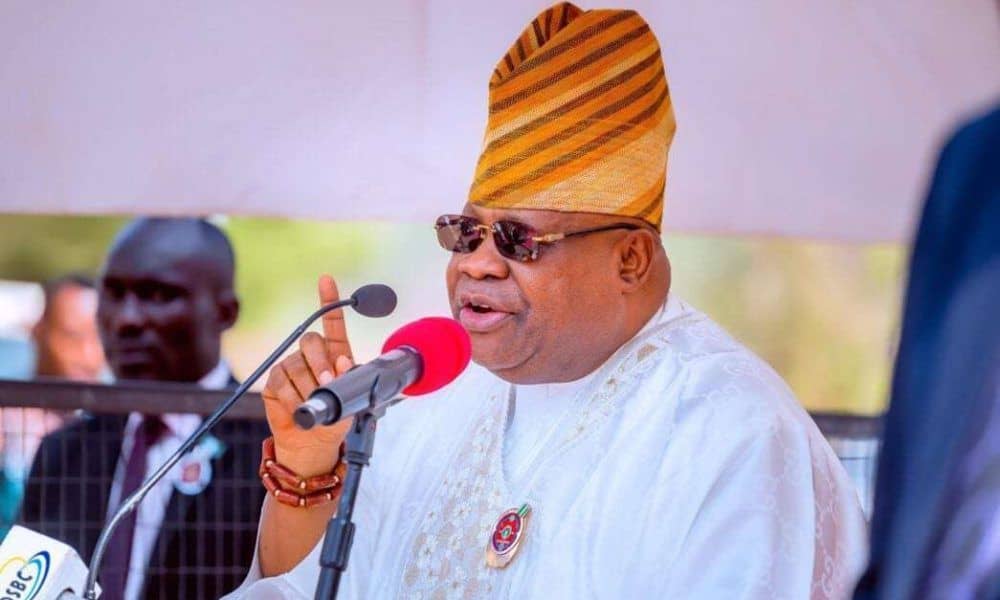
At the heart of much of this escalating political tension lies the August 15 Osun State governorship election. The outcome of this hotly contested poll was publicly presented as a definitive victory for Governor Ademola Adeleke. As the incumbent governor, Adeleke successfully secured his position in the state, this time running as the candidate for the Accord Party. However, the path to his re-election was marked by significant and controversial political maneuvering, most notably his departure from the People’s Democratic Party (PDP), a move that has since reverberated across the opposition landscape.
Adeleke, who had previously been a prominent and influential figure within the PDP, made the strategic decision to leave what was described as a “troubled party” to contest under the banner of the Accord Party. This pivotal shift in political allegiance was instrumental in securing his electoral win on August 15, fundamentally altering the dynamics of the Osun poll. While the election results were officially declared in favor of Adeleke, cementing his status as governor, his transition from the PDP to the Accord Party simultaneously ignited intense debates about loyalty, political opportunism, and strategic foresight within the broader Nigerian opposition landscape. This move has been viewed by many as a significant realignment, prompting questions about the stability of party structures and the motivations behind such high-profile defections.
Betrayal Accusations Deepen Rifts
In the aftermath of his electoral victory, Governor Adeleke has faced considerable scrutiny and sharp criticism from both former allies and long-standing political rivals. A chorus of critics has accused him of betrayal, interpreting his departure from the PDP not merely as a change of party, but as a profound breach of trust and a strategic abandonment of core party principles. These accusations extend beyond Adeleke himself, casting a considerable shadow over the Accord Party’s credibility and its potential standing within the wider opposition coalition. The perception of disloyalty threatens to undermine the unity and collective strength that the opposition desperately needs to challenge the ruling party effectively.
These allegations of betrayal have significantly contributed to the overall disarray observed by political commentators, exposing deep-seated fractures within the opposition ranks. What were once alliances of convenience or shared ideological fronts now appear to be dissolving, with former comrades increasingly finding themselves on opposing sides of critical political divides. Consequently, the Osun election results transcend their immediate local impact; they have become a potent flashpoint for broader disagreements concerning political loyalty, the sanctity of party platforms, and the complex calculus of future alliances. This internal strife risks fragmenting the opposition further, making a united front for 2027 an increasingly distant prospect.
Implications for the 2027 Electoral Landscape
The prevailing confusion within the opposition camp, as it gears up for 2027, is severely exacerbated by the intricate interplay between the mixed presidential signals and the precedents set by state-level electoral outcomes like Osun. President Tinubu's inconsistent messaging regarding the Osun poll has created an environment of profound uncertainty, leaving opposition leaders unsure of how best to navigate their relationship with the federal government and what to expect from the national political arena. This ambiguity is further compounded by the intense internal criticisms directed at Governor Adeleke, which serve as a stark cautionary tale for other politicians who might be contemplating similar shifts in allegiance or party affiliation.
As the 2027 elections draw nearer, the opposition camp is confronted with a multitude of layered challenges. The combination of unclear presidential guidance and the significant fallout from the Osun election has fostered an environment where coherent strategic planning is exceptionally difficult. Political actors are forced to interpret conflicting signals from the highest levels of government while simultaneously managing escalating internal disputes over past actions, perceived betrayals, and divergent future goals. The situation in Osun State, therefore, provides a critical and complex case study for the broader opposition movement, highlighting the formidable obstacles it must overcome to present a formidable challenge in the next national electoral contest. The ability of the opposition to coalesce and present a united front will largely depend on its capacity to resolve these internal conflicts and develop a clear, consistent strategy despite the external uncertainties.