


Origins and Structural Limitations of the Oslo Accords
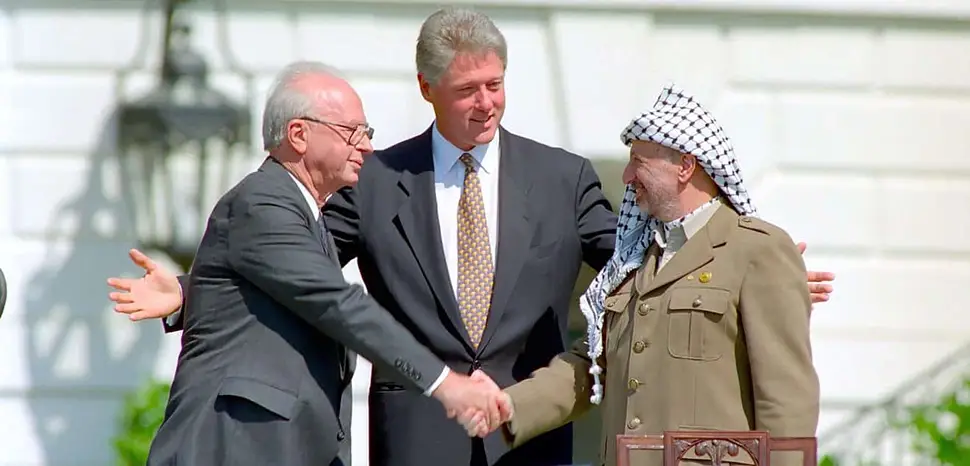
The Oslo peace process began with mutual recognition between the Palestine Liberation Organization (PLO) and Israel in 1993, followed by a peace treaty with Jordan in 1995. The framework established an interim self-government characterized by a "gradual" transfer of power but did not include a specific timeframe for the end of Israel’s occupation or the establishment of a Palestinian state.
The disintegration of the Soviet Union in the 1980s and the conclusion of the Cold War created conditions that many policymakers viewed as an opportunity for a peaceful, American-led world order. Following the Gulf War coalition, which included Arab monarchies from the region, international praise was directed at Israel for its restraint in not retaliating against Scud strikes by Saddam Hussein. This environment suggested to some that the time was ripe for negotiations and compromise.
Despite these conditions, many Israelis, including then-Prime Minister Yitzhak Shamir, believed that the land-for-peace agreement decided by UN Resolution 242 was flawed. They argued that peace would remain elusive as long as Arab nations did not recognize Israel’s right to exist. President George H.W. Bush’s "New World Order" speech to the U.S. Congress at the end of the 1991 Gulf War mentioned Israel seven times, signaling the enduring strategic friendship between the two democracies and urging both Palestinians and Israelis to recognize each other’s legitimate political rights.
The process ultimately faced a critical turning point with the failure of the Camp David Summit in 2000. This failure led directly to the outbreak of the second Intifada. The Oslo peace process is widely regarded as a failure that set the tone for future negotiations between the two sides.
Financial Restrictions and Sovereignty Concerns
A Congressional Research Service document outlines specific U.S. aid restrictions on Palestinians, including bans on assistance for statehood matters and support for the Palestinian Broadcasting Corporation. These restrictions are reported to be based on protecting Israel.
Consequently, the survival of the Palestinian Authority and its claims to sovereignty are dependent on Israel and the United States due to these financial constraints. This dependency makes the government answerable to the occupier rather than its citizens.
Recent Diplomatic Developments in September 2026
In updates from September 23, 2026, Iranian President Ebrahim Raisi stated during a speech at the United Nations that Tehran would not bow to pressure while remaining open to dialogue. On the same date, former U.S. President Donald Trump took the rare step of meeting a foreign leader at the airport, underscoring the significance of the U.S.-China relationship.