

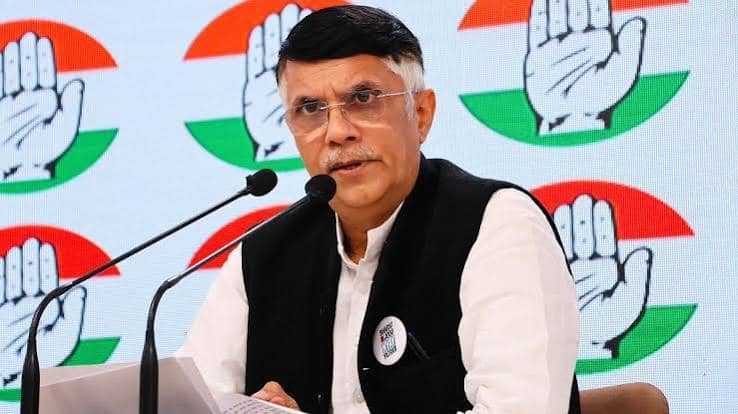

Congress Leaders Denounce BJP's 'Dimaagi Naxals' Post
Congress leaders Pawan Khera and Saurav Das have publicly criticized the Bharatiya Janata Party (BJP) over a social media video that has drawn widespread attention and condemnation. The controversy centers on a post shared by the BJP’s Karnataka state unit, which featured a clip explicitly labeled with the phrase "Dimaagi Naxals." This term, which translates to "mental Naxals," has been swiftly described by opposition figures as deeply derogatory and inflammatory, sparking a significant political outcry.
Pawan Khera, a prominent Congress figure, utilized the social media platform X, formerly known as Twitter, to voice his strong disapproval of the content. In his statements, Khera leveled a serious accusation against the BJP, alleging that the party was actively inciting violence against the nation’s youth through this specific post. This accusation underscores a growing tension between the ruling party and opposition leaders concerning the appropriate tone and content of political discourse, particularly on widely accessible digital platforms.
Saurav Das also joined the condemnation, aligning with Khera in criticizing the BJP for sharing material that, according to critics, promotes hostility and division. The joint criticism from these two prominent Congress figures highlights the party’s unified stance against what they perceive as a deliberate attempt to demonize a segment of the population, specifically targeting younger demographics and those with differing intellectual or political viewpoints.
The Controversial Label and Its Perceived Intent
The core of the dispute lies in the video distributed by the BJP’s Karnataka team, primarily due to its provocative label: "Dimaagi Naxals." While the precise visual or auditory content of the video has not been fully detailed in initial reports, the phrase itself has become the central focal point of the political debate. Opposition leaders argue that the use of such terminology is not merely a political jab but a calculated strategy designed to stigmatize individuals based on their political views or intellectual stance, effectively labeling them as internal threats.
The term "Naxal" historically refers to the Naxalite-Maoist insurgency in India, a movement associated with armed rebellion and extremist ideologies. By appending "Dimaagi" (mental) to it, critics contend that the BJP is attempting to extend this pejorative label to individuals who may hold dissenting opinions or engage in intellectual critique, thereby associating them with anti-national or extremist elements without factual basis. This linguistic tactic, according to the opposition, serves to delegitimize and marginalize voices that challenge the ruling party's narrative.
Khera’s response specifically targeted the potential impact of such messaging on younger demographics. By alleging that the BJP was inciting violence against the youth, Khera suggested that the video served as a dangerous catalyst for aggressive behavior among young supporters of the BJP, potentially encouraging them to act against those branded as "Dimaagi Naxals." This claim positions the BJP’s digital strategy as not merely political maneuvering but as potentially dangerous to social cohesion and harmony, particularly among impressionable younger citizens.
Allegations of Incitement and Undermining Democratic Discourse
The criticism from Das and Khera reflects a broader concern within the opposition about the normalization of polarizing language in political campaigns across India. They argue that such posts cross the line from legitimate political critique into the realm of hate speech, thereby undermining the fundamental principles of democratic discourse. The use of terms like "Dimaagi Naxals" is seen as an attempt to create an 'other' within society, fostering an environment of suspicion and animosity towards those who do not conform to a particular political ideology.
The incident has, predictably, sparked debate among political analysts and observers regarding the ethical responsibilities of political parties on social media platforms. In the immediate aftermath of the controversy, the BJP has not issued a formal retraction or provided a detailed explanation for the video and its label. This lack of an immediate response from the ruling party’s Karnataka unit or the central leadership indicates a significant rift in how the two major political entities perceive acceptable campaign tactics and the boundaries of political rhetoric in the digital age.
The Gravity of Khera's Accusation
Khera’s explicit use of the term "inciting violence" is a serious allegation that carries substantial legal and moral weight. In the Indian legal framework, incitement to violence is a grave offense, and such a claim suggests that the BJP’s Karnataka unit may be held liable for encouraging harmful actions against young people or any group identified by the controversial label. This allegation elevates the dispute beyond mere political mudslinging, placing it into a domain where legal scrutiny and public accountability become paramount.
The opposition leaders are likely to continue pressing this issue, potentially calling for formal regulatory action against the BJP’s social media activities or demanding public apologies from the party for what they view as a dangerous and divisive post. As the story continues to develop, attention remains fixed on whether the BJP will choose to address the criticism directly, defend its stance, or maintain its silence. This incident serves as a compelling case study in the evolving nature of political communication in India, where digital platforms play an increasingly central and often contentious role in shaping public opinion, mobilizing support, and, as critics argue, potentially polarizing the electorate.