


A Political Opening Amidst Diplomatic Silence
The recent visit of Pakistan’s Federal Minister for Climate Change, Musadik Masood Malik, to New Delhi has ignited a complex diplomatic dynamic, characterized by a stark contrast between high-level political engagement and evasive responses on critical security issues. The trip marks a significant milestone in bilateral relations, representing the first visit to India by a Pakistani minister since Operation Sindoor and the first instance in three years that a Pakistani minister has attended an event hosted within Indian territory. This historic attendance at the SCO 'Civilisational Dialogue' forum has prompted immediate reactions from political observers and lawmakers on both sides of the border, highlighting the fragile nature of current Indo-Pak relations.
At the heart of the controversy is Malik’s handling of questions regarding cross-border terrorism. Despite the high-profile nature of the event, the Pakistani minister sidestepped direct inquiries about India’s concerns over terrorism during interactions with reporters at the SCO Civilisational Dialogue Forum in New Delhi. When pressed on the issue, Malik told reporters that he would have "a lot of conversations" regarding the matter after delivering his statement on Saturday. This deferral has drawn sharp criticism from Indian political figures who argue that such dialogue cannot proceed without addressing foundational security grievances.
The PDP’s Call for Direct Engagement
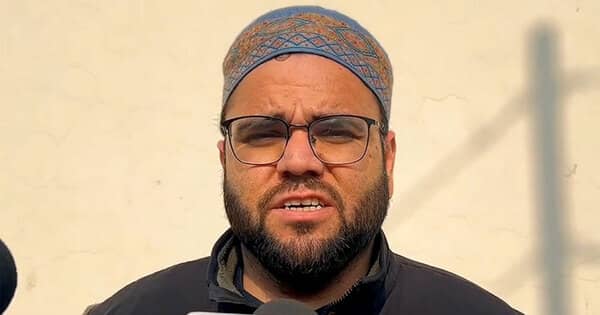
Amidst the diplomatic maneuvering, Aga Syed Muntazir Mehdi, a Member of the Legislative Assembly (MLA) from the Peoples Democratic Party (PDP), has emerged as a vocal advocate for resuming bilateral talks. Mehdi welcomed Malik's visit to India, framing it as a necessary step toward normalizing relations between New Delhi and Islamabad. He pitched strongly for the resumption of dialogue, arguing that both nations share a common history and mutual concerns that make continued non-engagement unsustainable.
Mehdi asserted that the two countries cannot afford to remain in a state of non-engagement and must instead work to build relations through direct communication. He emphasized that the concerns held by Delhi and Islamabad can only be resolved by sitting down and talking, rather than through mutual hostility or silence. According to Mehdi, dialogue must resume because the alternative is a perpetuation of tensions that neither nation can sustainably manage. His comments reflect a broader sentiment among certain political factions that civilizational ties should serve as a bridge for resolving political disputes.
Geopolitical Context and Forum Themes
The SCO forum, hosted by India at the historic Purana Qila in New Delhi from November 20 to 22, serves as the backdrop for these diplomatic exchanges. Prime Minister Narendra Modi is scheduled to inaugurate the event, which brings together representatives from China, Pakistan, Kazakhstan, Iran, Tajikistan, and Uzbekistan. The forum covers a wide array of themes, including civilisational expressions, art, architecture, language, and literature, aiming to foster a deeper understanding of shared cultural heritage among participating nations.
Malik welcomed the forum as a chance for regional dialogue amid shifting geopolitics, calling it a "very welcome sign." Regarding civilizational linkages, he stated that dialogue is about diversity and noted that archaeological excavations show dialogue taking place between India, Pakistan, Russia, China, and Central Asian states. He expressed hope that relations across the subcontinent would improve and called for countries to take a broader view of shared political and social challenges. However, these cultural overtures stand in tension with India’s firm stance that dialogue and terrorism cannot go hand in hand in its bilateral engagement with Pakistan.
Implications for Bilateral Relations
The juxtaposition of Malik’s civilizational rhetoric with his avoidance of security questions underscores the delicate balance India seeks to maintain. While the Indian government has utilized this platform to highlight its role as a host for regional dialogue, it has simultaneously maintained that any improvement in relations must be predicated on addressing terrorism concerns. The PDP MLA’s call for talks reflects a desire to break the cycle of silence, yet the lack of concrete commitments from the Pakistani minister leaves the path forward uncertain.
As the forum continues, the focus remains on whether the "civilisational dialogue" can translate into tangible diplomatic progress. With representatives from multiple nations participating, the event offers a rare opportunity for multilateral engagement, but the bilateral relationship between India and Pakistan remains fraught with unresolved issues. The coming days will likely see increased scrutiny on how effectively the themes of shared history and culture can be leveraged to address the deep-seated political and security challenges that continue to define Indo-Pak relations.