

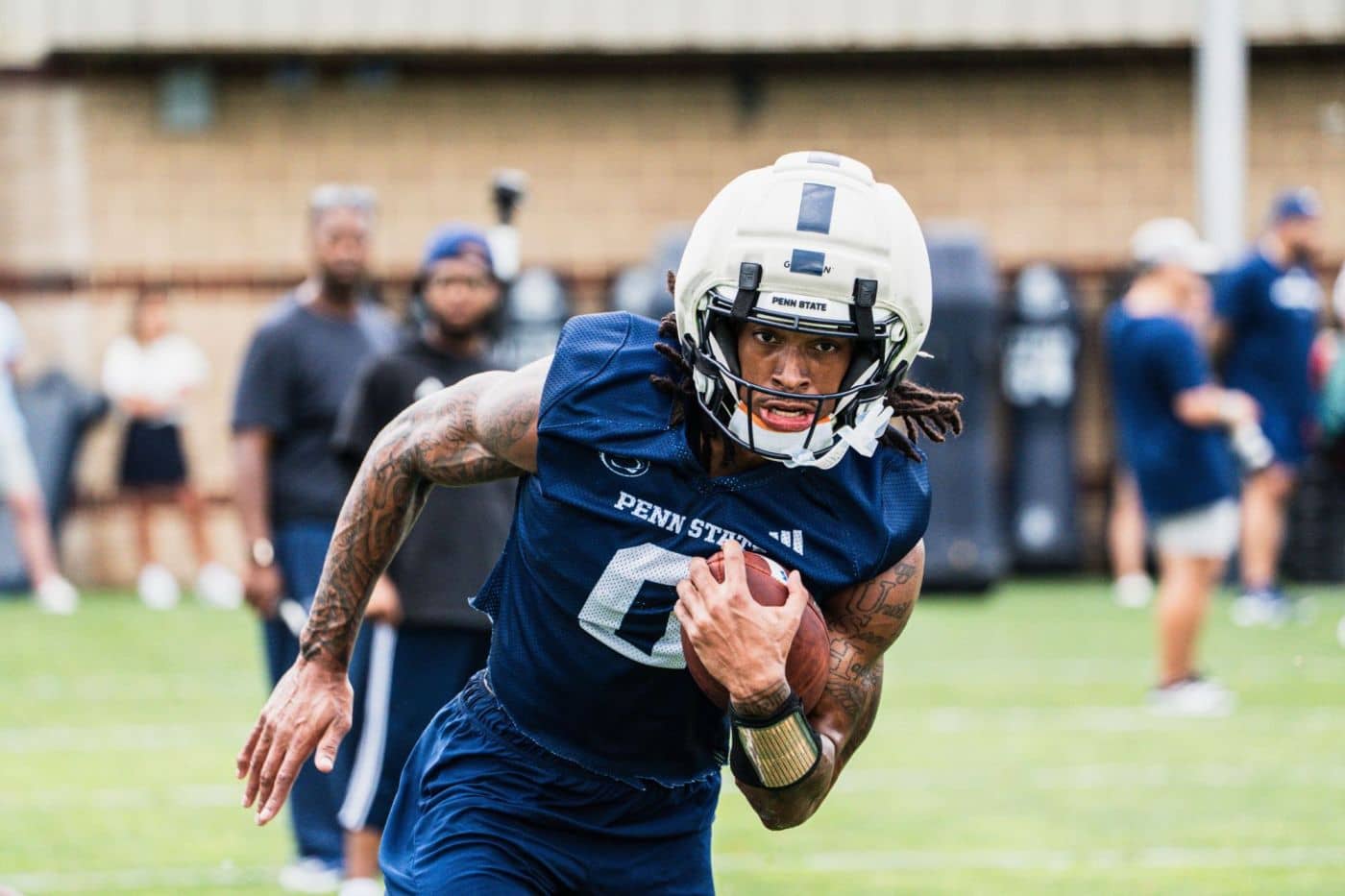

Massive Turnover Reshapes Receiver Corps
Penn State’s wide receiver unit is navigating a period of substantial structural change as the team prepares for the upcoming college football season. According to reports from the Reading Eagle and the Republican Herald, the group has entered what is described as "prove-it mode" following massive turnover within the roster.
The departure of established players has created a vacancy in the receiving corps that requires immediate filling. The coaching staff and team management have indicated that the remaining players must demonstrate their capabilities during the preseason to secure their positions on the depth chart. This environment places a heightened emphasis on performance during practice sessions and early-season games, as there is little margin for error in establishing roles.
The scale of the roster changes necessitates a rapid integration of new talent. The team’s offensive strategy will likely depend heavily on the immediate contributions of the wide receivers to maintain efficiency in the passing game. Coaches have not specified exact statistical targets for the group but have emphasized the need for reliability and adaptability among the players stepping into expanded roles.
Iowa State Transfers Lead Young Roster
Central to this reshaped unit are two key additions from the transfer portal: Chase Sowell and Brett Eskildsen, both arriving from Iowa State. These transfers are expected to play pivotal roles in stabilizing the receiver group during this transition period.
Chase Sowell’s Arrival
Chase Sowell joins Penn State as a significant acquisition for the wide receiver room. His experience at Iowa State provides a baseline of collegiate-level performance that the coaching staff can utilize as they evaluate the unit's overall depth. Sowell’s presence adds veteran leadership to a group that is otherwise characterized by its youth.
Brett Eskildsen’s Contribution
Alongside Sowell, Brett Eskildsen has transferred from Iowa State to Penn State. The addition of both players from the same program suggests a coordinated effort to bring in specific skill sets or strategic knowledge that aligns with Penn State’s offensive philosophy. Their combined experience is viewed as crucial for guiding the younger members of the team through the complexities of the upcoming season.
Youth and Experience Converge
The wide receiver group at Penn State is described as young, a characteristic that influences both its potential and its challenges. The integration of Sowell and Eskildsen serves to balance this youth with experienced perspectives. However, the overall composition of the unit remains heavily skewed toward newer players who are still developing their collegiate careers.
Implications for Team Dynamics
The dynamic between the transfers and the younger players will be a focal point of preseason training. The "prove-it mode" designation implies that every player, regardless of their transfer status or experience level, must compete fiercely for playing time. This competitive atmosphere is designed to elevate the overall performance level of the group through direct comparison and evaluation.
Preseason Expectations
As the season approaches, the focus remains on execution and consistency. The wide receivers must demonstrate that they can execute complex route trees and make reliable catches under pressure. The success of the passing offense will be closely tied to how quickly this young group, led by Sowell and Eskildsen, can establish chemistry and trust with the quarterback.
Roster Stability in Question
The term "massive turnover" highlights the extent of the changes faced by the program. Previous iterations of the wide receiver corps have likely established certain standards or expectations that now need to be met by a different set of individuals. The pressure is on the current group to replicate or exceed the production of their predecessors without the benefit of established continuity.
The coaching staff has not publicly detailed specific metrics for success but has consistently pointed to the need for the players to earn their spots through performance. This approach places the burden of proof squarely on the athletes, requiring them to translate practice performances into game-day reliability.
As Penn State moves forward, the wide receiver position will be watched closely by fans and analysts alike. The ability of Sowell, Eskildsen, and the younger players to thrive in this high-pressure environment will be a key indicator of the team’s offensive potential for the 2026 season.