


Confirmation Hearing Establishes New Norms for Controversial Appointees
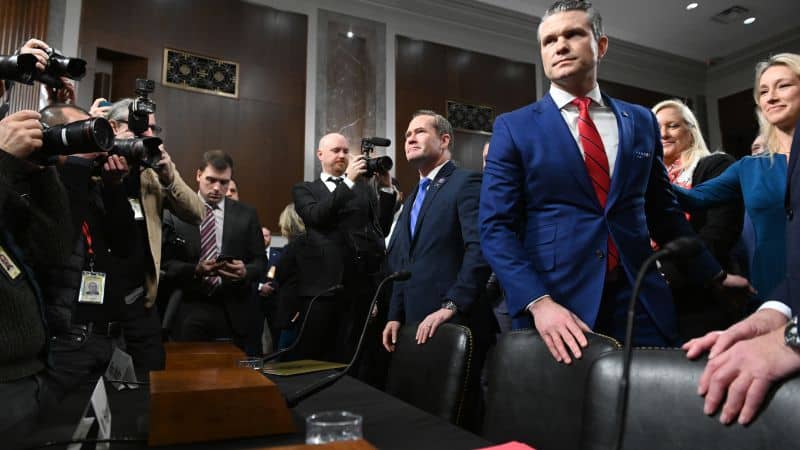
Pete Hegseth, the former Fox News anchor nominated by President-elect Donald Trump to serve as Secretary of Defense, appeared before Senate committee members on Tuesday in what has been characterized as one of the most contentious Cabinet confirmation hearings in recent administrative history. The proceedings have drawn attention not only for the substance of Hegseth’s testimony but also for the strategic posture he adopted during his interactions with Democratic senators.
According to reports, Hegseth’s performance during the hearing provided a model for how other controversial nominees from the incoming administration might conduct themselves. This approach is expected to influence the testimonies of subsequent picks, including Pam Bondi, who is designated as the backup choice for attorney general and was scheduled to appear before the committee on Wednesday.
The hearing highlighted a divergence between conventional standards of qualification and the political dynamics surrounding Hegseth’s nomination. While he could be considered unsuited for the role by traditional metrics, his alignment with Trump’s agenda has positioned him as a strong candidate in the eyes of the president-elect. By the conclusion of the Tuesday proceedings, Senator Joni Ernst, a Republican from Iowa who had expressed early reservations regarding Hegseth’s suitability, announced her support for his confirmation. Her endorsement marked a significant development in the legislative process, representing a victory for Trump’s selection.
Gaps in Geopolitical Knowledge and Questions on Executive Power
Despite the political maneuvering surrounding his nomination, Hegseth faced substantial questioning regarding his knowledge of international security issues. During the hearing, he demonstrated limited familiarity with the geopolitics of East Asia, a region described as one of the world’s most dangerous maritime hotspots. When pressed on specific regional dynamics, Hegseth appeared uncertain, offering little substantive analysis or policy direction.
Similarly, Hegseth struggled to provide answers regarding the conflict in Ukraine. He did not outline a clear strategy for how President Trump might work to end the war, leaving critics and observers with few details on potential diplomatic or military approaches. His testimony also contained minimal discussion of security threats in the Middle East, despite the region’s ongoing relevance to United States national security interests.
Beyond specific geopolitical knowledge, concerns were raised regarding Hegseth’s views on the scope of presidential authority. During the exchange, senators questioned whether he would utilize military force against domestic protesters if ordered by the president. Hegseth refused to state definitively whether he would order troops to shoot protesters under such circumstances. This refusal fueled fears among some observers that Trump might treat his executive power as unlimited, raising questions about the potential use of the military in domestic affairs.
Political Implications for the Incoming Administration
The confirmation process for Hegseth has underscored the challenges and strategies involved in appointing officials who may lack conventional experience in their designated roles. The hearing served as a test case for how the Trump administration might navigate Senate scrutiny while advancing its policy agenda.
Senator Ernst’s eventual support for Hegseth illustrates the shifting dynamics within the Republican party regarding these appointments. Her initial hesitation, followed by her public backing, suggests that political alignment may outweigh traditional qualifications in this specific nomination.
The blueprint established by Hegseth’s testimony is expected to influence future confirmation hearings. As other nominees prepare for their appearances, the tactics employed by Hegseth—particularly his handling of intense questioning and his refusal to provide certain assurances on executive power—may be replicated or adapted by subsequent appointees.
As the confirmation process continues, the focus remains on how these appointments will impact the Department of Defense and broader national security policies. The lack of detailed policy proposals regarding East Asia, Ukraine, and the Middle East leaves many aspects of Hegseth’s potential tenure undefined. Meanwhile, the questions surrounding his willingness to deploy troops domestically remain a point of contention.
The outcome of Hegseth’s nomination will depend on further legislative actions and the ability of supporters to overcome the reservations expressed during the hearing. The proceedings have already set a tone for the incoming administration’s approach to key security positions, emphasizing political loyalty and strategic confrontation over traditional bureaucratic expertise.