

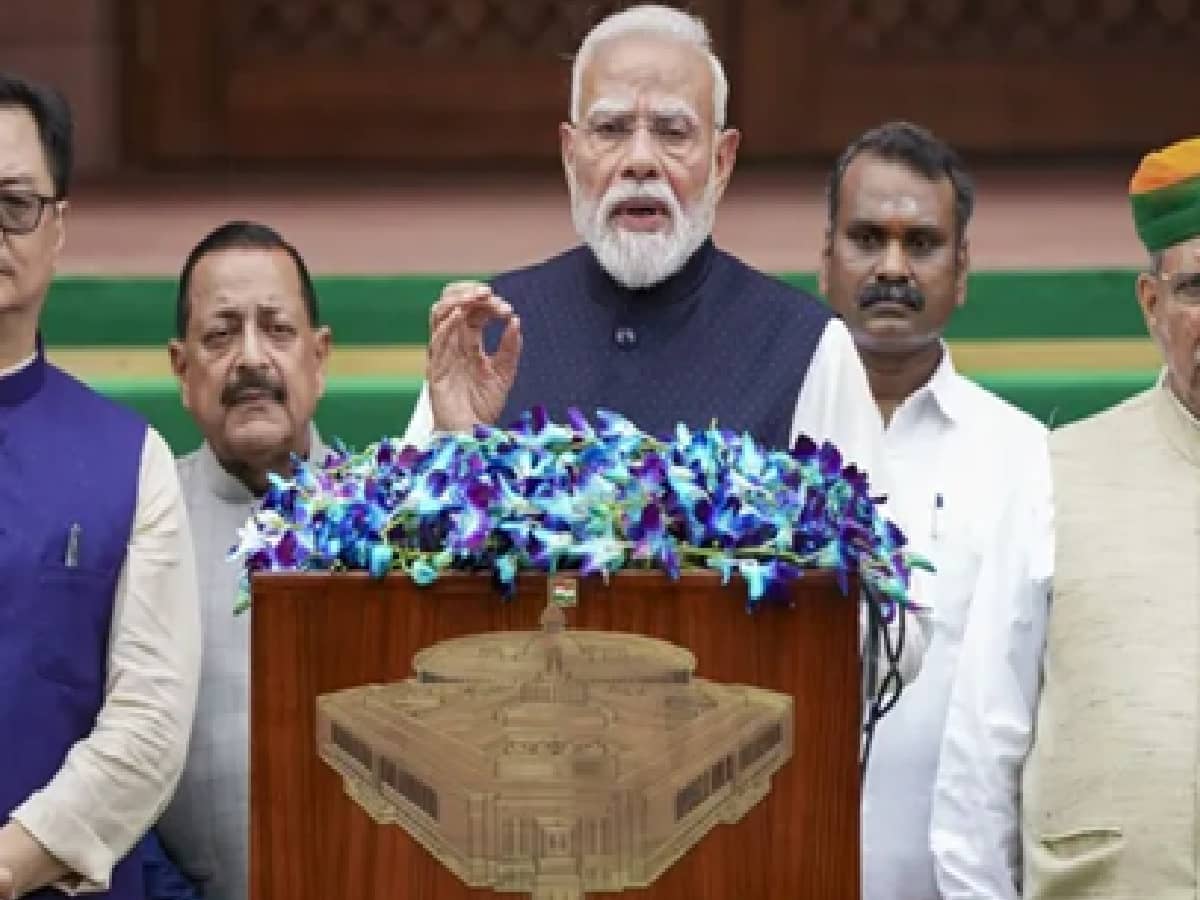

The Monsoon Session of Parliament continues to witness fierce political turbulence for the second consecutive day over the raging NEET paper leak controversy and subsequent student protests in the national capital.
Prime Minister Narendra Modi Condemns Incident as Grave Sin
Amid the escalating nationwide uproar, Prime Minister Narendra Modi has broken his silence on the crisis. He strongly denounced the irregularities associated with the leak of examination materials.
In a direct address regarding the severity of the breach of security protocols surrounding the National Eligibility cum Entrance Test, PM Modi characterized the event as a "grave sin." This statement marks a significant escalation in how leadership is framing the incident within the current political discourse. The Prime Minister's office has not issued further elaboration on specific administrative failures beyond this characterization.
Opposition Leaders Ramp Up Pressure for Resignations
As opposition leaders ramp up pressure with demands for high-profile resignations, the atmosphere within legislative corridors remains charged. The controversy centers specifically on the unauthorized release of NEET examination papers prior to their scheduled administration.
The opposition bloc has articulated clear demands targeting individuals they believe are responsible for the security lapse. These calls extend beyond mere criticism; they constitute formal requests for accountability measures that could alter the composition of certain government bodies or commissions overseeing medical education admissions in India.
Timeline of Political Disruption
The Monsoon Session has seen significant political disruption for two consecutive days due to the NEET controversy and student protests. This duration indicates a sustained period of unrest rather than isolated incidents.
Student protests in the national capital have intensified alongside parliamentary proceedings. These demonstrations are directly linked to concerns regarding exam integrity and fairness, which serve as the primary catalysts for the broader political confrontation unfolding within Parliament House New Delhi.
Government Preparedness for Parliamentary Confrontation
The government is prepared for a confrontation with the opposition in Parliament over the issue. Officials have indicated that they will address questions raised during floor debates and question hour sessions scheduled as part of the ongoing legislative agenda.
This preparation suggests an expectation of heated exchanges between ruling party members and their counterparts from various opposition parties. The government has mobilized resources to manage potential disruptions while attempting to defend its position on how examination security was compromised or why it remained vulnerable despite existing protocols.
National Impact and Public Sentiment
The controversy is described as an escalating nationwide uproar. This characterization reflects the breadth of public concern extending beyond immediate stakeholders in medical education admissions to include students, parents, educators, and general citizens across multiple states including Punjab, Rajasthan, Jharkhand, Bihar, Haryana, Chhattisgarh, Uttar Pradesh, Delhi, Jaipur, Mandsaur, and other locations mentioned in related national news cycles.
While the specific mechanisms of how papers were leaked have not been fully detailed by official sources yet, the incident has triggered a chain reaction involving student activism and political maneuvering. The intersection of these elements creates a complex environment for policymakers attempting to restore public confidence in examination systems administered under their supervision.
Broader Context Within National News Cycle
The NEET paper leak controversy does not exist in isolation within the current news landscape. It occurs alongside other significant developments affecting infrastructure and regional administration, such as toll tax hikes on Delhi-Jaipur National Highway where NHAI raises rates by up to ₹30 at key locations.
Related Administrative Developments
In Rajasthan's Suraj Saini region, an individual named Overcomes Gridlock Poverty To Crack NEET-UG With Staggering 99.16 Percentile has been highlighted in reports connecting personal achievement with broader systemic issues.
Additionally, the Rajasthan High Court recently cancelled illegal transfer of 184 Gadia Lohar plots and ordered a high-level investigation into these matters. These judicial actions demonstrate how administrative disputes often intersect with larger governance challenges facing various state governments including those in Uttar Pradesh, Punjab, and Jharkhand.
NHAI also launched non-stop MLFF toll system on NH-48 where invalid FASTags will now face double fines and vehicle blacklisting. These parallel developments underscore the multifaceted nature of current governance challenges involving transportation infrastructure alongside educational security concerns.
Student Achievements Amidst Controversy
Rajasthan's Suraj Saini overcomes gridlock poverty to crack NEET-UG with staggering 99.16 percentile is another story emerging from this period of intense scrutiny around the examination system.
Historical and Cultural Context
In related cultural developments, old houses in Rajasthan and Gujarat built raised verandas outside main doors have been unveiled as part of heritage preservation efforts that continue alongside contemporary political debates.
The juxtaposition of these stories highlights how national attention shifts rapidly between different sectors including education security issues versus infrastructure projects or historical conservation initiatives. This rapid shifting focus characterizes the dynamic nature of modern Indian media coverage where multiple narratives compete for public interest simultaneously.
Legal and Judicial Responses
The Rajasthan High Court cancelling illegal transfer of 184 Gadia Lohar plots represents one instance among several legal interventions occurring during this turbulent period. Such judicial actions suggest that courts are actively reviewing administrative decisions made under various state governments.
Investigative Measures
The order for a high-level investigation into the illegal transfer of land indicates that authorities recognize potential systemic issues requiring comprehensive review beyond immediate crisis management related to paper leaks or examination security breaches.