


Outreach Raises Expectations Among Shipbuilding Firms
SOUTH KOREA — US President Donald Trump's repeated public mentions of South Korean shipbuilders in the context of its Navy buildup have generated specific expectations within the industry. This outreach has led to hopes that companies like Hanwha Ocean and HD Hyundai Heavy Industries could play a larger role in modernizing naval fleets.
The momentum behind this potential shift is described as real by observers tracking the situation. Since South Korea and the US launched their shipbuilding partnership, there have been discussions regarding how these firms might contribute to broader defense needs. The specific interest from President Trump centers on leveraging existing manufacturing capabilities in Seoul for American military requirements.
Industry leaders note that while the political signal is strong, the operational reality involves complex factors beyond simple diplomatic requests. Companies such as Hanwha Ocean have been positioned as potential partners capable of handling significant portions of a modernization project if legal barriers were removed. Similarly, HD Hyundai Heavy Industries has expressed readiness to engage with US defense contractors under similar frameworks.
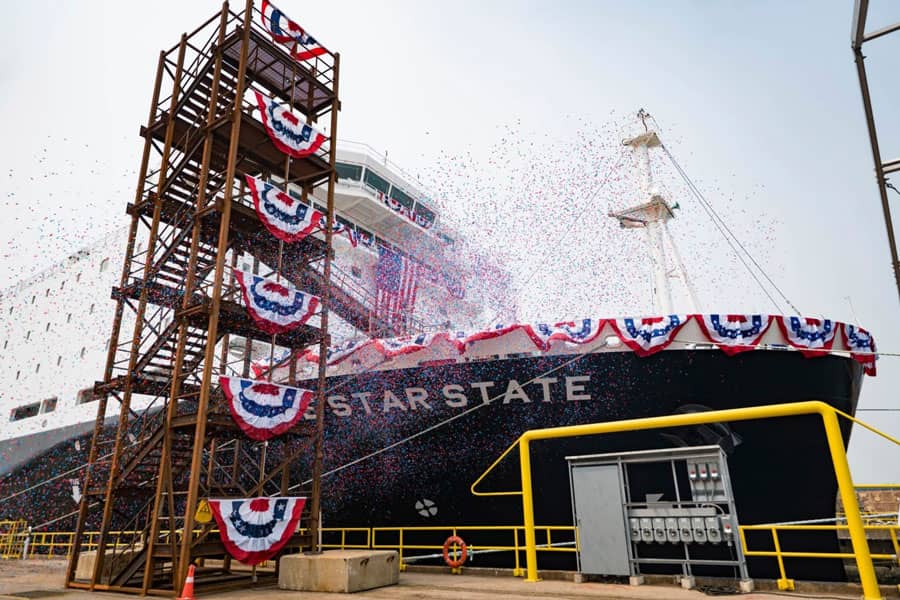
The fourth National Security Multi-Mission Vessel serves as an example of the type of assets currently being discussed in these high-level diplomatic exchanges. This vessel was pictured during its naming ceremony at Hanwha Philly Shipyard in Philadelphia on Friday, according to photographic records provided by HANWHA GROUP/THE KOREA HERALD.
Such ceremonies highlight the existing presence and capability of South Korean firms within US territories. The facility in Philadelphia demonstrates that infrastructure exists for joint production efforts. However, whether this specific asset will be utilized under a new directive remains subject to legislative constraints currently in place.
Legal Frameworks Present Significant Obstacles
The primary barrier preventing immediate collaboration is the existence of existing US legislation governing naval procurement and shipbuilding. According to reports from Asia News Network published on July 23, 2026, these laws stand in direct opposition to any proposal that would allow South Korean yards to construct US warships.
Despite President Trump's expressed interest, the legal framework established by Congress remains unchanged. This legislation dictates where and how naval vessels can be built within the United States. Any deviation from current statutes requires new legislative action or executive waivers that have not yet been secured as of mid-2026.
The specific laws in question restrict foreign participation in sensitive defense manufacturing sectors. These restrictions are designed to protect national security interests and ensure supply chain transparency. While diplomatic rhetoric suggests a willingness to expand partnerships, the statutory language does not currently accommodate such arrangements with South Korean entities for warship construction.
Legal experts note that overcoming these hurdles would require substantial changes to federal law. The current statutes were enacted under different geopolitical conditions and reflect longstanding policies regarding defense industrial base management. Changing them involves navigating complex congressional processes that are independent of presidential preferences or executive orders.
Production Challenges Complicate Immediate Implementation
Beyond legal restrictions, practical production challenges further complicate the prospect of South Korean shipyards constructing US warships in the near term. Manufacturing naval vessels requires adherence to strict quality control standards and supply chain protocols that may differ between jurisdictions.
The integration of foreign manufacturing facilities into US defense logistics networks presents additional logistical hurdles. These include issues related to component sourcing, workforce training, and certification processes specific to American military specifications.
Even if legal barriers were addressed through new legislation or executive action, the timeline for resolving production challenges would likely extend beyond immediate operational needs. Shipbuilding is a multi-year process involving intricate design phases, material procurement, assembly periods, and testing protocols that cannot be accelerated without compromising safety standards.
Diplomatic Signaling Versus Operational Reality
The gap between diplomatic signaling and operational reality defines the current situation regarding US-South Korean naval cooperation. President Trump's statements represent a clear political preference for increased South Korean involvement in American defense projects.
However, this preference does not automatically translate into actionable policy without corresponding legislative support. The difference lies in understanding that executive branch initiatives must operate within statutory boundaries established by the legislature.
South Korean shipbuilders have responded positively to these signals of interest. Companies like Hanwha Ocean and HD Hyundai Heavy Industries view the potential for expanded roles as an opportunity worth pursuing despite current limitations.
Industry stakeholders acknowledge that while immediate construction contracts are unlikely, long-term strategic partnerships might evolve over time if political will aligns with legislative changes. The fourth National Security Multi-Mission Vessel project illustrates how existing collaborations can serve as a foundation for future cooperation once legal frameworks permit broader participation.
The photograph of the Lone Star State during its naming ceremony at Hanwha Philly Shipyard in Philadelphia underscores the tangible assets already available for joint ventures. Yet, transforming these capabilities into warship production requires navigating both domestic US laws and international trade agreements governing defense exports.