


Prime Minister Outlines Conditions for Continued Effective Governance
SINGAPORE — The Prime Minister of Singapore has stated that the ability of the ruling People's Action Party (PAP) to continue governing effectively is contingent upon a specific condition regarding its membership. According to reports, Prime Minister Lawrence Wong asserted that the party must be renewed with individuals who possess a willingness to serve.
The core message delivered by the leadership focuses on the necessity of recruiting 'good people' into the fold. The statement suggests that without this infusion of dedicated personnel, the capacity for effective governance could diminish. This perspective was articulated during an address concerning the party's future direction and its ability to maintain high standards of public administration.
The Prime Minister's comments reflect a broader concern within political circles regarding the sustainability of long-term service in government roles. The emphasis on 'willingness to serve' implies that technical competence alone may not be sufficient; there must also be an intrinsic commitment to the duties associated with holding office or working for the party machinery.
This stance aligns with historical precedents where political parties have sought to balance experienced leadership with fresh energy. The specific phrasing used by Wong indicates a shift in focus toward character and dedication as primary metrics for selecting new members, rather than solely relying on professional credentials from outside sectors.
Launch of New Initiatives Designed as Leadership Launchpads
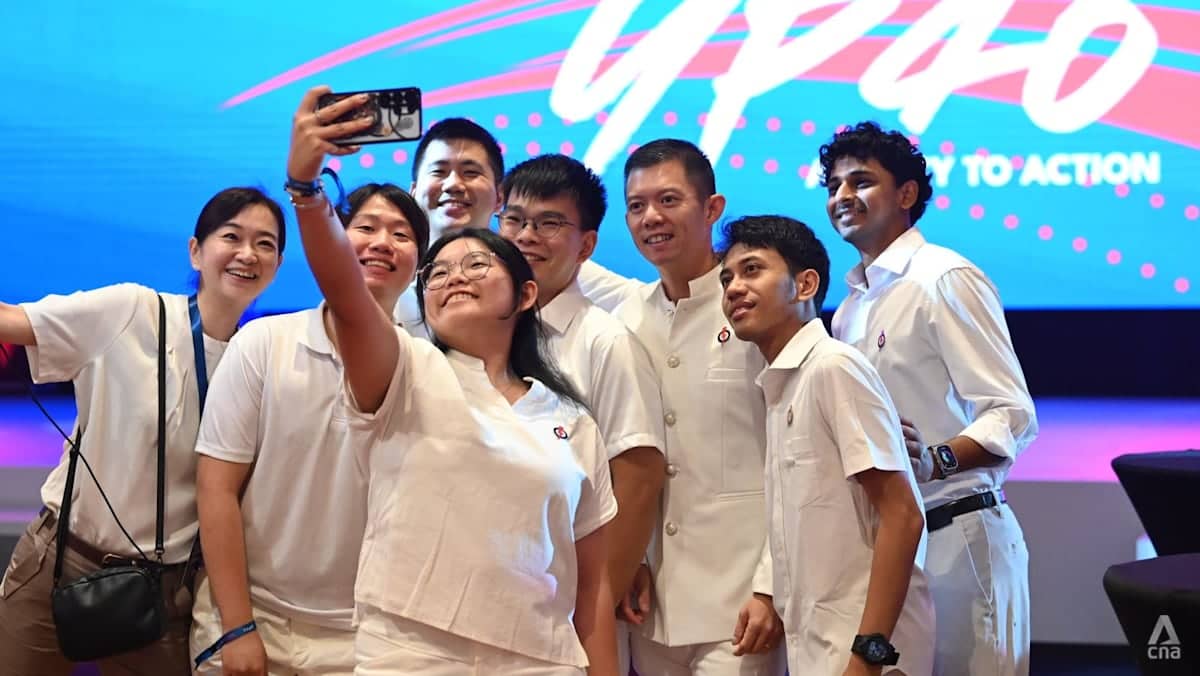
To operationalize the goal of renewing the party with dedicated young leaders, the PAP's youth wing has introduced two distinct programs. These initiatives are explicitly described in source materials as serving a function that can be termed a 'launchpad' for emerging talent within the organization.
The first program launched is titled the Young PAP Academy. This academy represents an institutionalized effort to train and prepare younger members of society for roles they might assume later, or potentially immediately, within the party structure. The existence of this academy suggests a formal curriculum designed to instill specific values and practical skills relevant to political service.
Simultaneously with the launch of the Academy, another initiative was introduced: the YP 40 Under 40 Action Fellowship. This fellowship targets individuals under the age of forty who demonstrate potential for leadership within the party framework. The designation 'Action' in its title implies a focus on practical engagement and active participation rather than passive observation.
Both programs were announced as part of a coordinated strategy to address the need for new blood while maintaining continuity with established principles. By creating these specific vehicles, the youth wing aims to create a pipeline through which members can transition from general party involvement into more significant leadership responsibilities.
Distinguishing Features and Strategic Purpose
The distinction between the two initiatives suggests different approaches or stages of development for prospective leaders. The Young PAP Academy likely serves as an educational foundation, whereas the YP 40 Under 40 Action Fellowship may focus on active deployment in various community service roles.
These programs are not merely symbolic; they represent a structural change intended to support the Prime Minister's call for renewal. By labeling them as 'launchpads,' organizers indicate that these platforms will actively propel participants toward future leadership positions within the PAP hierarchy.
The Broader Implications of Membership Renewal
Prime Minister Wong's remarks regarding party renewal carry significant weight in the context of Singaporean politics. The statement implies a direct correlation between the quality and dedication of party members and the overall effectiveness of government performance. This linkage suggests that governance outcomes are viewed as dependent on the internal composition of the ruling coalition.
The call for 'good people' willing to serve introduces a qualitative standard for membership recruitment. It moves beyond quantitative metrics such as voter numbers or donation amounts, focusing instead on personal attributes and commitment levels. This approach could influence how future candidates present themselves during selection processes within the party machinery.
There is an underlying assumption that current governance challenges can be mitigated through personnel changes rather than policy overhauls alone. The Prime Minister's focus suggests a belief in the transformative power of dedicated individuals to improve administrative efficiency and public satisfaction levels without necessarily altering fundamental political structures or economic models.
The initiatives launched by the youth wing provide concrete mechanisms for implementing this vision. They offer structured pathways that allow aspiring leaders to demonstrate their 'willingness to serve' before being considered for higher responsibilities. This process ensures a vetting mechanism based on demonstrated action rather than theoretical capability alone.
Integration of Youth Programs into Party Strategy
The simultaneous launch of the Young PAP Academy and the YP 40 Under 40 Action Fellowship indicates a synchronized effort to address multiple facets of party renewal. The integration of these programs suggests that education and active fellowship are seen as complementary rather than competing strategies for developing future leaders.
By establishing these specific channels, the party leadership aims to create an environment where young members can grow organically within the organization's framework. This organic growth model is likely intended to preserve traditional values while adapting methods of engagement to suit contemporary demographics and expectations among younger generations in Singapore society.