


Protesters Target One Nation Fundraiser in Melbourne
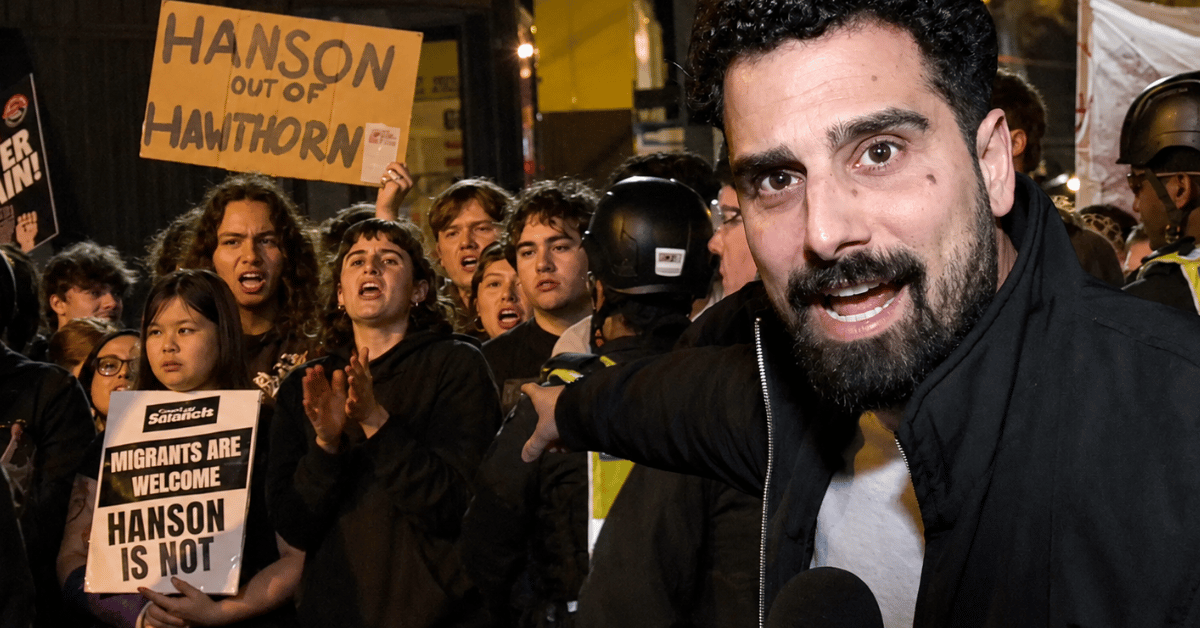
A One Nation meet-and-greet event in Melbourne on August 5, 2026, intended as a fundraiser following the launch of the party's Victorian state election campaign, was significantly disrupted by a group of masked activists. Described as "left-wing activists" wearing keffiyehs, the protesters gathered outside the venue, actively attempting to prevent the event from proceeding and intimidate attendees as they arrived.
Reports from Rebel News indicate that the demonstration featured protesters waving pro-Palestine flags while directing strong accusations of racism. These allegations were leveled specifically against One Nation leader Pauline Hanson, the One Nation party itself, and individuals entering the fundraising event. The atmosphere was characterized by the report as an aggressive effort by "self-righteous left-wing anti-Australian activists" to silence and intimidate those holding differing political views.
The disruption was framed as an attempt by a "mob" to shut down a legitimate political gathering. The activists reportedly claimed to be advocating for tolerance, yet their actions were perceived as an attempt to suppress conservative voices in Victoria. This incident aligns with a pattern of frequent disruptions reported at political gatherings across the state, highlighting ongoing tensions in the political landscape.
Diverse Attendees Confront Accusations of Racism
In stark contrast to the masked protesters, the crowd gathering to attend the One Nation event was noted for its significant diversity. The article specifically highlighted the presence of a wide range of individuals, including young voters, families, local business owners, and migrants who have chosen Australia as their home. This demographic composition was presented as a direct counterpoint to the protesters' claims, suggesting that the attendees were, in fact, more representative of Australia's multicultural fabric than the activists themselves.
Migrant Voices Challenge Protesters' Claims
Amidst the commotion, Rebel News reporter Avi Yemini conducted interviews with several attendees. One notable interaction was with an Iraqi Assyrian Australian woman, who was waiting near the front of the queue to enter the venue. She openly criticized the protesters' actions, particularly their use of keffiyehs while simultaneously branding others as racist. Her statement underscored what she perceived as a profound hypocrisy in the activists' accusations, coming from a background often associated with diverse experiences and perspectives within Australian society.
The woman's comments resonated with the broader sentiment among attendees, many of whom felt unjustly targeted by the protesters' blanket accusations. Her perspective, as a migrant who had chosen Australia, added a powerful voice to the narrative, challenging the notion that support for One Nation automatically equated to racism, especially when such accusations came from a group claiming moral superiority.
One Nation's Strained Relationship with Mainstream Media
The Melbourne fundraiser and the ensuing protest unfolded against a backdrop of escalating tensions between One Nation and several established media outlets. Pauline Hanson has been vocal in her criticism of what she terms "establishment media," leading to significant friction and policy decisions regarding press access.
Hanson's Media Ban and Public Statements
A key development in this ongoing conflict was Hanson's decision to ban specific news organizations from covering One Nation events. The Australian Broadcasting Corporation (ABC), The Guardian, and The Age were explicitly denied access, a move that sparked considerable debate within media circles. Hanson publicly justified these bans by suggesting that Australia no longer required the services of the ABC, given the availability of alternative news sources like Rebel News.
This statement, directly questioning the relevance and necessity of the national broadcaster, was met with considerable displeasure from the affected media outlets and their journalists. The sentiment of this conflict was further amplified by a tweet from Avi Yemini on August 3, 2026, just days before the Melbourne event. Yemini's tweet highlighted a specific incident where Hanson was reported to have effectively "destroyed" a journalist who expressed fury over the ABC ban, underscoring the confrontational nature of One Nation's relationship with parts of the mainstream press.
The ongoing dispute over media access and Hanson's public denouncements of established news organizations reflect a broader trend of political parties seeking to control their narrative and engage directly with their chosen media partners, often bypassing traditional journalistic gatekeepers. This strategy, while allowing for direct communication, also raises questions about media diversity and access to information for the wider public.