

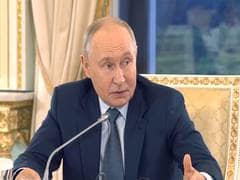

Putin Highlights Growing Indian Interest in Arctic Logistics
MOSCOW — Russian President Vladimir Putin announced on Wednesday that India is among the key countries demonstrating growing interest in cooperating with Russia on the Northern Sea Route (NSR), a critical Arctic shipping corridor. The remarks were made during a meeting with personnel of the Pacific Fleet aboard the missile cruiser Varyag, according to state media reports.
Putin stated that there is increasing engagement from partner nations regarding the logistics and utilization of the NSR. He specifically identified China and India as primary partners actively discussing these matters with Moscow. The President emphasized that Russia has consistently voiced its readiness to cooperate and leverage the advantages of the Northern Sea Route, provided such activities remain strictly within the bounds of existing international maritime law.
The announcement comes amid ongoing Western sanctions imposed on Moscow related to the conflict in Ukraine. Putin noted that despite these geopolitical pressures, Russia continues to seek economic and logistical partnerships in the Arctic region. He described the NSR as a route with significant potential, asserting that Moscow is open to engaging with nations willing to utilize its infrastructure.
Warnings Regarding External Actors and NATO Expansion
During the same address, Putin issued warnings regarding the security landscape of the Arctic. He stated that he sees growing "artificial tensions" in the region, which he attributed to the activities of external actors. Specifically, the President pointed to the expansion of the North Atlantic Treaty Organisation (NATO) as a contributing factor to these rising tensions.
Putin suggested that the geopolitical dynamics in the Arctic are being influenced by outside powers seeking to undermine Russian interests or stability in the area. By linking the NSR cooperation with warnings about NATO, the President framed Russia's outreach to countries like India and China as a strategic response to perceived external encroachment.
The remarks highlight the increasing militarization and geopolitical competition in the High North. While Moscow presents its stance as one of legal compliance and economic opportunity, it simultaneously portrays the region as a theater of conflict driven by Western alliances. Putin did not provide specific details on the nature of the cooperation being discussed with India or China, nor did he outline any immediate agreements or timelines for joint projects.
Legal Framework and Strategic Positioning
In his address, Putin reiterated that Russia's approach to the NSR is grounded in international law. He stressed that Moscow's readiness to cooperate is conditional upon adherence to established maritime regulations. This legal framing serves to counter potential criticisms from Western nations regarding Russia's control over the route, which passes through Russian territorial waters.
The President noted that Russia has always voiced its readiness to leverage the advantages of the Northern Sea Route. By highlighting this consistency, Putin aimed to present Russia as a stable and reliable partner for international shipping, despite the broader geopolitical isolation caused by the war in Ukraine.
The discussion aboard the Varyag underscores the strategic importance Moscow places on the Arctic. The presence of Pacific Fleet personnel at the meeting signals the military dimension of Russia's Arctic policy. Putin's comments suggest that the NSR is not merely an economic asset but a component of broader national security strategy, requiring vigilance against what he described as artificial tensions created by NATO expansion.
Geopolitical Implications for Regional Partners
The identification of India and China as key partners in this context reflects Moscow's efforts to diversify its international relationships beyond traditional Western alliances. By citing interest from New Delhi, Putin highlights the reach of Russia's Arctic diplomacy.
India has historically maintained a balanced foreign policy, engaging with both Western powers and Russia. The reported interest in the NSR could indicate New Delhi's desire to secure alternative shipping routes that bypass traditional chokepoints, potentially offering economic benefits in terms of distance and time for trade with Europe.
However, the context of Putin's speech links this commercial interest directly to a critique of Western geopolitical moves. The President's warning about artificial tensions serves as a broader indictment of NATO's presence in the Arctic, where member states such as the United States, Canada, and Norway have increased their military activities.
As Russia continues to face sanctions, its focus on the Arctic represents a strategic pivot toward regions with resource potential and emerging market partners. The President's remarks provide a window into how Moscow interprets its position in the global order: as a nation seeking cooperation under legal frameworks while simultaneously resisting what it perceives as hostile expansion by Western military alliances.