


Condemnation of Trilateral Defense Alignment
Pyongyang has issued a sharp rebuke of the growing defense coordination among the United States, Japan, and South Korea, characterizing the alliance as a direct threat to stability in East Asia. According to a report by the Korean Central News Agency (KCNA) on Saturday, North Korea’s Ministry of National Defence described the cooperation between the three nations as "military collusion" that undermines regional peace.
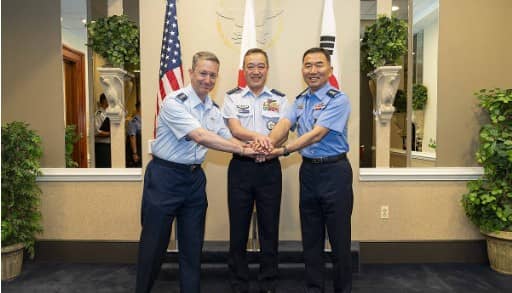
The condemnation followed the Trilateral Chiefs of Defence meeting held in Washington earlier in the week. A spokesman for the North Korean ministry stated that the gathering demonstrated an attempt by the participating nations to attain military superiority in the region, Xinhua news agency reported. The statement alleged that the three governments are seeking "hegemonic geopolitical interests" through intensified trilateral military cooperation.
North Korea identified this "military nexus" as the primary driver of instability. The ministry spokesman told KCNA that the collaboration is "the root cause of undermining peace and stability in the Korean Peninsula and the Asia-Pacific region." The agency reported that Pyongyang views the alignment not as a defensive measure, but as an aggressive effort to shift the balance of power.
Military Posture and Constitutional Mandates
In response to what it describes as an encroaching military alliance, North Korea outlined its stance on maintaining regional force parity. The ministry spokesman asserted that North Korea’s armed forces will never allow an "imbalance of force" in the region resulting from the US-Japan-South Korea partnership.
The statement emphasized that the country's military remains committed to its statutory obligations. The spokesman said the armed forces will "always remain faithful to the constitutional mission to neutralise the actual security challenges and potential threats and reliably defend the security of the country and the regional peace." This declaration serves as a formal warning that Pyongyang views any expansion of trilateral capabilities as a direct security challenge requiring a military response.
Denunciation of Rim of the Pacific Exercise
The criticism extended beyond diplomatic meetings to active military operations. On Friday, North Korea denounced an ongoing US-led multinational military exercise taking place in Hawaii. The state media outlet characterized the event as a "war rehearsal" designed to provoke regional tensions.
The exercise in question is the Rim of the Pacific Exercise (RIMPAC). An op-ed published in North Korean state media criticized the scale and intent of the drill, Yonhap news agency reported. The publication argued that RIMPAC is not a routine training event targeting a hypothetical adversary. Instead, it described the exercise as "a blatant war rehearsal spearheaded by the US and its followers to target regional states deemed primary obstacles to realising its Asia-Pacific strategy."
The criticism specifically highlighted South Korea’s involvement in the drill. This year, South Korea is leading the combined maritime component command of RIMPAC, marking the first time an Asian country has held this position. The North Korean commentary linked South Korea’s leadership role directly to the broader US-led strategy it opposes.
Warnings of Retaliatory Measures
Pyongyang warned that such military activities would have immediate consequences. The state media report stated that the "war rehearsal" in Hawaii would trigger a "chain of countermeasures" from countries in the region. While the specific nature of these countermeasures was not detailed in the KCNA report, the language suggests a coordinated regional response rather than an isolated action by North Korea.
The condemnation underscores the deepening security dilemma in Northeast Asia. As Washington, Tokyo, and Seoul deepen their defense ties to address shared threats, Pyongyang interprets these moves as offensive preparations. The North Korean government continues to frame its own military buildup and diplomatic rhetoric as necessary defenses against what it perceives as external aggression and hegemonic expansion.
The dispute highlights the diverging security perspectives in the region. For the United States and its allies, trilateral cooperation is presented as a stabilizing force against nuclear and missile threats. North Korea rejects this framing entirely, viewing the same cooperation as the primary source of regional instability. The upcoming days may see further diplomatic exchanges or military posturing as both sides assess the implications of the recent trilateral meetings and ongoing multinational exercises.