

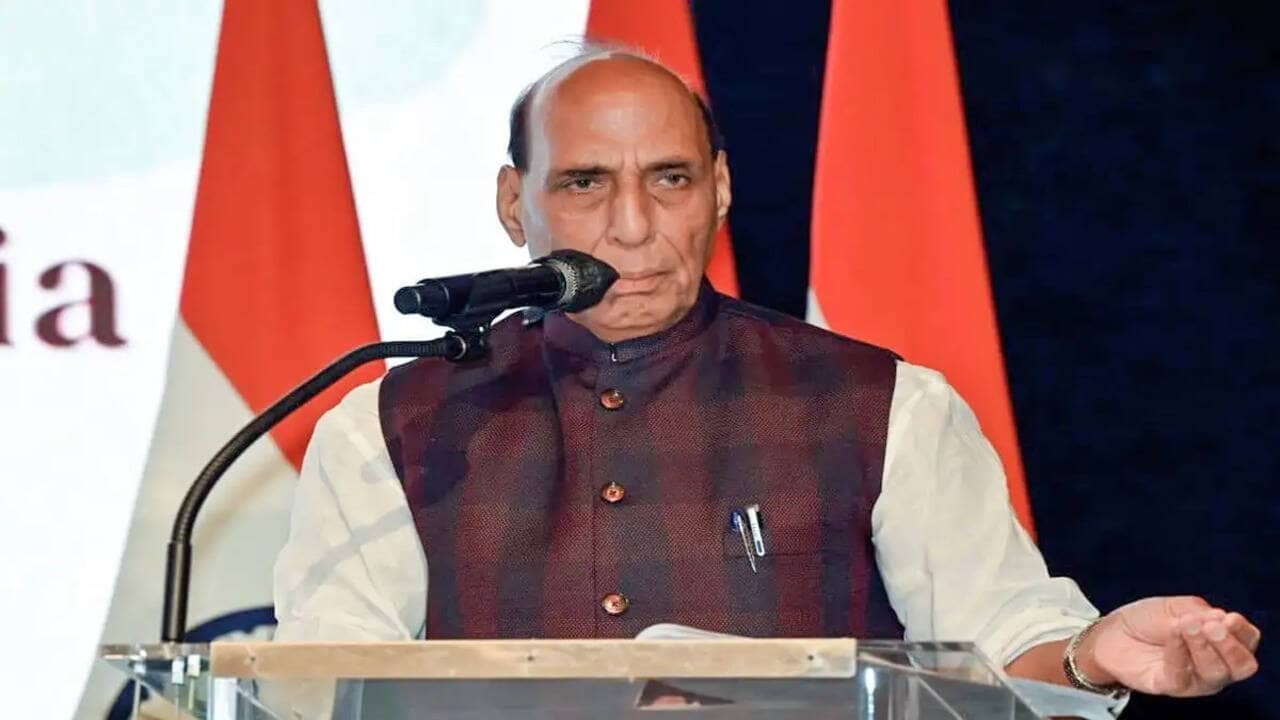

New Delhi – Defence Minister Rajnath Singh has lauded Prime Minister Narendra Modi's leadership, marking the completion of 12 years since he first assumed the nation's highest executive office. Singh's remarks underscore a period he described as profoundly transformative for India, emphasizing significant shifts in governance and national development that have reshaped the country's trajectory.
A Pivotal Decade of Leadership Commemorated
The occasion highlighted by Defence Minister Singh commemorates May 26, 2014, as a pivotal date in India's contemporary political history. It was on this day that Narendra Modi was sworn in as Prime Minister, initiating a tenure that Singh stated has been characterized by a resolute commitment to national progress, economic resurgence, and the comprehensive welfare of its citizens. Singh's commendation focused on the far-reaching and holistic nature of the changes brought about under Prime Prime Minister Modi's guidance since that inaugural moment.
He articulated that the past twelve years have witnessed a fundamental reorientation of governmental priorities and operational methodologies. This period, according to Singh, has seen a conscious effort to move away from conventional approaches, embracing innovative strategies aimed at accelerating development and ensuring equitable distribution of its benefits. The Defence Minister's statements positioned Modi's leadership as a catalyst for a new era, one defined by proactive governance and a clear vision for India's future, leading to what he termed a transformative impact across various critical sectors of the economy and society.
Transformative Governance and Development Initiatives
According to Defence Minister Singh, the transformative impact of Prime Minister Modi's leadership is profoundly evident in both the realm of governance and the accelerated trajectory of India's development. He highlighted that the administration has consistently worked towards streamlining governmental processes, making them more efficient, transparent, and accessible to the common citizen. This focus, Singh indicated, has aimed at dismantling bureaucratic hurdles and fostering a more responsive and accountable administrative system, thereby enhancing the ease of living and doing business in the country.
In terms of development, Singh pointed to a sustained and robust effort to accelerate economic growth while ensuring its benefits permeate through all strata of society. The initiatives undertaken during this period, as emphasized by Singh, have sought to modernize critical infrastructure, including roads, railways, and digital networks, which are vital for national progress. Furthermore, he noted efforts to boost industrial output, encourage domestic manufacturing, and foster an environment conducive to innovation, technological advancement, and entrepreneurial expansion. This dual focus on improved governance and targeted development has, in Singh's view, laid a strong foundation for India's sustained growth.
Commitment to Inclusive Growth and the Spirit of 'Antyodaya'
A central and recurring theme in Defence Minister Singh's appreciation of Prime Minister Modi's leadership was the unwavering commitment to inclusive growth. Singh stated that the government's policies have been meticulously crafted with the overarching objective of ensuring that the fruits of development are not confined to specific regions, urban centers, or privileged demographics, but rather encompass all sections of Indian society, particularly those historically underserved.
This commitment, Singh elaborated, is deeply rooted in the philosophy of 'Antyodaya'. The term 'Antyodaya', which translates from Sanskrit as "uplifting the last person," signifies a profound socio-economic approach focused squarely on the welfare, empowerment, and upliftment of the most marginalized and vulnerable populations. Singh underscored that this foundational principle has guided the formulation and implementation of numerous flagship schemes and programs. These initiatives, he noted, have been specifically designed to reach those at the lowest rung of the socio-economic ladder, providing them with essential services, financial security, and opportunities for advancement that were previously out of reach.
The emphasis on 'Antyodaya', as articulated by Singh, reflects a governance model that prioritizes equity and social justice, aiming to bridge disparities and ensure that no segment of the population is left behind in India's developmental journey. This approach, he suggested, has been a hallmark of Modi's tenure, driving policies that seek to create a more equitable and prosperous society for all citizens.
Empowerment of Millions Through Direct Impact
Defence Minister Singh further asserted that the policies and initiatives spearheaded by Prime Minister Modi's government have directly led to the tangible empowerment of millions across the country. He indicated that through a diverse array of welfare programs, such as those providing housing, sanitation, clean cooking fuel, and healthcare, a significant number of citizens have been provided with fundamental necessities and improved living standards.
Beyond basic needs, Singh highlighted the impact of financial inclusion drives, which have brought banking services to remote areas and facilitated direct benefit transfers, thereby reducing leakages and increasing efficiency. Skill development initiatives, aimed at enhancing employability, and access to essential services have collectively equipped a substantial portion of the population with the means to improve their economic standing and participate more actively and meaningfully in the nation's progress. This empowerment, as highlighted by Singh, is not merely economic but also encompasses social dignity and a greater sense of self-reliance among beneficiaries, fostering a more engaged citizenry.
He suggested that the consistent focus on grassroots development, coupled with technological interventions for direct delivery of benefits, has played a crucial role in ensuring that the intended support reaches those who need it most, thereby fostering genuine and widespread empowerment across diverse communities.
Prime Minister's Unwavering Commitment to Serving the Nation
Throughout his remarks, Defence Minister Rajnath Singh consistently highlighted Prime Minister Narendra Modi's profound and unwavering commitment to serving the nation. Singh characterized this commitment as a singular and powerful driving force behind the government's extensive endeavors and policy decisions, stating that it has been instrumental in navigating complex domestic and international challenges, and in achieving significant milestones over the past twelve years.
He noted that the Prime Minister's dedication to the welfare, security, and strategic advancement of India has been a constant and defining feature of his leadership. This dedication, according to Singh, has profoundly influenced the formulation of policy decisions, the implementation of developmental programs, and the strategic directions taken by the government across all sectors. Singh's statements reflected a view that this steadfast commitment has not only instilled a renewed sense of purpose and direction in national governance but has also significantly contributed to the substantial strides made by India on both domestic development fronts and in its standing on the global stage.
The Defence Minister's commendation underscored the belief that Modi's tenure has been marked by a relentless pursuit of national interests and a deep-seated resolve to elevate India's stature and ensure the prosperity and well-being of its people.