


Turnbull’s Critique of Delivery Timelines
Former Australian Prime Minister Malcolm Turnbull has issued a sharp critique of the strategic partnership between Australia, the United Kingdom, and the United States known as AUKUS. The partnership, which was established in 2021 by former leaders Boris Johnson, Joe Biden, and Scott Morrison, has faced significant political headwinds as those original architects are no longer in office.
Turnbull, who was toppled by his own MPs in 2018, had previously vowed not to remain a "miserable ghost" over his successors' decisions. However, he has now delivered what has been described as a coruscating critique of the agreement's central component: the plan for the United States to sell Australia up to three Virginia-class nuclear attack submarines, followed by the development of an AUKUS-specific class of nuclear boats jointly developed by Australia and Britain.
These future vessels are based on the Royal Navy’s Astute class. Turnbull explicitly challenged the feasibility of this timeline, stating that it is "stark, raving bonkers" to presume these submarines will ever be delivered. His comments highlight deep skepticism regarding the industrial capacity and reliability of the United Kingdom in executing such a complex naval construction project for an ally.
Strategic Benefits Versus Political Reality
Despite the political friction, strategic assessments within the partnership suggest that AUKUS offers substantial military advantages. The agreement is designed to deepen cooperation among the three close allies and bolster Australia’s naval capability to counter China’s growing military threat in the Indo-Pacific region.
Additionally, the partnership aims to give both Britain and the United States a stronger presence in the Indian Ocean. It also underpins the provision to Australia of the very latest and best nuclear boats from the United States and Britain. These strategic goals remain central to the alliance's justification despite the leadership changes that have occurred since its inception.
Politically, however, the partnership is described as fraught. The new leaders who have inherited the agreement show varying degrees of enthusiasm for the project. Complicating matters further, the Trump administration is described as internally conflicted regarding the partnership, having previously opposed aspects of it. This internal division within the U.S. government adds another layer of uncertainty to the reliability of the alliance.
Historical Precedents in UK Naval Maintenance
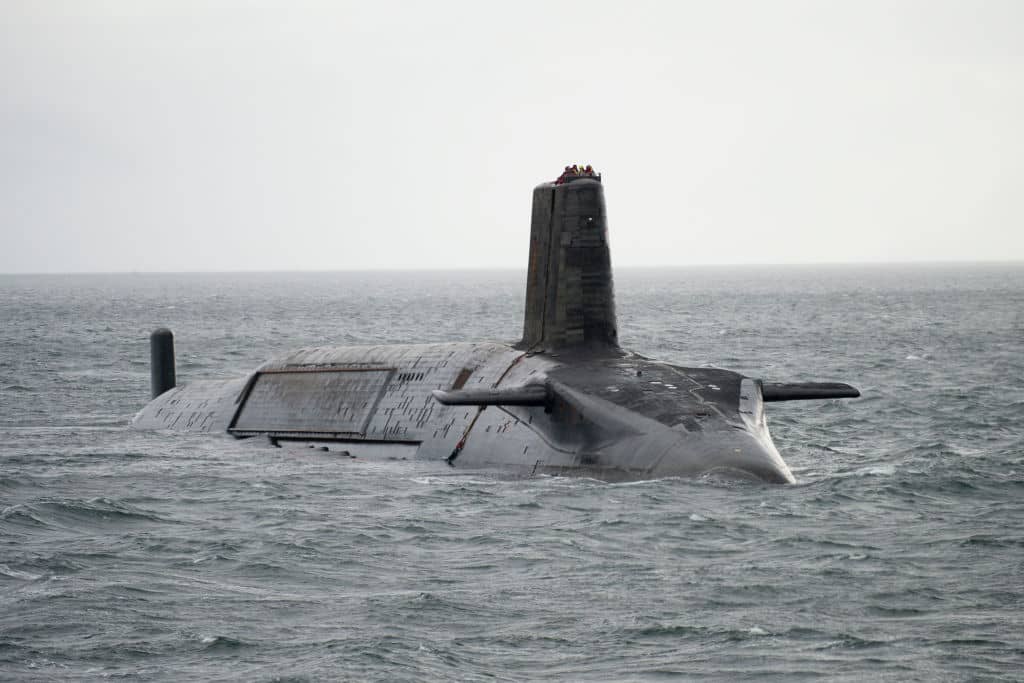
Questions about the reliability of UK naval infrastructure are often contextualized by historical precedents in maintenance and refit schedules. In March 2012, the UK Ministry of Defence awarded a contract to the naval support business Babcock for the planning phase of a £350 million GBP refit for HMS Vengeance.
The project was undertaken at Devonport Royal Dockyard and was projected to take approximately three and a half years. The defense ministry stated that the project would safeguard 2,000 UK jobs. HMS Vengeance, a Vanguard-class ballistic missile submarine, underwent a Long Overhaul Period and Refuel (LOP(R)).
The transit of the 150m-long, 15,900-tonne submarine to Devonport in March 2012 occurred amid concerns regarding the lack of a signed contract for the refit at that time. River Tamar shipping was suspended during this transit. The vessel arrived ahead of the scheduled refit, with plans for it to be the last of four Vanguard class submarines to undergo a LOP(R) at Devonport following the completion of HMS Vigilant’s overhaul in 2012.
These historical details regarding the planning and execution of submarine overhauls in the UK provide a backdrop against which current assessments of industrial capability are being made. The scale of the Vengeance refit, involving significant logistical suspensions and multi-year timelines, illustrates the complexity involved in maintaining nuclear-capable vessels within British shipyards.