


Taipei's Outdated View of India's Strategic Role
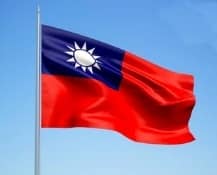
A new report has emphasized that Taiwan requires a sustained and long-term strategy for engaging with India, noting that Taipei currently views the South Asian nation through what it describes as a "traditional and outdated lens." The analysis, published in the Taipei Times newspaper, suggests that while India remains a priority country for Taipei—particularly under initiatives such as the New Southbound Policy Plus, Taiwan’s integrated diplomacy approach, and its broader Indo-Pacific strategy—the broader economic and strategic focus on New Delhi appears to have diminished. This diminished focus is particularly concerning given India's growing geopolitical significance and its potential as a partner in various domains, from trade and technology to regional security.
The report criticized the prevailing interpretation of India’s foreign policy outlook within Taipei, describing much of this understanding as "more reactive than evidence-based." This traditional perspective, the report implies, fails to grasp the nuances of India's evolving global posture and its distinct national interests. It suggests that Taipei's approach has not adequately adapted to the complexities of 21st-century geopolitics, where middle powers increasingly assert their own strategic agency and pursue multifaceted foreign policies.
Misreading India's Engagement with China
According to the publication, a primary example of this flawed perspective is the way Taiwan interprets India’s efforts to manage and stabilize ties with China. The report stated that some in Taipei view these diplomatic maneuvers as a "reset in relations" between New Delhi and Beijing, leading to the conclusion that India is inching closer to China. This interpretation often stems from a binary understanding of international relations, where engagement with one major power is perceived as necessarily coming at the expense of another, particularly in the context of US-China competition.
However, the report explicitly labeled this interpretation as incorrect. It argued that managing ties with China does not equate to abandoning engagement with Taiwan. The analysis noted that India refrains from viewing its engagements with Taiwan solely through the lens of China, suggesting that Taipei’s current assessment fails to account for New Delhi’s independent diplomatic calculus. India's foreign policy, the report underscores, is driven by its own strategic imperatives and a desire to maintain a balanced relationship with all major global actors, rather than being solely defined by its interactions with Beijing or Washington.
India's Strategic Autonomy in a Shifting Global Order
The report further argued that Taiwan’s strategic analysis often overlooks the concept of strategic autonomy, which is gaining greater importance for India. It stressed that it is "never simply a question of China versus the US for India." This principle of strategic autonomy allows India to pursue its national interests independently, engaging with various global powers without being constrained by bloc politics or the dictates of any single nation. For India, this means maintaining diversified partnerships and making sovereign decisions based on its own economic, security, and geopolitical considerations, rather than aligning exclusively with one side.
As the international system becomes less unipolar and middle powers exercise greater agency, the report warned that Taiwan continues to look at international relations largely through the prism of US-China competition. This narrow focus prevents Taipei from fully appreciating the motivations and actions of countries like India, which actively seek to carve out their own space in a multipolar world. India's emphasis on strategic autonomy is a defining characteristic of its foreign policy, reflecting its ambition to be a leading power rather than a junior partner in any grander geopolitical strategy.
Reinterpreting Indo-Pacific Dynamics
This framing, according to the report, misses broader regional dynamics. The analysis highlighted that the perception of a weakening Indo-Pacific region, driven by growing differences between India and the United States, is another factor contributing to a diminished focus on India from Taipei’s side. The report stated that this interpretation "misses the larger regional picture," asserting that the Indo-Pacific construct is not disappearing. Instead, its evolution reflects a more complex interplay of national interests and regional agency, where states are increasingly asserting their own roles.
Instead of a decline in regional importance, the report suggested that the credibility and reliability of the United States are being questioned by an increasing number of countries. This questioning does not signify the collapse of the Indo-Pacific concept but rather a recalibration of how regional states engage within it. In response to these shifts, many regional states are either doubling down on the Indo-Pacific construct or placing greater emphasis on regional agency and their own strategic interests. This means that while some traditional alliances might be under scrutiny, the fundamental idea of a free and open Indo-Pacific, driven by regional actors, remains robust and continues to evolve.
Charting a Sustained Path for Taiwan-India Relations
The report’s findings suggest that for Taiwan to maintain meaningful and effective relations with India, it must move beyond reactive assessments and a binary view of global power dynamics. A sustained, long-term strategy would require Taipei to proactively understand and engage with India on its own terms, recognizing its unique position as a rising middle power with significant strategic autonomy. This involves a deeper appreciation of India's complex foreign policy objectives, which are not solely dictated by its relationships with either Washington or Beijing, but by its own national development and security imperatives.
By recognizing India’s role as a middle power exercising independent agency, Taipei may better align its diplomatic and economic strategies with New Delhi’s actual foreign policy objectives. This could involve exploring new avenues for cooperation in areas such as technology, trade, and strategic partnerships, based on mutual interests rather than perceived alignments in the US-China rivalry. A more nuanced understanding would enable Taiwan to tap into India's vast market and growing technological prowess, fostering a more robust and resilient bilateral relationship that serves both nations' long-term interests.
The publication did not provide specific counter-arguments from Indian officials regarding the report’s claims. The analysis remains focused on the internal strategic assessments within Taipei and the perceived gaps in understanding India’s geopolitical positioning. Ultimately, the report serves as a critical call for Taiwan to recalibrate its strategic compass, ensuring its approach to India is grounded in contemporary realities and a forward-looking vision for engagement.