

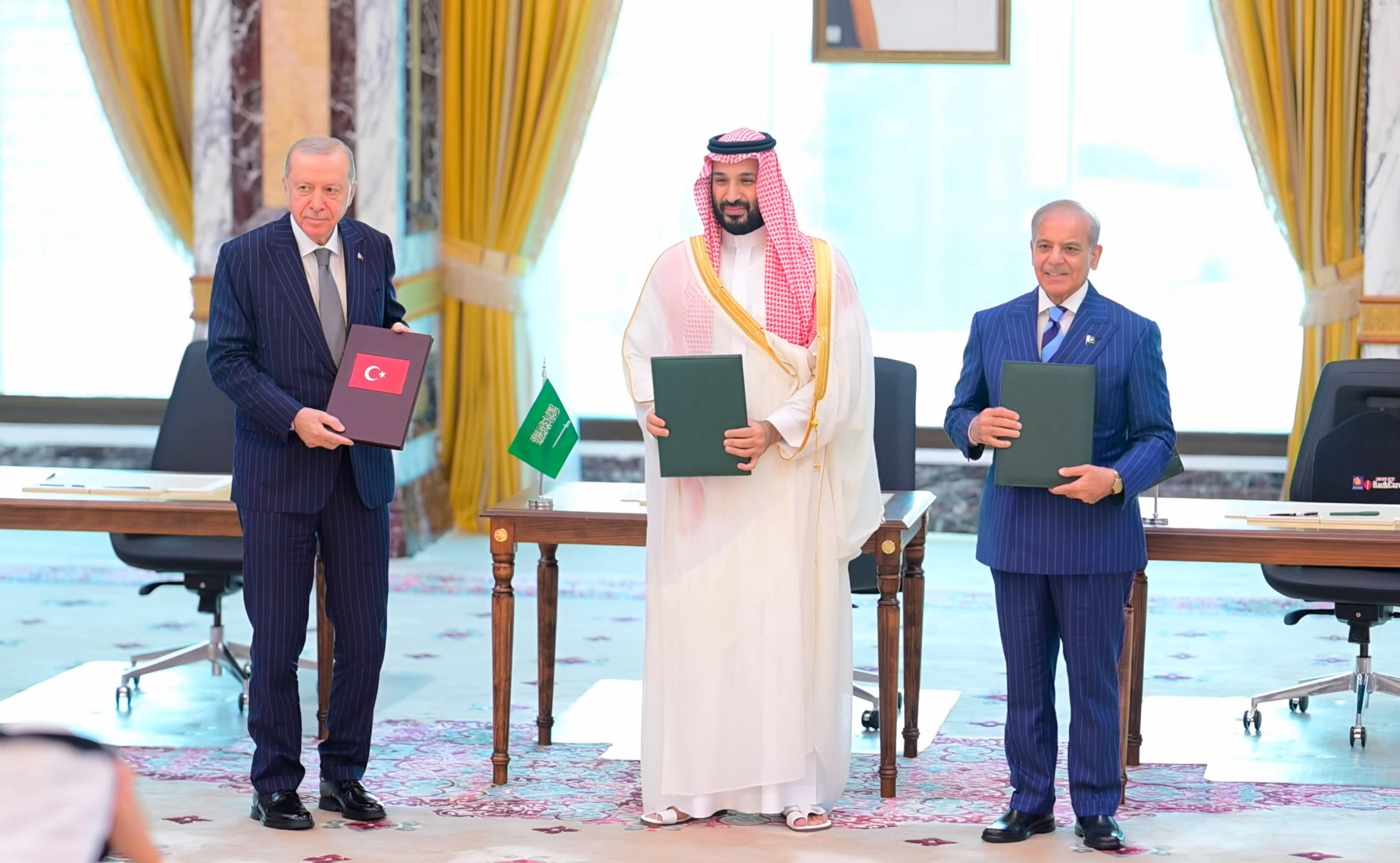

Speculation Over Defense Alliance Grows Following Diplomatic Invitations
Dhaka, Sep 1 (IANS) — A report published by the Bangladeshi media outlet BDNews 24 has warned that Bangladesh must maintain strong and balanced relations with all countries in the Gulf region and beyond. The publication cautioned that this diplomatic objective could become increasingly difficult if Dhaka decides to join the Mecca Agreement, a defense pact involving Pakistan, Saudi Arabia, and Turkey.
According to the report, speculation regarding Bangladesh’s potential entry into the Mecca Joint Defence Agreement (MJDA) began around August 17. This surge in diplomatic interest occurred after Saudi Crown Prince Mohammad bin Salman invited Prime Minister Tarique Rahman to visit the Arabian kingdom.
The MJDA was signed approximately ten days prior to this invitation, on August 7. The agreement marks a shift away from the decades-old US-centric defense alignment that has historically characterized the region. By declaring that an attack on one member constitutes an attack on all, the pact creates a framework for collective military response.
Strategic Implications and Regional Geopolitics
The BDNews 24 report highlighted that while the high-sounding commitments of the MJDA are easier to articulate than execute, they tend to serve as instruments of deterrence rather than a "blueprint for Armageddon." However, the report stressed that for Dhaka, making such a commitment requires significant deliberation.
A primary concern raised by the report is the theoretical possibility of Bangladesh being drawn into an India-Pakistan war. The publication noted that such a conflict would likely have nothing to do with Bangladesh’s direct interests, yet membership in the pact could obligate Dhaka to take sides.
The report questioned whether becoming militarily entangled in the volatile and rapidly shifting geopolitics of West Asia would serve Dhaka’s national interests. It further asked if such a move would align with the government’s repeatedly emphasized "Bangladesh First" policy.
Domestic Political Reactions and Foreign Policy Challenges
The report indicated that joining the pact could find support among extreme right-wing voices within Bangladesh. These groups might view the alliance as an opportunity to gain strategic leverage over India.
Despite these potential domestic political gains, the report argued that the crucial question of how the Mecca Pact would serve Dhaka’s broader interests appears to have received little attention in public discourse. The publication suggested that the government has not yet engaged in sufficient thinking regarding the long-term implications of such a defense commitment.
BDNews 24 emphasized that maintaining balanced relations with Gulf nations remains a critical task for Bangladesh. Joining a multilateral defense agreement that includes Pakistan could complicate these relationships, particularly given the complex historical and political dynamics between Dhaka, New Delhi, and Islamabad.
Assessment of National Interest
The report concluded its analysis by noting that while the MJDA signals a new era of regional defense cooperation among Saudi Arabia, Turkey, and Pakistan, Bangladesh’s entry into this framework is not without significant risks. The publication urged policymakers to carefully weigh the benefits of such an alliance against the potential for unintended military entanglement.
As diplomatic engagements continue between Dhaka and Riyadh, the report suggests that the government must determine whether the strategic leverage offered by the Mecca Pact outweighs the potential loss of diplomatic flexibility in South Asia and West Asia.