

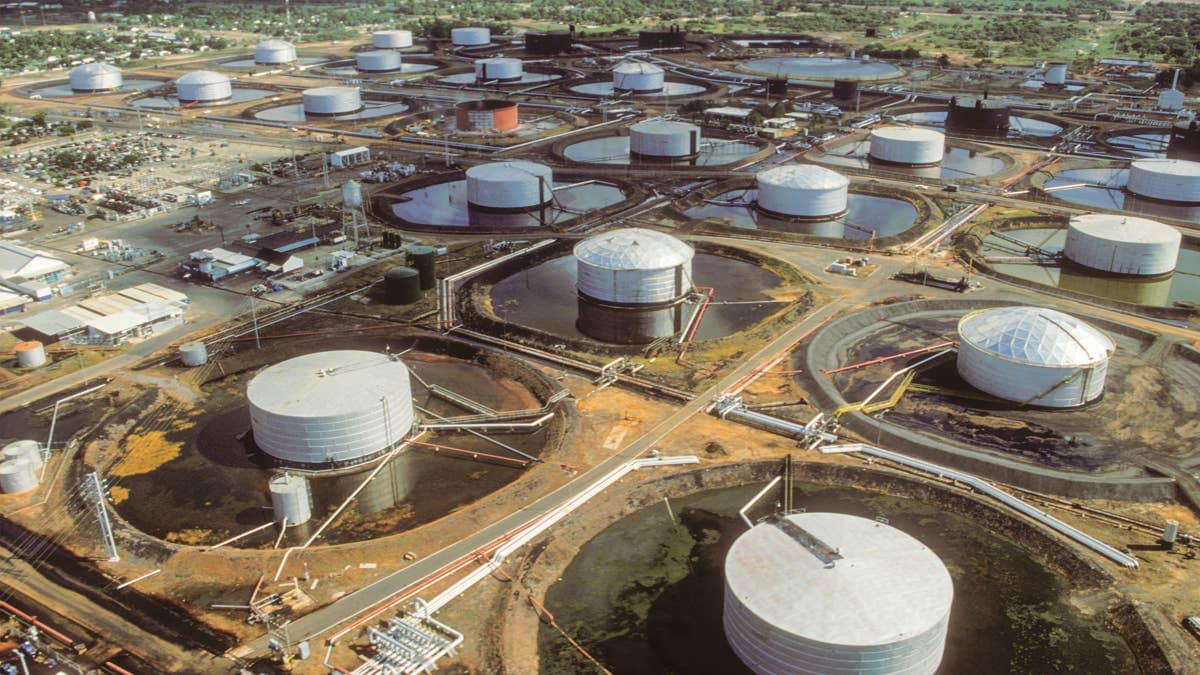

Formalizing American Oversight of Venezuelan Oil
The United States has reportedly secured control over Venezuela's vast oil reserves, a development that marks a significant shift in the geopolitical landscape of the region. This assertion of control, as detailed in reports from Thestreet, is rooted in a series of recent legislative or administrative actions designed to formalize American oversight of these critical energy assets. The implications of such a move are far-reaching, potentially reshaping global energy dynamics and international relations.
A Concluded Vote and Finalized Agreements
Central to this acquisition of control was a vote that has now successfully passed. The passage of this measure signifies that the necessary procedural hurdles for such an arrangement have been cleared, establishing a robust legal framework for U.S. involvement in Venezuela's oil sector. This legislative or administrative action provides the foundational authority for the United States to exert influence over what are considered some of the world's most substantial proven oil reserves.
The status of these proceedings was underscored by Thestreet, which noted that "the ink is dry." This phrase indicates that the agreements, legislative actions, or administrative decisions are finalized and are no longer subject to negotiation or immediate reversal. The finality implied by this statement suggests that all requisite administrative steps to transfer or establish this control have been completed, moving the issue from a phase of deliberation and negotiation into one of implementation and execution. This solidification of legal authority is a crucial precursor to any practical engagement with the oil fields themselves.
The Strategic Value of Legal Control
Securing legal control over such a significant resource represents a strategic achievement. It provides the United States with a formal basis to influence the management and future output of Venezuela's oil wealth. This level of oversight, formalized through a passed vote and finalized agreements, positions the U.S. to potentially play a direct role in the trajectory of a major global energy supplier. The establishment of this legal framework is distinct from the operational challenges of oil extraction, yet it is an indispensable first step towards any long-term engagement or revitalization efforts.
Bridging Financial Pledges with Operational Realities
A substantial financial component underpins this newly established arrangement. An investment of $7 billion has been committed to support the operations associated with these reserves. This figure represents a major capital injection, signaling a serious intent to facilitate the management and development of the oil fields under the newly established control structure. Such an investment would typically be allocated towards various aspects of the oil industry, from infrastructure upgrades to operational costs and potentially new exploration or drilling initiatives.
The $7 Billion Investment and Its Purpose
The commitment of $7 billion highlights the scale of the undertaking and the financial resources the United States is prepared to deploy. This capital is intended to address the myriad needs of a complex oil production system, which often requires continuous investment in technology, maintenance, and human resources. The funds are earmarked to support the operations necessary to transition from legal control to actual productive capacity, aiming to lay the groundwork for a more stable and efficient oil sector in Venezuela under the new oversight.
The Complexities of Oil Extraction and Infrastructure
However, financial commitment alone does not equate to immediate operational capability. Thestreet explicitly distinguished between securing legal control and the physical ability to produce oil from the ground, noting that "the pump is a separate conversation." This crucial distinction highlights that while the administrative and financial foundations are now in place, the actual extraction of crude oil from Venezuelan reserves faces a distinct set of practical and logistical challenges.
The complexities of revitalizing Venezuela's oil industry are considerable. Decades of underinvestment, mismanagement, and sanctions have reportedly led to significant degradation of infrastructure, including pipelines, refineries, and drilling equipment. The ability to physically pump oil from Venezuelan reserves is not automatically guaranteed by the passed vote or the financial pledge alone. It requires overcoming substantial technical barriers, re-establishing operational logistics, ensuring security for personnel and assets, and potentially rebuilding a skilled workforce. These practicalities mean that the journey from legal control to tangible oil output will likely be a protracted and challenging endeavor, requiring more than just capital injection but also extensive on-the-ground work and expertise.
Geopolitical Shifts and Energy Market Ramifications
The reported control over Venezuela's oil reserves places an extraordinary volume of resources under U.S. influence. Venezuela holds some of the largest proven oil reserves in the world, making any change in their control a matter of substantial implications for global energy markets and regional politics. This shift could potentially alter the balance of global oil supply and demand, influencing international prices and the strategic calculations of major energy-consuming nations.
Venezuela's Pivotal Role in Global Oil Supply
Venezuela's vast reserves have long positioned it as a critical, albeit often volatile, player in the global energy landscape. The United States gaining control over these assets could lead to a significant re-evaluation of future oil supply projections. For global energy markets, the prospect of these reserves being brought back to higher production levels under stable management could offer a new source of crude, potentially impacting market stability and energy security for various nations. This development marks a profound change from previous periods where international sanctions and internal political instability severely hampered Venezuela's ability to contribute meaningfully to global oil supply.
Navigating the Path from Control to Production
The combination of a passed vote, finalized agreements, and a $7 billion investment signals a decisive move by the United States to engage directly with Venezuela's most valuable natural resource. This engagement marks a clear departure from previous periods where sanctions or diplomatic tensions may have limited direct involvement, ushering in an era of more direct oversight. However, despite the clarity provided by the passing of the vote and the commitment of funds, the uncertainty surrounding operational execution remains a critical factor.
The explicit separation of "control" from the ability to "pump" oil suggests that all stakeholders—including the United States, any Venezuelan entities involved, and international energy consumers—must navigate complex technical and logistical barriers before the financial investments can yield tangible energy outputs. The ultimate success of this initiative will depend not only on the legal and financial frameworks now in place but also on the practical ability to overcome the deep-seated challenges inherent in revitalizing a large-scale, complex oil industry.