


Electoral Decline and Alliance Dependence
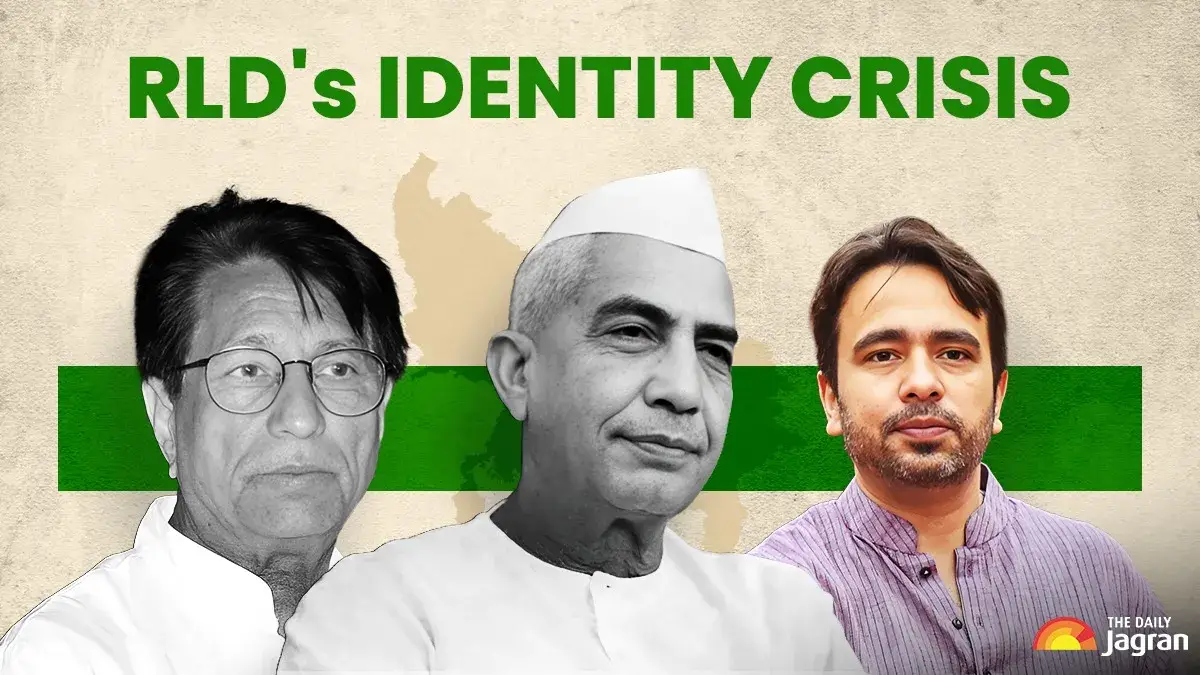
The Rashtriya Lok Dal (RLD) is confronting a significant identity crisis as it prepares for the 2027 Uttar Pradesh elections, struggling to maintain relevance without major alliances. Once a dominant political force in western Uttar Pradesh built on the legacy of former Prime Minister Chaudhary Charan Singh and his farmer-focused politics, the party now faces uncertainty regarding its independent electoral viability.
Historical election data illustrates the party's shifting fortunes and increasing reliance on larger partners. The RLD was formally established by Chaudhary Ajit Singh in 1996-97 to consolidate farmer votes under his father’s political banner. In the 2002 UP Assembly elections, the party contested 38 seats in alliance with the BJP and won 14. Similarly, in the 2009 Lok Sabha elections, it joined forces with the BJP again and secured five seats.
A turning point occurred during the 2014 Lok Sabha elections, where the RLD allied with the Congress party. The alliance failed to deliver victories; the party did not win any of its eight contested seats. Founder Ajit Singh lost in Baghpat, while Jayant Chaudhary lost in Mathura.
The trend of electoral struggle continued in subsequent years. In the 2017 UP Assembly elections, the RLD contested independently across 277 seats but won only one seat. During the 2019 Lok Sabha elections, the party allied with the Samajwadi Party (SP) and the Bahujan Samaj Party (BSP). It failed to win any of its three contested seats, with both Ajit Singh and Jayant Chaudhary losing their respective constituencies.
The party managed a modest recovery in the 2022 UP Assembly elections by joining an alliance with the Samajwadi Party. In that election, the RLD won eight of its 33 contested seats. This result highlighted the party's continued dependence on larger parties for electoral relevance and its inability to secure significant victories independently.
Shifting Political Landscape in Western UP
The erosion of the RLD’s traditional base is attributed to several structural changes in Uttar Pradesh politics. The rise of the Bharatiya Janata Party (BJP) in western UP and its expansion of support among Jats have significantly weakened the RLD's standing.
Additional factors contributing to this decline include the impact of events such as the Muzaffarnagar riots, which altered caste dynamics and voter alignment in the region. These external pressures have compounded internal challenges within the party.
Strategic Realignment and Internal Friction
The RLD’s recent strategic shift to the National Democratic Alliance (NDA) has created significant turbulence within its ranks. According to reports, this move has upset traditional voters who had long supported the party's historical positioning. The realignment has also generated internal friction among party members and drawn sharp criticism from former allies who view the pivot as a betrayal of past political commitments.
As the 2027 elections approach, the RLD remains caught between its foundational identity rooted in Chaudhary Charan Singh’s legacy and the pragmatic necessity of seeking alliances to remain politically relevant. The party's history shows that while it has occasionally leveraged partnerships for electoral gains, its independent strength has steadily diminished, leaving it vulnerable to the shifting tides of Uttar Pradesh politics.