


Rubio Highlights Greece’s Strategic Importance in Athens
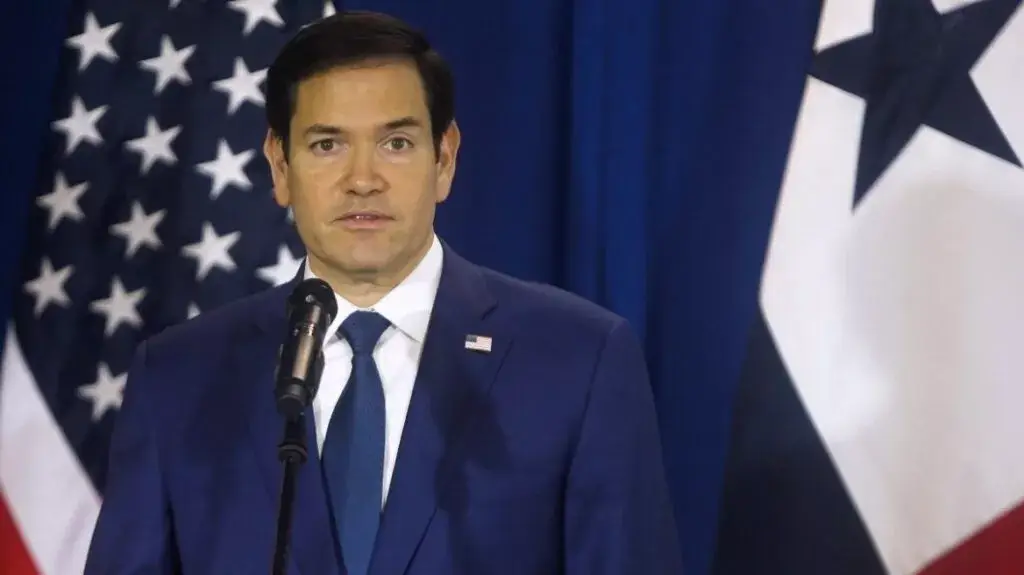
US Secretary of State and National Security Adviser Marco Rubio visited Athens, emphasizing Greece’s growing strategic importance as Washington reshapes its global priorities. The visit was characterized by both substantive policy discussions and symbolic gestures, marking a shift in how the United States views its relationship with the Balkan nation.
During his address on the Pnyx, with the Acropolis visible in the background, Rubio invoked Greece’s historical legacy to argue for a conception of the West based on sovereignty and national power. He described the current global environment as competitive, asserting that economics, technology, energy, industrial capacity, and military strength are interconnected instruments of national strategy.
Rubio argued that diplomacy must be backed by hard power, stating that alliances should defend national sovereignty rather than extinguish it. This proposition was noted as particularly relevant to the ongoing challenges facing Cyprus, which shares a complex geopolitical landscape with its neighbor.
Shift in US Policy and Military Cooperation
The visit signaled a departure from previous US foreign policy frameworks. Washington no longer views Greece exclusively through the prism of its relations with Turkey. Instead, officials pointed to Souda Bay, Alexandroupolis, Greek shipping capabilities, energy infrastructure, and cooperation in the Eastern Mediterranean as factors that give Greece strategic importance beyond its traditional NATO role.
Rubio described Greece as an “indispensable friend” and an “anchor partner” in American regional strategy. This designation was formalized during the sixth US–Greece Strategic Dialogue, which announced $4 billion in military sales. The agreement also outlined deeper cooperation in defense, security, energy, and emerging technologies.
According to reports from the visit, Greece is increasingly moving from being a security consumer to a security producer, contributing directly to regional stability. This shift aligns with broader American efforts to integrate Greek capabilities into wider strategic frameworks in the Mediterranean.
Energy Infrastructure and Regional Dynamics
Energy security emerged as a central theme of the diplomatic engagement. The Vertical Gas Corridor, which facilitates American liquefied natural gas flowing into Europe, was cited as a key factor strengthening Greece’s regional role. The growing involvement of US energy companies in the region further underscores this transition.
Rubio reiterated American support for specific energy infrastructure projects, including the Great Sea Interconnector (GSI). This project aims to link Greece, Cyprus, and eventually Israel, creating a unified energy network. Officials described energy not merely as a commercial commodity but as a matter concerning national security, strategic autonomy, and geopolitical influence.
Assurances on Turkey and Cyprus
In an interview with Alexis Papachelas published by Kathimerini on October 8, Rubio addressed potential flashpoints in the region, describing a serious crisis involving Turkey in the Aegean or Cyprus as “unthinkable.” His assurances signaled American determination to prevent armed conflict between two NATO allies.
However, while Rubio emphasized the importance of maintaining strong relations with both Ankara and Athens, he left unanswered how Washington would address threats and unilateral actions that could precipitate a crisis. Washington maintains that Ankara remains important to NATO, the Black Sea, the Middle East, and wider American strategy, seeking strong relations with both countries in what is described as not a zero-sum game.