


Suppression of the Niamey Air Base Mutiny
Niger’s ruling junta successfully quelled a fierce 24-hour mutiny at a key air base near the capital, Niamey, following the direct intervention of Russian paramilitary forces. The incident involved renegade soldiers staging an uprising that posed a significant threat to the stability and control of the country's military government.
According to official reports, Russia's Africa Corps, which has been identified as the successor to the Wagner Group, played a crucial role. These paramilitary forces assisted loyalist presidential guards in neutralizing the mutineers. The operation unfolded at a strategic air base located close to Niamey, where the combined efforts of loyalist forces and Russian personnel were instrumental in crushing the rebellion led by the renegade soldiers.
The intervention occurred over a weekend, with the mutiny lasting approximately 24 hours before being decisively suppressed. The timely and effective presence of the Africa Corps was pivotal in enabling the junta to retain control of the vital air base and neutralize the immediate internal security threat posed by the renegade faction.
Official Confirmation from Russian Diplomacy
The nature of the assistance provided to the West African nation was officially confirmed by Viktor Voropayev, Russia’s ambassador to Niger. In statements made to Russian media, Voropayev explicitly stated that Niger’s ruling junta had requested support from Russian forces to address the internal uprising.
“The mutineers were neutralized, particularly thanks to the intervention” of the Africa Corps, Voropayev told reporters. His comments not only underscore the direct operational role played by Moscow’s paramilitary unit but also highlight Russia's willingness to publicly acknowledge its deepening involvement in the internal security affairs of its African partners.
Russia's Evolving Security Footprint in Africa
The successful quelling of the mutiny in Niger highlights a broader and accelerating geopolitical trend wherein Russia is solidifying its position as a primary protector of military regimes across the African continent. This engagement model is characterized by Moscow trading vital security protection for enhanced influence in the politics, arms markets, and mining sectors within these partner nations.
The Africa Corps now serves as a key and increasingly overt supporter for military juntas in several West and Central African countries. Beyond Niger, its presence and influence are notable in nations such as Mali, Burkina Faso, and the Central African Republic. This growing network of Russian security support allows these regimes to maintain power against both internal dissent and external pressures, while simultaneously deepening their strategic and economic ties to Moscow.
From Wagner to Africa Corps: A Strategic Transition
The emergence of the Africa Corps as a successor to the Wagner Group signifies a strategic evolution in Russia's approach to its African engagements. While Wagner operated with a degree of plausible deniability, the Africa Corps appears to represent a more formalized, albeit still paramilitary, instrument of Russian foreign policy. This transition allows Moscow to maintain and even expand its influence in critical regions, particularly where Western powers have historically held significant sway or have seen their influence wane.
This shift underscores Russia's long-term commitment to cultivating alliances with military governments, offering a robust security alternative that often comes without the human rights or governance conditionalities typically associated with Western aid or military cooperation.
A Strategic Shift in Security Alliances
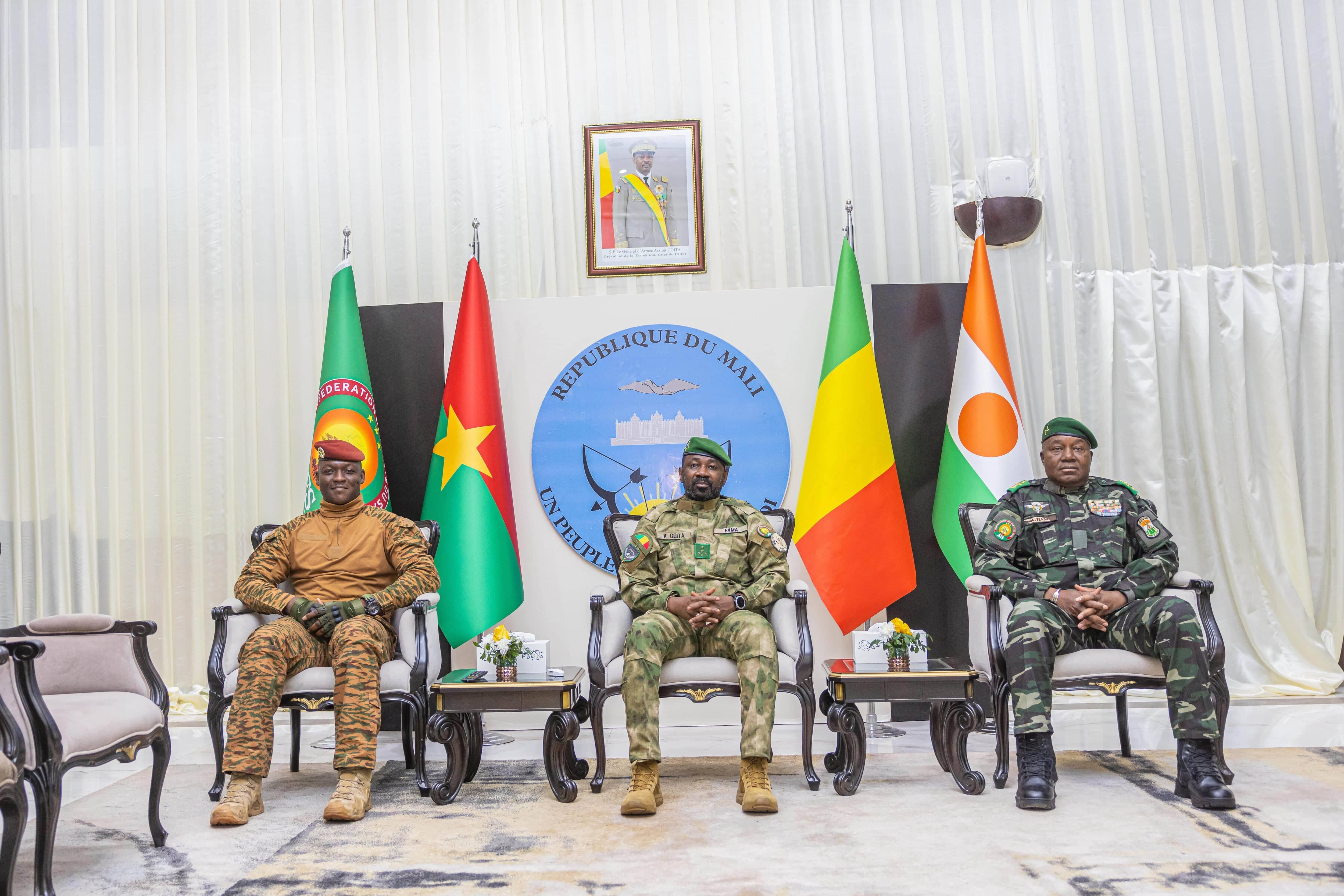
The interconnected nature of these military governments is evident in their high-level diplomatic interactions and shared security concerns. For instance, Captain Ibrahim Traoré of Burkina Faso, General Assimi Goïta of Mali, and General Abdourahamane Tchiani of Niger were documented attending a summit together, demonstrating a coordinated regional front.
On Tuesday, Dec. 23, 2025, the three leaders attended the second summit on security and development in Bamako, Mali. Their presence at this significant event illustrates the coordinated political landscape among these junta-led states, which increasingly rely on mutual support and, crucially, external backing from Russia to sustain their rule and address common challenges, such as regional instability and jihadist insurgencies.
Moscow's Expanding Influence and Resource Control
The deployment of the Africa Corps in Niger underscores the depth of Moscow's commitment to these military governments. By providing direct combat support during critical moments, such as the recent mutiny, Russia ensures its continued relevance and expands its influence in a region where Western powers have previously held significant sway. This strategic trade of security for resources and political leverage creates a dependency relationship that strengthens the position of both the African juntas and the Russian state in the broader geopolitical arena.
Russia's engagement model specifically targets influence in three key areas: political alignment, lucrative arms deals, and access to valuable mining rights. This comprehensive approach allows Moscow to secure long-term strategic advantages while providing the military regimes with the means to consolidate power and address internal and external threats.
Implications for Regional Stability
The neutralization of the mutineers at the Niamey air base sets a clear operational precedent for future interactions between the Africa Corps and other military regimes facing similar internal threats. The ability to rapidly deploy well-trained paramilitary forces to quell internal uprisings reinforces the value proposition offered by Moscow to these governments, presenting Russia as a reliable and decisive security partner.
As jihadist violence continues to impact parts of the Sahel and wider West and Central Africa, the reliance on Russian security guarantees may increase for these junta-led states. The swift and effective cooperation demonstrated during the Niger mutiny provides a tangible template for how Russia can intervene in the internal affairs of its partners to preserve their grip on power, potentially reshaping regional security dynamics for years to come.