


U.S. Secures Significant Venezuelan Oil Holdings
U.S. President Donald Trump announced on Friday that his administration has secured majority control over more than 65 billion barrels of proven oil reserves in Venezuela. The president described the agreement as being "at no cost to the American Taxpayer" and heralded it as the "biggest oil deal in history." This landmark deal grants Washington control over approximately 20 percent of Venezuela's total oil reserves, which are globally recognized as the largest.
The acquisition of such a substantial volume of proven reserves is poised to significantly boost U.S. energy holdings, potentially reshaping the nation's strategic energy posture. The 65 billion barrels represent a considerable addition to global oil inventories under U.S. influence, marking a profound shift in energy geopolitics. President Trump's emphasis on the deal incurring no cost to American taxpayers positions it as a strategic economic victory, aiming to secure long-term energy resources without direct financial outlay from the public purse.
Questions Arise Over Vague Terms
Despite the celebratory announcement, the specific terms and conditions of the agreement have been widely described as vague. This lack of detailed clarity has immediately raised questions about the practical implementation of the arrangement and its long-term implications. Critics have swiftly pointed to these unclear stipulations as a primary concern, warning of potential legal ambiguities and operational challenges in the future.
The opacity surrounding the deal has fueled accusations of "new colonialism" from various observers. These critics argue that gaining majority control over a significant portion of another sovereign nation's primary natural resource, particularly under vague terms, echoes historical patterns of economic exploitation. The absence of transparent details regarding how the control will be exercised, the financial mechanisms involved beyond the "no cost" claim, and the duration of the agreement has intensified scrutiny and deepened the polarized discourse surrounding the pact.
Diplomatic Engagements and Operational Shifts
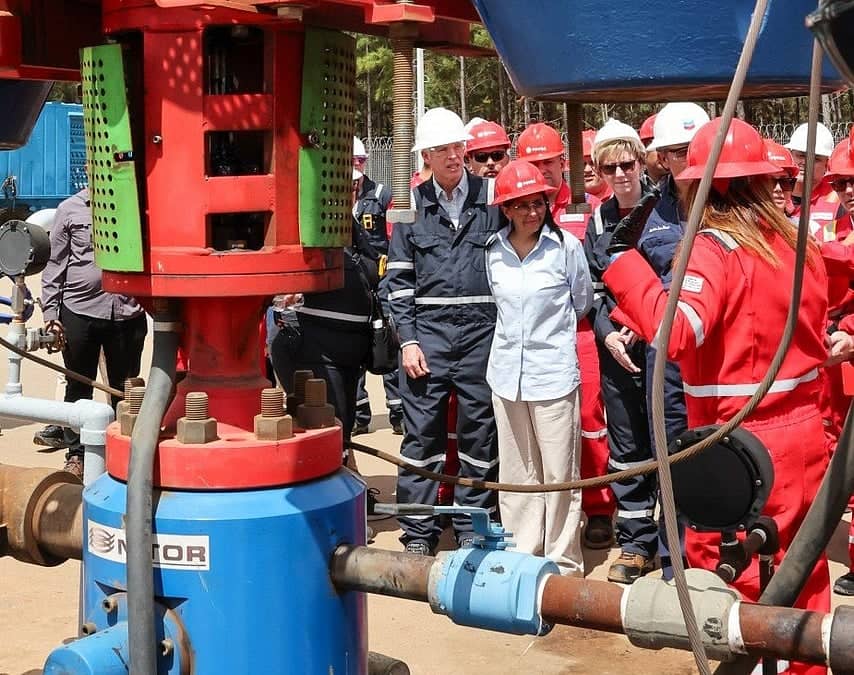
Official engagement surrounding the agreement was visually documented through a handout picture released by the Venezuelan Presidency. The image captures key figures involved in the diplomatic efforts, including Venezuela's Interim President Delcy Rodriguez, U.S. Secretary of Energy Chris Wright, and U.S. diplomatic mission to Venezuela representative Laura Farnsworth Dogu. The photograph places these officials during a visit to the Orinoco oil belt in southern Venezuela, a region renowned for its vast heavy crude oil deposits.
The visit, which took place on February 12, 2026, underscores the high-level bilateral engagement preceding or immediately following the agreement. The presence of workers from the state oil company Petroleos de Venezuela (PDVSA) in the photograph further highlights the operational dimension of the discussions, suggesting direct interaction with the personnel responsible for the extraction and management of these vital resources. This visual record serves as the primary public confirmation of direct, high-level interaction between the two nations regarding the energy sector during this critical period.
Corporate Expansion and Military Oversight
Parallel to the presidential announcement and diplomatic visits, reports indicate a multi-faceted approach to securing and expanding oil operations in Venezuela. Venezuela and the international energy giant Chevron have reportedly struck deals aimed at expanding their oil operations within the region. This corporate involvement signals a strategic partnership to leverage existing infrastructure and expertise to increase output from the newly controlled reserves.
Further underscoring the comprehensive nature of the U.S. strategy, it was reported that a U.S. military board has boarded a sanctioned oil tanker. This action signifies increased enforcement or oversight activities related to energy transport, potentially aimed at securing supply chains, monitoring compliance, or asserting control over the movement of Venezuelan oil. Concurrently, the U.S. government has actively pushed for what officials described as a "dramatic" jump in Venezuela's oil output. These operational details, combining corporate expansion with a visible military presence, suggest a robust and integrated strategy to support the newly announced controls over Venezuelan oil reserves and ensure their productive utilization.
International Scrutiny and Sovereignty Concerns
The agreement has drawn sharp criticism from international observers and legal experts who warn of profound implications for national sovereignty and the potential for "new colonialism." A central point of contention is the inherent vagueness of the pact's terms, which critics argue creates significant legal risk and could complicate future implementation. The lack of clear, publicly accessible details regarding the operational framework, revenue sharing, and dispute resolution mechanisms raises concerns about transparency and fairness.
Experts have highlighted that Washington gaining a majority stake in oil fields that are unequivocally part of Venezuela's sovereign resources represents a significant challenge to the principle of self-determination. While the United States possesses its own substantial subsoil reserves, this agreement specifically targets assets within another nation's territory, prompting questions about the balance of power and economic justice. The contrast between the stated benefits for U.S. energy security and the allegations of exploitative practices has created a deeply polarized discourse around the deal, with proponents emphasizing strategic gains and critics decrying a potential erosion of Venezuelan autonomy.
Broader Geopolitical and Economic Ramifications
The implications of this deal extend far beyond the immediate energy sector, touching upon broader international business, banking, and insurance sectors. The financing of expanded operations, the processing of international transactions for oil sales, and the insurance of tankers and infrastructure all fall within the complex web of this agreement. Furthermore, the corporate tax implications for both Venezuelan entities and international partners like Chevron will be substantial, influencing revenue streams and investment decisions.
Major international outlets, including Gulf News and the Jamaica Observer, have extensively covered the announcement, detailing the significant financial and geopolitical stakes involved. While President Trump framed the agreement as a strategic victory for American taxpayers and a boost to U.S. energy independence, the persistent criticism regarding its vague terms and the warnings of "new colonialism" remain central points of contention. The situation continues to evolve as further details regarding the implementation of the 20 percent reserve control emerge, prompting ongoing debate about its long-term impact on Venezuela's economy, regional stability, and global energy markets.