


Ruto Advocates for AU Institutional Reforms
President William Ruto of Kenya has continued his advocacy for comprehensive reforms within the African Union (AU), emphasizing the need for stronger institutions, sustainable financing, and enhanced self-reliance across the African continent. These calls are made in the context of evolving global dynamics and shifting geopolitical realities, which necessitate a more robust and unified African response.
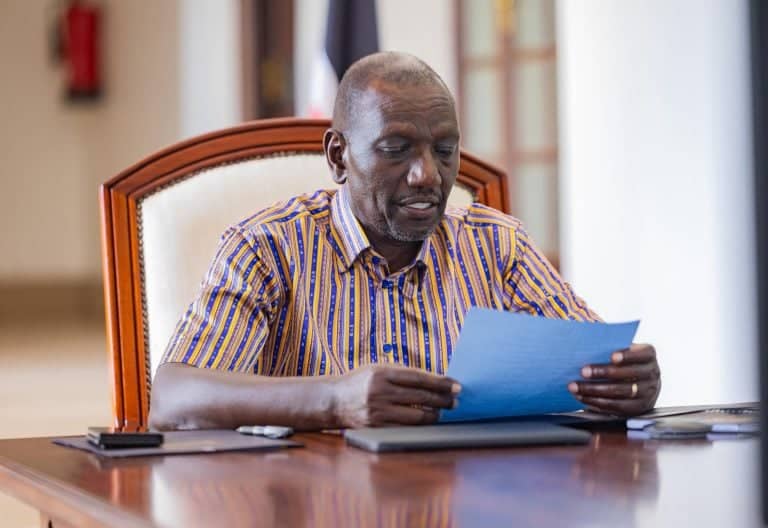
President Ruto chairs the African Union Ad Hoc Oversight Committee of Heads of State on Institutional Reforms, a body tasked with guiding and overseeing the implementation of the AU's reform agenda. On Monday, May 25, 2026, President Ruto chaired the fourth virtual session of this committee. In a statement shared on his X account following the session, he confirmed that the committee had reviewed progress on the ongoing reform initiatives.
Enhancing Institutional Effectiveness
A core component of President Ruto's reform agenda is the strengthening of AU institutions. This objective aims to improve the efficiency, effectiveness, and accountability of the AU Commission and its various organs. The proposed reforms seek to streamline decision-making processes, ensuring that continental policies and programs are not only formulated but also implemented with greater coherence and impact across member states.
The drive for stronger institutions is rooted in the recognition that a more agile and responsive AU is critical for addressing the continent's diverse challenges, ranging from peace and security to economic development and social progress. By enhancing the operational capacity and governance structures of the AU, the reforms aim to foster a more integrated and impactful continental body capable of delivering on its mandate and the aspirations of African citizens.
Towards Financial Self-Reliance
Sustainable financing represents another cornerstone of the reform efforts championed by President Ruto. Historically, the African Union has faced challenges related to its financial independence, with a significant portion of its budget often relying on contributions from external partners. This reliance has, at times, raised questions regarding the AU's autonomy in setting and pursuing its own agenda.
President Ruto's sustained calls for sustainable financing underscore the imperative for African member states to assume greater ownership of the AU's financial resources. The goal is to establish predictable and adequate funding mechanisms, primarily through increased and consistent contributions from member states, alongside exploring innovative alternative sources. Achieving financial self-reliance is viewed as fundamental to enabling the AU to independently pursue its strategic objectives and priorities, free from undue external influence.
Fostering Continental Autonomy
The concept of greater self-reliance extends beyond financial independence to encompass broader continental autonomy – economically, politically, and in matters of security. President Ruto advocates for an Africa that is increasingly capable of addressing its own challenges and leveraging its collective strengths on the global stage.
Economically, self-reliance involves fostering intra-African trade, promoting industrialization, and diversifying economies to reduce dependence on primary commodity exports. In the realm of security, it entails strengthening continental peace and security architecture, enhancing conflict prevention and resolution mechanisms, and building Africa's capacity to manage its own security challenges. Politically, greater self-reliance means Africa speaking with a unified and assertive voice in international forums, advocating for its interests, and shaping global discourse on issues pertinent to the continent.
Geopolitical Context for Reforms
The ongoing push for AU reforms is situated within a dynamic global landscape characterized by significant geopolitical shifts. The emergence of a multipolar world order, increased competition among global powers for influence and resources in Africa, and the pervasive impacts of global challenges such as climate change, pandemics, and economic volatility necessitate a re-evaluation of Africa's position and strategy.
President Ruto and other African leaders recognize that a reformed and strengthened African Union is essential for navigating these complex dynamics. A more cohesive, financially independent, and institutionally robust AU is better positioned to protect and advance African interests, foster regional stability, and ensure the continent plays a more prominent and equitable role in shaping the future international order.
Committee Reviews Progress
During the fourth virtual session of the African Union Ad Hoc Oversight Committee of Heads of State on Institutional Reforms, chaired by President William Ruto on May 25, 2026, the committee undertook a review of the progress made in implementing the various reform initiatives. This committee plays a crucial role in ensuring that the reform agenda remains on track and that commitments made by member states are translated into tangible improvements within the continental body. The session underscored the ongoing commitment of African leadership to the transformation of the African Union into a more effective and self-reliant organization.