

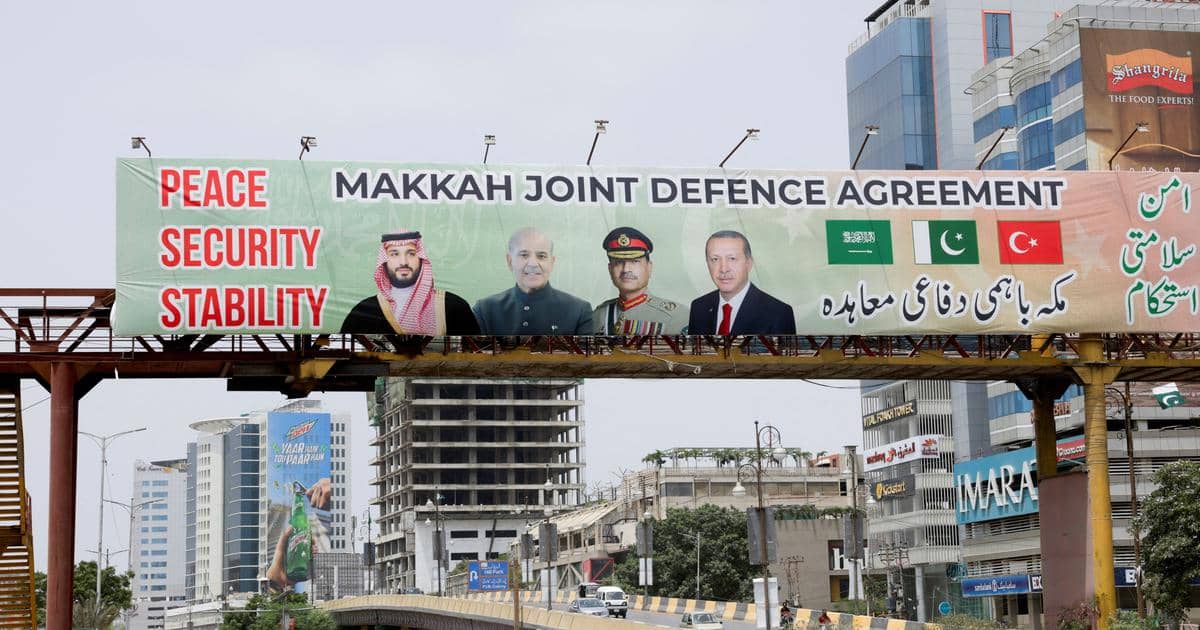

Strategic Diversification Through New Defense Accords
Saudi Arabia has formalized defense pacts with both Turkey and Pakistan, marking a significant adjustment in the kingdom’s foreign policy and security architecture. The agreements include the Mecca Joint Defence Agreement, which establishes a framework for military cooperation between Riyadh and Ankara. These developments have been widely analyzed as a response to perceived inconsistencies in American security guarantees, suggesting that Saudi leadership is actively seeking to reduce its dependency on a single external power for its national defense.
The signing of these agreements signals a broader trend among Gulf states to diversify their security partnerships. Rather than entrusting their safety exclusively to the United States, Riyadh and other regional actors are increasingly looking toward alternative allies. This shift is characterized by experts as an "insurance policy" taken by nations that no longer wish to rely on a single guarantor for their survival in an unpredictable geopolitical environment.
The Mecca Joint Defence Agreement
A central component of this new security posture is the Mecca Joint Defence Agreement between Saudi Arabia and Turkey. This pact formalizes military collaboration between the two nations, which have historically navigated complex diplomatic relations. The agreement allows for coordinated defense mechanisms and potentially shared intelligence or logistical support in times of crisis. By solidifying this bond, Saudi Arabia strengthens its ties with Ankara, a NATO member with significant military capabilities and strategic influence in the Middle East.
The inclusion of Turkey in Saudi Arabia’s security network expands Riyadh’s diplomatic reach beyond traditional Western alliances. It also reflects a pragmatic approach to regional stability, where historical rivalries are set aside in favor of mutual security interests. The agreement underscores the kingdom’s willingness to engage with diverse powers to ensure its territorial integrity and political stability.
Interpretations of American Reliability
The timing and nature of these defense deals have led to widespread interpretation that they serve as a verdict on American reliability. Analysts argue that the agreements indicate a loss of confidence in the United States’ ability or willingness to consistently protect Saudi interests. This perspective suggests that Riyadh has concluded that relying solely on Washington is no longer a viable strategy for long-term security.
According to reports, the move is seen as an "insurance policy" taken by governments that have grown skeptical of American commitments. The perception is that the United States may not always prioritize the security needs of its allies in the Gulf, particularly in the face of competing global interests or domestic political constraints. This skepticism has driven Saudi Arabia to seek multiple layers of security assurance from different partners.
Pakistan’s Role in the Security Triangle
In addition to the pact with Turkey, Saudi Arabia has also entered into a defense agreement with Pakistan. This alliance leverages Pakistan’s large standing army and nuclear capabilities to provide an additional layer of deterrence against regional threats. The inclusion of Pakistan in this security triangle highlights Riyadh’s strategy of balancing power among different regional actors.
Pakistan has long been a key security partner for Saudi Arabia, with historical precedents of military cooperation dating back decades. The new formalization of these ties through a specific defense pact reinforces the existing relationship and ensures that it remains robust in the face of evolving regional dynamics. This tripartite security arrangement involving Saudi Arabia, Turkey, and Pakistan creates a complex web of alliances that complicates traditional geopolitical calculations in the Middle East.
Implications for Regional Security Dynamics
The establishment of these defense pacts has significant implications for the broader Middle East security landscape. By diversifying its security partnerships, Saudi Arabia is reducing its vulnerability to shifts in US foreign policy. This strategy allows Riyadh to maintain greater autonomy in its decision-making and reduces the leverage that external powers might otherwise have over its domestic and regional policies.
The move also reflects a growing realization among Gulf states that the post-Cold War order, which was heavily anchored by American hegemony, is no longer sufficient to address contemporary security challenges. The rise of regional powers, the complexity of proxy conflicts, and the unpredictability of great power politics have necessitated a more nuanced approach to alliance building.
While the United States remains a critical partner for Saudi Arabia, the new agreements indicate that Riyadh is preparing for scenarios where American support may be limited or delayed. This does not necessarily imply a rupture in US-Saudi relations but rather a pragmatic adjustment to ensure that the kingdom’s security is not contingent on a single source. The defense pacts with Turkey and Pakistan serve as tangible evidence of this strategic recalibration, signaling a new era of multipolar security arrangements in the Gulf region.