


Geopolitical Realities Redefining Investment Landscapes
Scotland is currently navigating a period of significant change in its economic strategy, characterized by a decline in foreign investment driven by broader global shifts. According to an analysis published in The Scotsman on June 26, 2026, the competitive landscape for capital inflows into the region is being fundamentally redefined by three primary sectors: geopolitics, data centres, and defence.
Adrian Gillespie, chief executive of Scottish Enterprise, contributed to this assessment alongside First Minister John Swinney and Stuart Johnson, the innovation director at Guala Closures. Their joint commentary underscores the complexity of attracting overseas capital in an environment where traditional investment drivers are being supplanted by strategic and technological imperatives.
The decline in foreign investment is not isolated to a single industry but reflects a wider realignment of global capital flows. As geopolitical tensions reshape international trade routes and security protocols, investors are recalibrating their risk assessments. Simultaneously, the rapid expansion of the data centre sector and the growing emphasis on defence infrastructure are drawing resources away from other potential areas of economic development.
Industrial Visits and Corporate Profiles
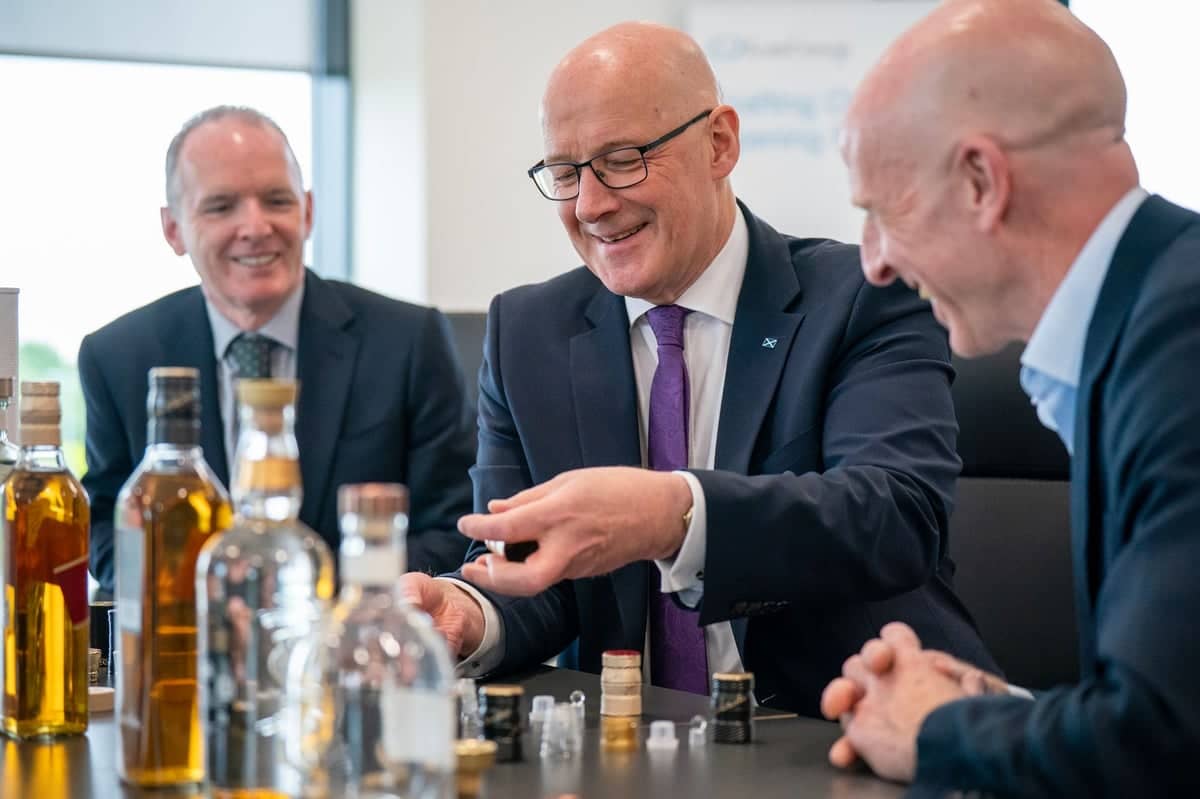
The discussion regarding foreign investment was contextualized by a recent visit from First Minister John Swinney to a factory in Gartcosh. The facility, operated by the Italian company Guala Closures, serves as a specific example of international business presence in Scotland. Guala Closures opened this particular facility one year prior to the date of the report in June 2026.
Guala Closures is identified in the source material as a leading global maker of tamper-proof seals for whisky bottles. The company’s operations in Gartcosh represent a tangible link between Scottish manufacturing and international supply chains, particularly within the spirits industry. Stuart Johnson, serving as the innovation director at Guala Closures, provided insights into the operational aspects of such enterprises.
The visit by the First Minister to the Gartcosh site was described in the source article as providing a "fitting backdrop for soundbites about foreign investment." This characterization suggests that high-level political engagement with specific industrial sites is being used to illustrate broader points about the state of overseas capital. However, the presence of established international firms like Guala Closures contrasts with the reported overall decline in new foreign investment.
Consultancy Data and Market Analysis
The analysis presented by Gillespie, Swinney, and Johnson coincided with the publication of data from the consultancy EY. On the same day as the First Minister’s visit, EY released its annual report, which likely provided further quantitative context to the challenges facing Scottish investment.
While the specific figures from the EY report are not detailed in the provided research notes, the timing of its release alongside the political commentary indicates a coordinated effort to address public and investor concerns. The inclusion of consultancy data suggests that the decline in foreign capital is being measured against established benchmarks, allowing for a more precise understanding of the scale of the shift.
Strategic Implications for Scottish Enterprise
The involvement of Adrian Gillespie, as chief executive of Scottish Enterprise, places the issue within the framework of official economic development strategy. Scottish Enterprise is responsible for driving economic growth in Scotland, and its leadership’s engagement with this topic signals the priority given to reversing or mitigating the decline in overseas capital.
The redefinition of the competitive landscape by geopolitics, data centres, and defence implies that future investment strategies may need to pivot away from traditional sectors. Instead, attracting capital may require aligning with these new dominant forces. For instance, businesses that can support the infrastructure needs of data centres or contribute to defence supply chains may find themselves in a more favorable position for securing funding.
The article, authored by Jeremy Grant and published on June 26, 2026, serves as a record of this moment in Scotland’s economic history. It captures the intersection of political leadership, corporate operations, and consultancy analysis in addressing the challenges posed by global shifts. The narrative does not offer predictions beyond the current state of affairs but documents the specific factors identified by key stakeholders as reshaping the investment environment.
Global Shifts and Local Impact
The core issue identified is the decline in foreign investment, which is attributed to broader global shifts. These shifts are not abstract concepts but are manifested in the specific sectors of geopolitics, data centres, and defence. The competitive landscape for investment in Scotland is no longer determined solely by local factors but is heavily influenced by international dynamics.
As global powers adjust their economic strategies, regions like Scotland must adapt to remain attractive to overseas capital. The presence of companies like Guala Closures demonstrates that opportunities still exist, but the nature of these opportunities may be changing. The focus on tamper-proof seals for whisky bottles highlights a niche but critical component of the global supply chain, illustrating how specialized manufacturing can still attract international interest.
However, the broader trend points toward a more challenging environment for attracting new foreign investment. The analysis contributed by Gillespie, Swinney, and Johnson reflects a recognition of this reality. Their comments, published in The Scotsman, provide a window into the strategic thinking of Scotland’s economic leaders as they navigate a world where capital flows are increasingly dictated by geopolitical and technological forces.