

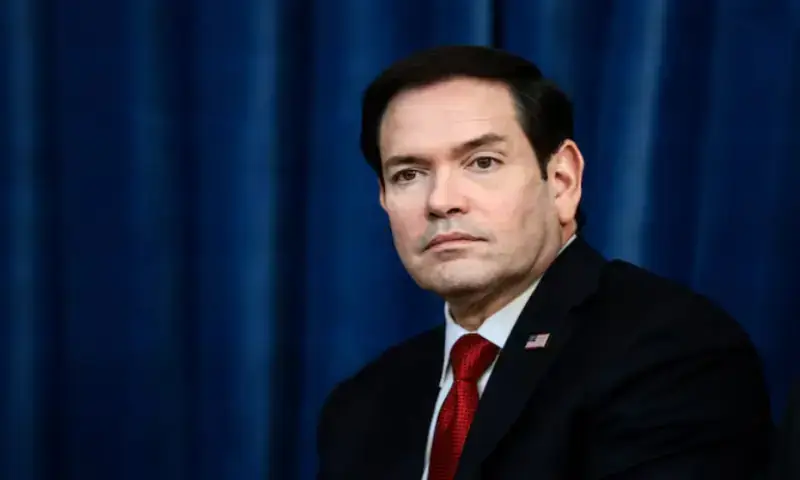

Rubio scheduled for meetings in UAE
United States Secretary of State Marco Rubio faces a diplomatic mission involving several Middle Eastern nations. The US official is scheduled to meet with leaders from the United Arab Emirates on Tuesday.
The itinerary includes travel to Kuwait and Bahrain, where Rubio will also hold discussions with officials representing the Gulf Cooperation Council (GCC).
GCC membership details
According to reports, the GCC grouping of monarchies consists of Saudi Arabia, Qatar, Oman, Kuwait, and Bahrain.
Rubio's upcoming engagements involve these six nations in total. The United Arab Emirates hosts one such meeting on Tuesday before Rubio proceeds to other locations.
Draft agreement elements
Discussions reportedly center on a draft agreement between Washington and Tehran. Elements of this proposed accord include provisions that do not limit Iran's ballistic missile program.
The draft also includes a proposal for a $300 billion reconstruction fund. Additionally, the text suggests provisions that could expand Tehran's regional influence and control over critical oil shipping lanes.
Regional security concerns
Gulf Arab leaders are reportedly wary of excessive concessions to Iran. Officials fear such terms might strengthen Tehran or reshape the region's security balance and oil flows.
The United States is seeking to sell this peace deal to these partners, who hold specific views on regional dynamics.
Context of recent conflict
All six Gulf Cooperation Council nations are described as strategic US allies. Reports indicate they offered some degree of logistical support to Washington during a war between the United States and Israel with Iran that began four months ago.
Officials from these countries were buffeted by Iranian airstrikes resulting from that specific conflict, according to available information.
National security architecture
The UAE, Saudi Arabia, Qatar, Kuwait, and Bahrain all host US military bases. These installations are described as making up the backbone of America's security architecture in the Middle East.
US policymakers note that if any of these countries rethink their security relationship with Washington, it could have a significant impact on American military strategy in the region.
Diplomatic balancing act
Rubio must balance assuring regional allies without appearing to criticize the US-Iran memorandum of understanding. President Donald Trump signed this accord last week and remains firmly behind it despite criticism from some fellow Republicans.