


International Workshop on Shifting Global Dynamics
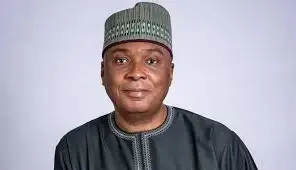
Former Senate President Dr. Bukola Saraki has joined a gathering of global leaders and policy experts at an international workshop held in Lake Como, Italy. This prestigious three-day event, organized by the Konrad Adenauer Stiftung, is focused on examining the future of global partnerships amid growing concerns regarding the United States’ evolving role in international development and diplomacy. The workshop is scheduled to take place from June 29 to July 1.
The official theme of the event, "Big Daddy Gone? Global Partnerships Without U.S. Leadership," encapsulates the core inquiry of the discussions. It reflects a contemporary geopolitical discourse questioning the long-term consistency and scope of American engagement in global affairs. According to a statement issued on Sunday by Yusuph Olaniyonu, the Head of the Abubakar Bukola Saraki Media Office, the workshop will thoroughly examine the implications of a gradual reduction in United States engagement in global partnerships. The discussions aim to explore emerging opportunities for other regions as the international landscape shifts, prompting a re-evaluation of established alliances and development frameworks.
Examining a Changing Global Order
The Konrad Adenauer Stiftung, known for its commitment to fostering international dialogue and understanding, has structured this workshop to facilitate high-level discourse among policymakers, diplomats, and experts from multiple continents. Participants are expected to delve into the viability of existing international institutions and agreements in a scenario of potentially diminished U.S. leadership. A significant part of the agenda involves identifying and debating alternative models for cooperation and partnership that can sustain global stability and progress. These critical discussions will cover a broad spectrum of global relations, including economic strategies, security arrangements, and developmental policies, all viewed through the lens of a changing international power dynamic.
Saraki's Role: Advocating the African Perspective
Dr. Saraki is slated to present the African perspective during the fifth panel of the workshop, which is scheduled for Tuesday. His specific topic is "Development Policies: Withdrawal of the United States from International Development – Opportunities and Challenges." This presentation places him at the center of discussions regarding how international development frameworks may adapt to potential changes in U.S. foreign aid and diplomatic engagement, particularly concerning the African continent.
The selection of Dr. Saraki to represent Africa at this pivotal forum was based on his extensive and diverse experience in both the private and public sectors. His qualifications for this significant role include his distinguished tenure as Senate President of Nigeria, his impactful service as Chairman of the Nigerian Governors’ Forum, and his time as Governor of Kwara State. These roles have provided him with a comprehensive understanding of governance, economic development, and international relations from an African standpoint, making him uniquely positioned to articulate the continent's challenges and opportunities in a shifting global order.
Forum for Global Dialogue
The workshop brings together a diverse array of stakeholders to analyze the potential consequences of a reduced American footprint in global governance. The participants, comprising global leaders, policy experts, policymakers, diplomats, and experts from various continents, are engaging in a direct and candid dialogue. This collaborative environment is designed to foster a deeper understanding of the complex interdependencies that characterize modern international relations and to collectively chart a course for future cooperation. The discussions are not limited to theoretical frameworks but also aim to identify practical strategies and policy adjustments required to navigate a world with evolving leadership dynamics.
Reimagining Global Partnerships in a Multipolar Era
The provocative theme, "Big Daddy Gone?" reflects a broader and increasingly urgent discourse on the reliability and consistency of the United States as a hegemonic power in international affairs. The workshop directly addresses the growing anxiety among partner nations regarding the future of American commitments to global stability, security, and development initiatives. This sentiment underscores a period of significant transition in international relations, moving towards a more multipolar world where power and influence are distributed among several major actors.
By specifically focusing on "Opportunities and Challenges," the panel led by Dr. Saraki highlights the dual nature of this global transition. While a reduced U.S. involvement may indeed create gaps in international support, funding, and diplomatic leadership, it simultaneously opens space for other nations and regional blocs to assume greater responsibility and exert increased influence in global policy-making. This shift necessitates a re-evaluation of traditional alliances and encourages the formation of new, more diversified partnerships.
The event itself underscores the increasing multipolarity of the current geopolitical era. Leaders and experts from Africa, Europe, Asia, and the Americas are engaging in direct, high-level dialogue to chart a course for international cooperation that does not rely solely or predominantly on American leadership. This collaborative effort seeks to build resilient global partnerships capable of addressing complex challenges independently, fostering a more balanced and distributed approach to global governance.
Strategic Adjustments for International Development
A key component of the workshop is the examination of how development policies might be restructured to adapt to new global realities. The potential withdrawal or significant reduction of U.S. funding and diplomatic support in certain critical areas requires immediate strategic adjustments by other international actors, multilateral organizations, and recipient nations. This necessitates innovative approaches to resource mobilization, capacity building, and collaborative development initiatives.
Dr. Saraki’s participation ensures that the crucial African viewpoint is integrated into these critical negotiations and strategic planning sessions. His extensive background in governance, particularly in a developing nation context, provides a practical and informed lens through which to assess how developing nations can effectively navigate a world with potentially diminished U.S. engagement. The Konrad Adenauer Stiftung continues to serve as a vital platform for such cross-cultural and cross-political exchanges, aiming to foster deeper understanding and facilitate the development of collaborative strategies among diverse political systems and economic interests worldwide.