


Expert Warnings on Seoul’s Strategic Position
As speculation intensifies regarding a possible summit between United States President Donald Trump and North Korean leader Kim Jong Un before the end of 2026, concerns have emerged regarding South Korea’s role in any potential diplomatic outcomes. According to reports from Asia News Network, experts have warned that such a meeting could leave Seoul marginalized and less secure.
The warning highlights a specific concern: given existing tensions within the United States-South Korea alliance, a direct engagement between Trump and Kim might bypass South Korean interests. This assessment suggests that the bilateral security partnership is currently experiencing friction that could impact regional diplomatic dynamics.
Tensions Within the US-South Korea Alliance
The potential sidelining of Seoul is linked directly to fraying relations between Washington and its key Asian ally. The United States considers South Korea a security ally, yet current geopolitical assessments indicate that this alliance is under strain.
Asia News Network reported on September 4, 2026, that the risk of South Korea being sidelined in Trump-Kim talks is heightened by these internal tensions. The publication attributed the warning to experts who analyze the intersection of US foreign policy and regional security structures. No specific details regarding the nature of the tensions within the alliance were provided in the source material beyond the general characterization of them as existing factors.
Historical Context of the Korean Armistice
The diplomatic landscape in which these potential talks occur is defined by a long-standing military stalemate. North Korea and South Korea remain in an uneasy truce following the war that took place between 1950 and 1953.
This conflict, which lasted three years, concluded with an armistice rather than a peace treaty. The absence of a formal peace agreement means that technically, the two nations are still at war, though active combat has ceased for decades. This historical backdrop provides the context for why any new diplomatic engagement between the United States and North Korea is viewed as significant by observers.
Visual Documentation of Past Engagements
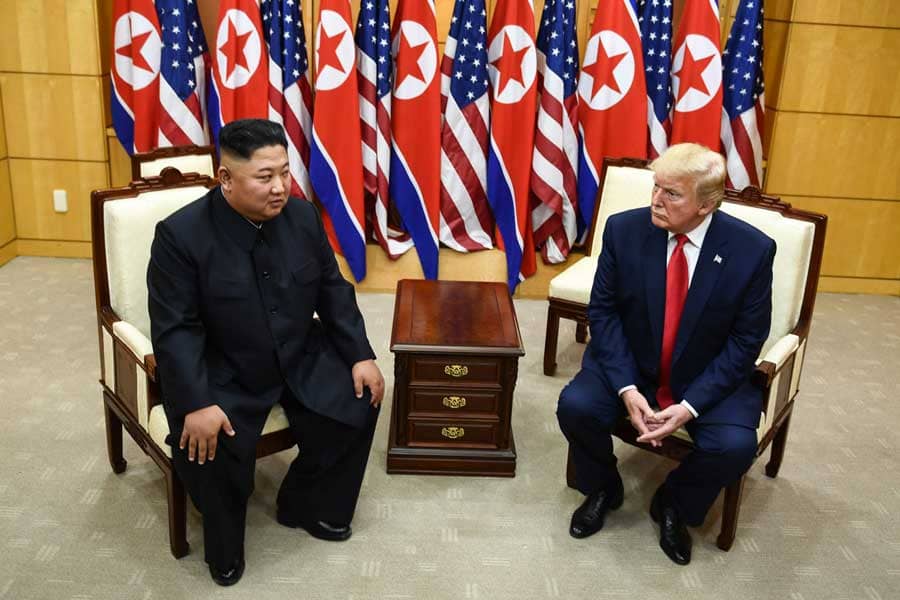
Historical precedents for such high-level diplomacy have been documented in past years. An image from June 30, 2019, shows North Korean leader Kim Jong Un and US President Donald Trump attending a meeting on the south side of the Military Demarcation Line. This encounter took place in the Joint Security Area (JSA) of Panmunjom, located within the Demilitarized Zone (DMZ).
The photograph, credited to AFP, captures the leaders during that specific diplomatic event. The location itself serves as a physical marker of the division between the two Koreas and the restricted nature of interactions across the border.
Implications for Regional Security
The primary concern raised by experts is not merely diplomatic protocol but tangible security outcomes. The warning that Seoul could be left "less secure" implies that a direct US-North Korea agreement might exclude South Korean input on matters affecting its national defense.
As the potential for a Trump-Kim summit before the end of 2026 grows, the focus remains on how South Korea’s status as a US security ally is managed in these negotiations. The current reporting suggests that the trajectory of the US-South Korea alliance and the conduct of US-North Korea diplomacy are converging in a way that poses risks to Seoul’s strategic position.
North Korea is described as nuclear-armed in the source material, adding weight to the security implications of any diplomatic developments. The combination of nuclear capabilities, the unresolved status of the 1950-53 war, and current tensions in the US-ROK alliance creates a complex environment for future negotiations.
Asia News Network published its report on September 4, 2026, noting the mounting speculation. The article was authored by Wendy Teo and originally appeared in The Straits Times. The publication date of the source material aligns with the current timeline of speculation regarding a summit before the end of 2026.
No response from the South Korean government or the White House has been included in the provided research notes or source context. The available information is limited to the warnings issued by experts and the factual background of the ongoing armistice and alliance tensions.