


Structural Shifts Redefining Corporate Strategy
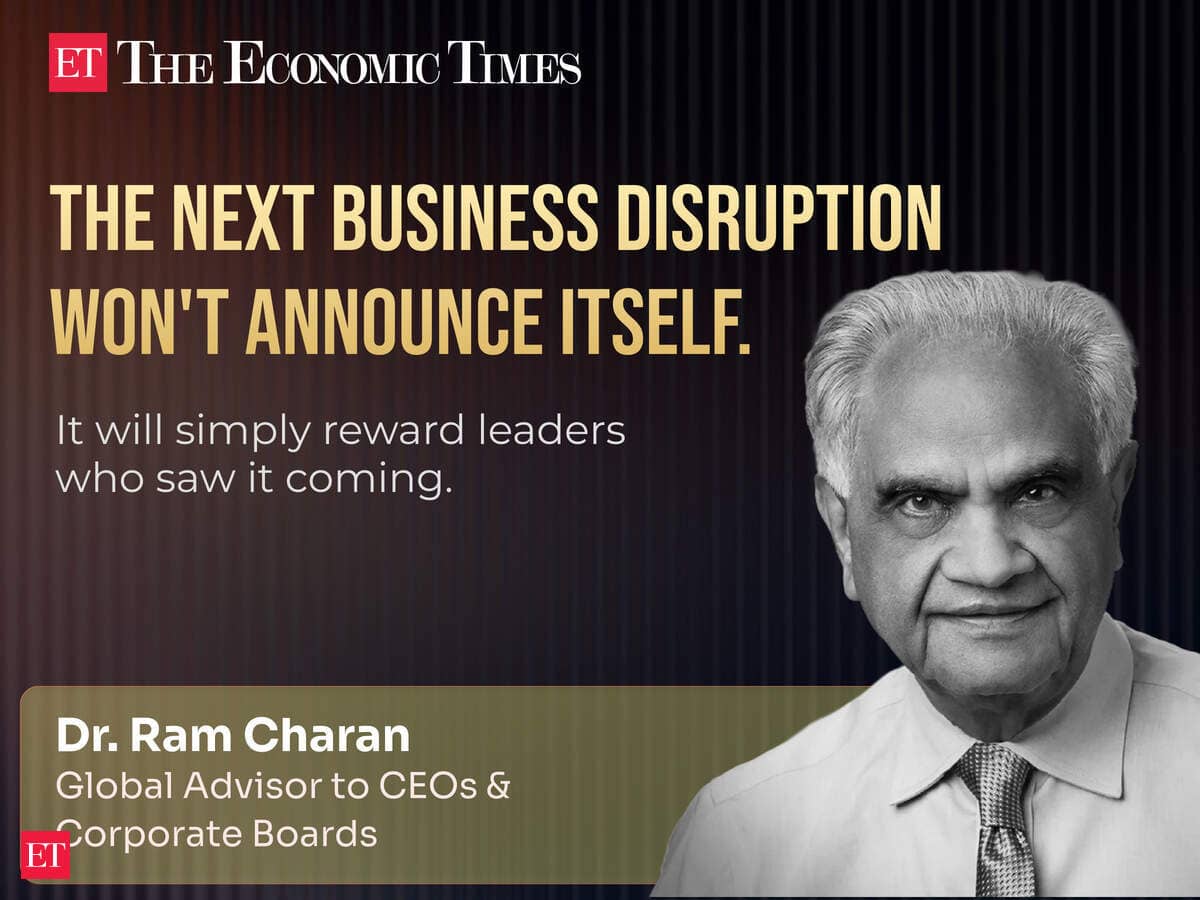
Business strategy is currently undergoing a fundamental transformation driven by forces that extend far beyond traditional markets and financial balance sheets. According to Dr. Ram Charan, a globally renowned business advisor, these structural changes are creating a new competitive landscape that requires immediate attention from corporate leadership. The primary drivers reshaping the global economy include geopolitical tensions, the rapid integration of artificial intelligence, shifting supply chain dynamics, and emerging economic realities.
These developments challenge the validity of traditional planning models. Charan noted that the fundamentals of business are changing, with standard five-year plans being increasingly difficult to sustain in the face of volatile structural shifts. Leaders must adapt to a new environment defined by China's expanding industrial influence, long-term currency pressures, and rising energy costs. These factors collectively demand that executives interpret global developments with greater precision and assess emerging risks more rigorously than in previous decades.
The Decisive Decade for Leaders Program
To address these complex challenges, an executive masterclass titled "The Decisive Decade for Leaders" has been organized. The program targets CEOs, founders, and senior executives in India, aiming to provide strategic frameworks for navigating the structural changes redefining business operations. Unlike traditional leadership conferences that focus on conversational exchanges, this masterclass is designed as a practical working session.
The initiative brings together business leaders for an intensive program focused on interpreting global developments and identifying new growth opportunities. The stated goal of the program is to help participants strengthen resilience, seize emerging opportunities, and lead with confidence through what Charan describes as a decisive decade. By focusing on actionable insights rather than theoretical discussions, the masterclass seeks to equip executives with the tools necessary to respond to the six critical driving forces identified in the curriculum.
Geopolitics and Economic Pressures
Geopolitics stands out as a primary driver reshaping business strategy alongside other structural changes. The program highlights that global political dynamics are no longer peripheral concerns but central components of corporate planning. This geopolitical reality intersects with economic pressures that have long-term implications for industrial competitiveness.
Industrial Competition and Currency Dynamics
A significant component of the new competitive landscape is China's expanding industrial power. The masterclass identifies this expansion as a key factor altering global market dynamics. Simultaneously, leaders must navigate long-term currency pressures that affect international trade and investment flows. These economic variables are compounded by rising energy costs, which add another layer of complexity to operational planning.
Charan emphasized that these factors create a new baseline for competition. Businesses can no longer rely on historical precedents or stable economic assumptions. Instead, executives must actively monitor these indicators to adjust their strategies in real time. The program frames this adaptation not as a optional adjustment but as a necessity for survival and growth in the current decade.
Technology and Supply Chain Reconfiguration
The integration of artificial intelligence represents another critical force impacting the future of business operations. Charan cited AI as a determinant factor in how companies will compete in the coming years. The adoption of this technology is not merely an operational upgrade but a strategic imperative that reshapes core business functions.
Supply Chain Volatility
Alongside technological shifts, supply chain dynamics are undergoing significant changes. Shifting supply chains are altering competitive landscapes by disrupting traditional logistics and procurement models. Leaders must understand how these disruptions affect their specific industries and develop contingency plans that account for potential bottlenecks or reconfigurations in global trade routes.
The masterclass explores how these forces intersect. For instance, geopolitical tensions can impact supply chain stability, while economic realities influence the cost of implementing new technologies. Charan’s framework suggests that business leaders must view these elements as interconnected rather than isolated challenges. The objective is to build a holistic understanding of the environment in which their organizations operate.
Operationalizing Strategic Responses
The executive masterclass provides a structured approach for leaders to assess these risks and identify opportunities. By focusing on practical application, the program aims to move participants beyond awareness to action. The six critical forces identified—geopolitics, AI, supply chains, economic realities, industrial competition, and currency/energy pressures—serve as the core modules of this strategic assessment.
Participants are expected to leave with a clearer understanding of how these forces will define the competitive landscape in the near future. The program does not offer predictions about specific market outcomes but provides the analytical tools to interpret ongoing developments. Charan’s approach emphasizes that resilience is built through proactive adaptation to structural changes rather than reactive measures after disruptions occur.
The initiative reflects a broader trend among senior executives seeking rigorous, data-driven frameworks to guide decision-making in an uncertain global environment. As the new decade progresses, the ability to navigate these six key challenges will likely determine which organizations thrive and which struggle to maintain their market position.