


Global Staple Food Costs Rise Amid Climate and Energy Pressures
Data published on Friday by the UN Food and Agriculture Organization (FAO) indicates that a global basket of staple foods cost one percent more in July than it did a year prior. The FAO, a specialized agency of the United Nations, plays a critical role in collecting and analyzing data on global food security and agricultural trends. Its recent report highlighted a concerning trend: the cost of a global basket of staple foods in July climbed by one percent compared to the same period last year. This seemingly modest increase, when viewed in the broader context of persistent economic pressures, significantly contributes to ongoing food inflation worldwide. The organization's findings underscore that staple food prices have not only risen but continue to remain elevated above the levels observed in 2025, indicating a sustained period of higher food costs for consumers globally.
The FAO identified several factors contributing to these rising costs, including heatwaves, energy price hikes, and El Niño-related weather conditions. The FAO's analysis delves into a confluence of interconnected factors driving these escalating costs. Foremost among them are severe heatwaves, which have become more frequent and intense, directly impacting agricultural productivity across various regions. Simultaneously, significant energy price hikes have increased the operational costs for farmers, from fuel for machinery to electricity for irrigation and processing, ultimately translating into higher consumer prices. The influence of El Niño-related weather conditions, characterized by shifts in global weather patterns, has also been a critical determinant, leading to persistent hot and dry weather in key agricultural zones. This adverse climate phenomenon directly threatens crop yields, reducing the supply of essential foodstuffs. Furthermore, the backdrop of ongoing war and broader geopolitical tensions introduces a profound layer of market uncertainty, disrupting established supply chains and influencing commodity trading, thereby exacerbating price volatility.
Sugar Prices Spike on Yield Concerns
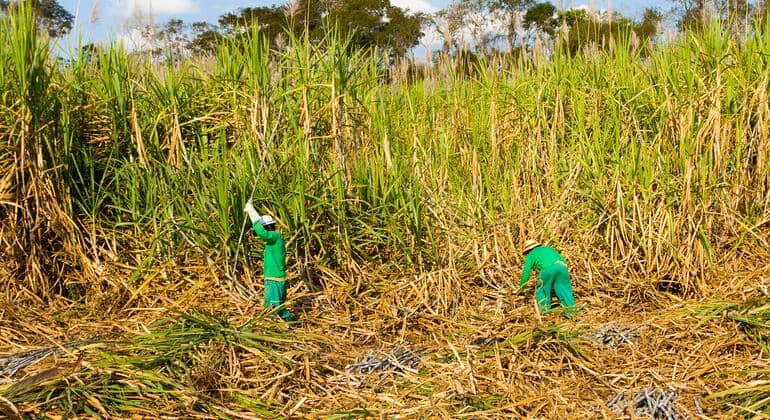
Among commodities, sugar prices registered a standout surge of 5.6 percent in July. The FAO Food Price Index update attributed this increase primarily to concerns about the potential impacts of persistent hot and dry weather on crop yields in the European Union. Within the broader spectrum of commodity markets, sugar stood out with a particularly sharp increase, registering a 5.6 percent surge in July. The FAO Food Price Index update specifically pointed to concerns over the impact of persistent hot and dry weather on crop yields within the European Union, a significant producer of sugar beet. These unfavorable climatic conditions have raised anxieties about the forthcoming harvest, contributing to upward price pressure.
The report also cited El Niño-related weather conditions affecting key producing countries in Asia as a significant driver for the price hike. Concurrently, the report highlighted the role of El Niño-related weather conditions, which have adversely affected key sugar-producing countries across Asia, including major cane sugar producers. The combined effect of these regional climate impacts on two crucial sugar-producing continents has created a tight global supply outlook, directly influencing market prices. These global market shifts pose hunger risks for millions, despite some better harvests reported in certain areas. While some regions have reported better harvests for specific crops, these global market shifts, particularly in staple commodities like sugar, nonetheless pose significant hunger risks for millions of vulnerable populations, as the overall cost of the basic food basket continues to climb.
South Africa Faces Sharp Increase in Basic Food Costs
In South Africa, the cost of the basic food basket has seen a 62 percent surge. This sharp increase is attributed to a combination of local energy price hikes and broader climatic factors affecting agricultural production. The global trends of rising food costs find a stark reflection in South Africa, where the financial burden on households has intensified dramatically. The cost of the basic food basket, a critical measure of household affordability for essential foodstuffs, has experienced an alarming 62 percent surge. This substantial increase is not an isolated event but rather the result of a potent combination of local energy price hikes and broader climatic factors that are severely impacting agricultural production within the country. The nation's reliance on energy for farming, processing, and transportation means that domestic energy cost increases directly translate into higher food prices.
The rise in costs aligns with global trends where heatwaves and energy price hikes have pushed food prices upward. This local situation is further exacerbated by global phenomena. The rise in South African food costs aligns directly with the international trends identified by the FAO, where widespread heatwaves and escalating energy prices have consistently driven food prices upward. In South Africa, these economic pressures are compounded by the same climate impacts threatening harvests elsewhere, including El Niño-related weather patterns. For South Africa, these economic pressures are compounded by the very same climate impacts that threaten harvests globally, most notably the disruptive El Niño-related weather patterns, which can bring either severe droughts or intense rainfall, both detrimental to crop yields.
Impact on Local Markets and Consumers
The 62 percent surge in the basic food basket represents a significant financial burden for consumers in the region. For millions of South African consumers, the staggering 62 percent surge in the basic food basket represents a profound and immediate financial burden. This dramatic increase directly erodes household purchasing power, particularly for low-income families who allocate a larger proportion of their income to food. The increase is driven by the interplay of energy costs and climate conditions, which have affected both production and distribution channels. The escalation in costs is a direct consequence of the intricate interplay between rising energy costs and adverse climate conditions, which together have disrupted and made more expensive both the production and distribution channels for food. From the farm gate, where energy is crucial for irrigation and harvesting, to the transportation networks that bring produce to markets, every stage of the food supply chain is affected.
While specific data on local harvest yields was not detailed in the primary reports, the FAO's global assessment notes that persistent hot and dry weather continues to threaten crop yields. In South Africa, this has coincided with energy price hikes, creating a dual pressure on food affordability. While the primary reports did not detail specific local harvest yields for South Africa, the FAO's global assessment provides a critical context, indicating that persistent hot and dry weather continues to threaten crop yields across vulnerable regions. In South Africa, this climatic stress has coincided with a period of significant energy price hikes, creating a formidable dual pressure that severely impacts food affordability and exacerbates food insecurity for many households.
Climate and Geopolitics Drive Market Volatility
The broader context for these price increases involves complex interactions between climate change and geopolitical instability. The overarching narrative behind these pervasive food price increases is one of complex and often reinforcing interactions between the accelerating impacts of climate change and persistent geopolitical instability. The FAO highlighted that El Niño and heatwaves are recurring threats to agricultural stability, reducing the reliability of harvests in key regions. The FAO has consistently highlighted that phenomena such as El Niño and intensifying heatwaves are not isolated incidents but recurring threats that fundamentally undermine agricultural stability worldwide. These climate events reduce the predictability and reliability of harvests in key food-producing regions, leading to supply shocks.
Geopolitical conflicts add another layer of uncertainty to global food markets. Adding a critical layer of volatility, geopolitical conflicts introduce profound uncertainty into global food markets. War and political tensions disrupt supply chains and influence commodity prices, making it difficult for countries like South Africa to stabilize local food costs despite regional production efforts. Instances of war and heightened political tensions directly disrupt vital supply chains, whether through blockades, damage to infrastructure, or the displacement of agricultural labor. Such disruptions not only limit the physical movement of goods but also influence global commodity prices, making it exceedingly challenging for nations like South Africa to implement effective strategies to stabilize local food costs, even when regional production efforts are robust.
The combination of these factors has resulted in staple food prices staying elevated above previous years' levels. The cumulative effect of these global and local pressures—from climate-induced crop failures to conflict-driven market disruptions and domestic energy price surges—has resulted in staple food prices remaining significantly elevated above previous years' levels. For consumers in South Africa, the 62 percent increase in the basic food basket reflects the tangible impact of these global and local pressures on daily living costs. For the average consumer in South Africa, the dramatic 62 percent increase in the basic food basket is a stark and tangible manifestation of how these intricate global and local forces directly translate into higher daily living costs and increased economic hardship.