

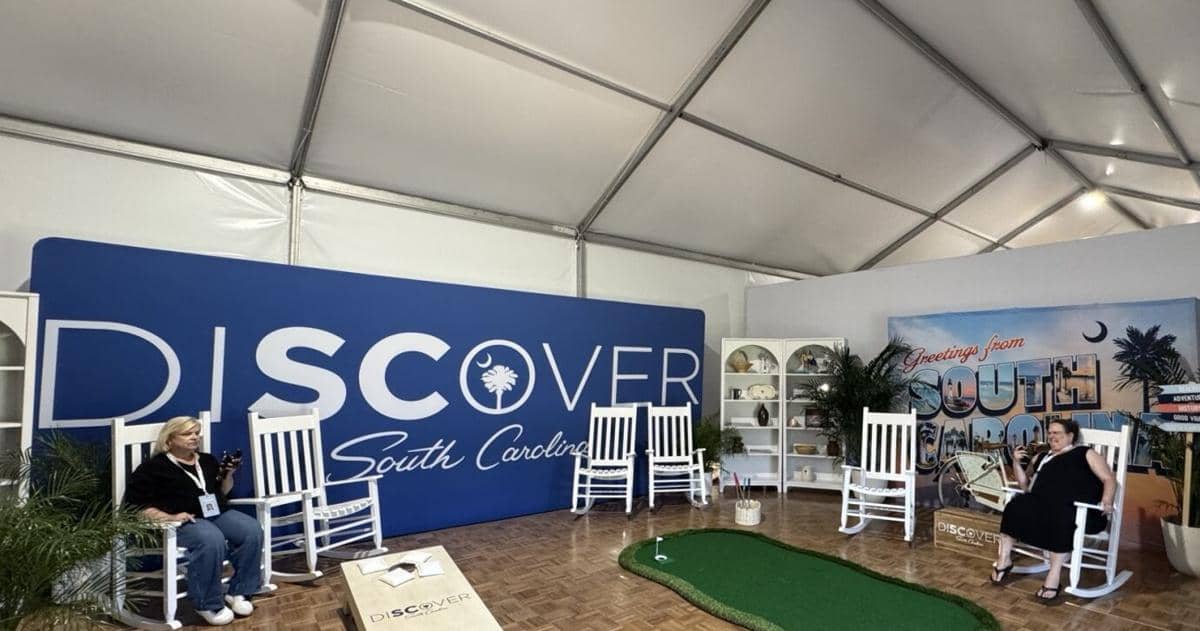


South Carolina Establishes Presence Along the National Mall
The state of South Carolina has set up a dedicated tent for attendance at the Great American State Fair. This specific location is situated along the National Mall in Washington, D.C., placing it within one of the primary gathering areas for the event. The presence of this pavilion indicates an organized effort to represent the state during the proceedings of the fair.
According to reports from Postandcourier, the physical structure serves as a central point where visitors can engage with representatives or view exhibits associated with South Carolina. The tent functions as more than just a display area; it is designed to offer specific amenities that distinguish it from other temporary structures at large public gatherings.
Attendees entering the venue find themselves in an environment curated for comfort and relaxation. The interior layout includes seating arrangements intended to allow guests to rest between viewing fair activities or while waiting for food service. These details are part of a broader strategy to ensure that visitors from out-of-state can experience hospitality consistent with regional traditions.
Specific Amenities Define the Visitor Experience
The South Carolina booth provides rocking chairs as a primary seating option within its tent structure. This choice in furniture contrasts with standard plastic folding chairs often found at similar events, suggesting an intentional design decision to provide comfort and leisure opportunities for fairgoers.
Climate Control Features
In addition to the specific type of seating available, the pavilion is equipped with air conditioning. This feature addresses environmental conditions that might otherwise make waiting in line or standing near food stalls uncomfortable during warmer weather months typical for state fairs held outdoors.
Operational Focus on Hospitality and Service
The operational model of the South Carolina tent emphasizes a specific style of interaction between staff and visitors. Descriptions provided by sources characterize this approach as "Southern hospitality." This term refers to a cultural set of values often associated with the region, prioritizing warmth, politeness, and personal attention in service interactions.
Commitment to Friendly Service
Beyond general hospitality tropes, the booth explicitly markets itself on providing "friendly service." Staff members are tasked with maintaining a demeanor that aligns with these expectations. This focus extends beyond mere transactional exchanges involving tickets or merchandise; it involves cultivating an atmosphere where visitors feel welcomed and attended to.
Comparison of Service Standards
The emphasis on friendliness serves as a distinguishing factor for the South Carolina pavilion within the larger context of the Great American State Fair. While many vendors at such events focus primarily on product sales or information dissemination, this particular booth integrates service quality into its core identity.
Integration Within the Larger Event
The existence of a state-specific tent implies coordination with event organizers to secure space along the National Mall. The Great American State Fair operates as a major attraction drawing crowds from various regions, including Washington, D.C., and surrounding areas.
South Carolina's participation aligns it with other states that maintain booths or tents at this gathering. This arrangement allows for geographic representation across the United States within a single venue. The success of such an endeavor often relies on foot traffic patterns along the National Mall during fair hours.
Visitor Flow and Accessibility
The placement of the tent suggests accessibility to high volumes of pedestrian traffic. Visitors navigating the grounds can locate the South Carolina booth as part of their tour of various state exhibits, food courts, and entertainment stages typical for such events.
Cultural Representation at National Events
By incorporating rocking chairs and emphasizing Southern hospitality, the pavilion projects a specific cultural image to attendees. This representation aims to educate visitors about regional customs while simultaneously offering them an opportunity to experience these traits firsthand through direct interaction with booth staff.
The Role of State Fairs in Political and Cultural Discourse
State fairs often serve as platforms for political messaging, cultural promotion, and economic development. The South Carolina pavilion contributes to this multifaceted role by showcasing the state's identity through tangible elements like furniture choices and service protocols.
Impact on Attendee Satisfaction
The inclusion of air conditioning and comfortable seating likely influences visitor satisfaction metrics for the booth. Comfortable conditions allow attendees to spend more time at a single location, potentially increasing engagement with South Carolina representatives or products displayed inside the tent.
Feedback Loops from Fairgoers
While specific quantitative data on attendee feedback is not detailed in available notes, qualitative descriptions suggest that the amenities are intended to meet high standards of comfort. Positive reception of these features would reinforce the decision-making process behind selecting rocking chairs and installing climate control systems.
Broader Implications for State Representation
The success of this specific booth model may influence how other states approach their own representations at future events. The integration of comfort-focused amenities sets a precedent that prioritizes the visitor experience alongside informational content delivery.
Evolving Standards for Event Spaces
As public gatherings become more competitive in attracting visitors, attention to detail regarding physical environment becomes increasingly important. Features like air conditioning and specialized seating differentiate spaces within crowded venues where competition for foot traffic is high among various state pavilions.