


Agreement Marks Shift in Allied Industrial Cooperation
SEOUL — The South Korean government announced Tuesday that it has opened a pathway for national defense companies to participate directly within NATO's broader defense procurement system. This development follows a specific agreement reached between Seoul and the North Atlantic Treaty Organization alliance to initiate formal negotiations on a comprehensive procurement framework.
National Security Adviser Wi Sung-lac stated in an interview with The Korea Herald that this diplomatic move represents a significant structural change for South Korean industry within the security architecture of Europe. Under current arrangements, defense firms typically engage solely in bilateral cooperation projects with individual member states such as Germany or France. If finalized and concluded, the proposed deal would fundamentally alter this dynamic.
The resulting agreement is designed to enable South Korean defense companies to move beyond these restricted bilateral interactions. Instead, they would gain broader access to alliance-wide procurement initiatives and industrial cooperation programs that currently remain closed to non-member nations outside of specific partnerships. This shift allows Seoul's private sector entities to engage in a unified market rather than navigating separate contracts for each participating nation.
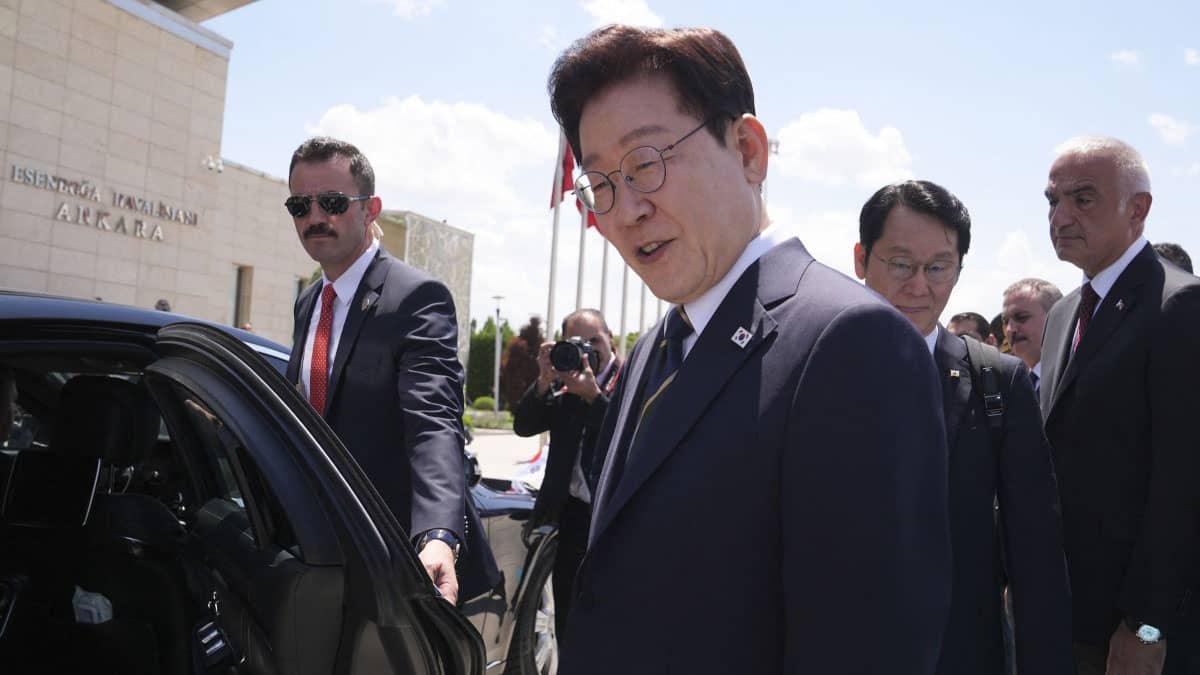
The timing of this announcement coincides with the 36th NATO Heads of State and Government Summit, which took place in Ankara on July 7, 2026. South Korean President Lee Jae Myung attended the summit as a guest leader before departing from Esenboga Airport upon his return to Seoul.
The decision reflects an evolving geopolitical landscape where industrial integration is increasingly tied to security commitments. By opening this door, Seoul signals its willingness to align more closely with NATO standards and supply chains without necessarily joining the alliance itself immediately. The framework agreement negotiations are expected to cover logistical support, maintenance contracts, and potentially joint research initiatives involving defense technology.
Financial Commitments Amidst Policy Constraints
Prior to these industrial discussions regarding procurement systems, South Korea made a distinct financial contribution at the NATO summit held in Ankara. The government pledged $100 million specifically for Ukraine as part of its broader foreign policy strategy during this period.
This monetary commitment occurred alongside a maintenance of existing defense export policies that differ from those adopted by other major allies. While many European nations have intensified their own arms production and sales, South Korea has maintained a strict no-lethal-arms policy regarding direct military hardware exports to conflict zones in the immediate vicinity of its strategic interests.
National Security Adviser Wi Sung-lac addressed this apparent contradiction between financial aid and export restrictions. He noted that while Seoul provides humanitarian support through funding mechanisms like the pledged $100 million, it does not supply lethal weapons systems under current regulations. This policy stance distinguishes South Korea's approach from nations that have fully integrated into NATO's arms transfer protocols.
The distinction between financial aid and military hardware sales remains a point of discussion among analysts observing regional security dynamics. The $100 million pledge represents non-lethal assistance, which may include medical supplies, engineering equipment for reconstruction efforts, or logistical support vehicles that do not fall under lethal weapon classifications defined by international arms control treaties.
Meanwhile, the negotiations on defense procurement focus on commercial and industrial cooperation rather than direct military exports to conflict zones. This separation allows South Korean firms like Hanwha Aerospace or Hyundai Rotem to participate in NATO supply chains for peacetime maintenance of equipment used by member nations without violating domestic restrictions on selling offensive weaponry.
Implications for Regional Security Architecture
The opening of the procurement market creates a new channel through which South Korean industrial capacity can be integrated into Western defense ecosystems. Defense firms that were previously limited to bilateral contracts with single NATO members will now have opportunities to bid on projects funded by pooled resources or managed at the alliance level.
This structural change could accelerate technology transfer and standardization efforts across different military platforms used by various member states. By participating in joint procurement programs, South Korean companies would need to adhere to interoperability standards set forth by NATO command structures rather than customizing products for individual national armies.
The negotiations initiated at the Ankara summit are expected to take several months to complete before any formal agreement is signed and implemented across all member states. During this negotiation phase, technical committees will review existing contracts and determine which South Korean firms qualify for inclusion in the expanded procurement network.
Opposing parties within NATO have not issued public statements contradicting these developments as of Tuesday morning. However, some European defense ministers expressed cautious optimism about integrating new industrial partners while emphasizing that security partnerships must remain compatible with broader alliance strategic goals.
The announcement comes after weeks of diplomatic engagement between Seoul and Brussels regarding the future role of Asia-Pacific nations in Euro-Atlantic security frameworks. President Lee Jae Myung's attendance at the summit underscored South Korea's intent to deepen ties beyond traditional economic cooperation into defense industrial collaboration.