

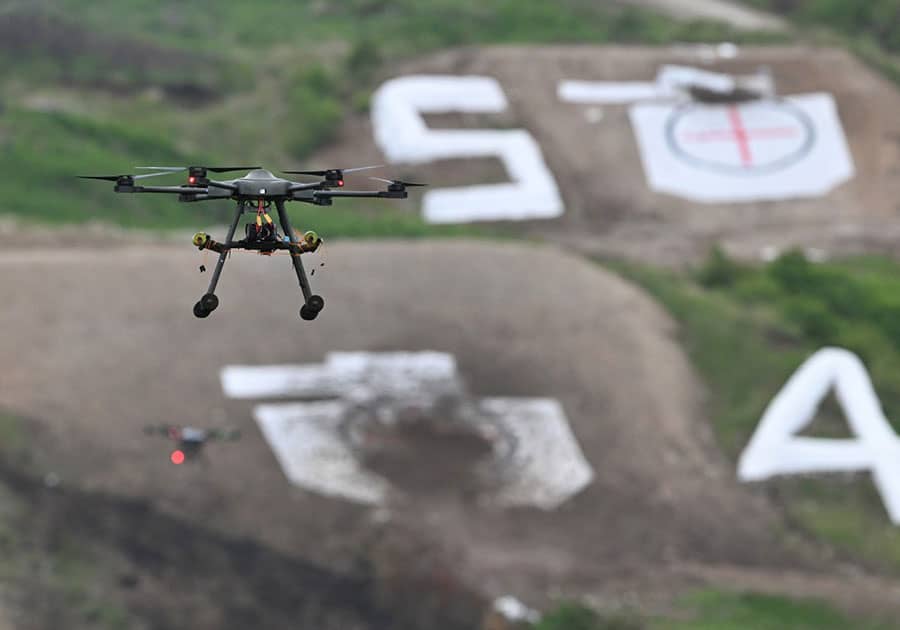

Defence Ministry Unveils Expanded Drone Capabilities
South Korea’s Defence Ministry has announced a strategic initiative to rapidly expand the nation's drone and counter-drone capabilities. The plan, designed to address escalating security concerns with neighboring North Korea, involves a comprehensive overhaul of unmanned aerial systems deployment and personnel training.
According to the ministry, the strategy includes two primary components: the establishment of a large-scale training program for military personnel and the mass distribution of unmanned equipment to active units. The Defence Ministry stated that these measures are intended to strengthen national defense readiness in response to specific regional threats.
Training 500,000 ‘Drone Warriors’
A central pillar of the announced strategy is the training of 500,000 individuals referred to as “drone warriors.” This figure represents a significant expansion in the number of personnel trained to operate unmanned aerial vehicles (UAVs) and counter-drone technologies.
The Defence Ministry described this workforce development as essential for managing the increasing complexity of modern aerial warfare. By training such a large cohort, the ministry aims to ensure that drone operations are integrated deeply into standard military procedures across various branches of the armed forces.
Distribution of Unmanned Systems
In addition to personnel training, the Defence Ministry plans to distribute tens of thousands of unmanned systems across frontline units. This equipment rollout is scheduled to coincide with the training initiative, ensuring that newly trained operators have immediate access to operational hardware.
The distribution targets units positioned along the border regions where tensions with North Korea are most acute. The ministry indicated that these systems will enhance situational awareness and rapid response capabilities for troops stationed in high-risk areas.
Strategic Response to Regional Threats
The announcement comes amid heightened geopolitical tensions on the Korean Peninsula. The Defence Ministry explicitly linked the expansion of drone capabilities to the need to counter North Korean threats. Officials stated that the rapid development of these technologies is a direct response to perceived security challenges posed by Pyongyang.
Counter-Drone Focus
The strategy emphasizes not only offensive drone operations but also counter-drone defenses. The ministry noted that the expansion includes capabilities to detect, track, and neutralize unauthorized unmanned aerial systems, which have become a growing concern in recent years.
This dual focus on both deploying and defending against drones reflects an assessment of the evolving nature of aerial threats in the region. The Defence Ministry has not provided specific details regarding the types of counter-drone technologies being acquired or developed as part of this initiative.
Timeline and Implementation
The Defence Ministry stated that the plan involves rapid expansion, though specific timelines for the completion of the training program or the full distribution of equipment were not detailed in the initial announcement. The ministry emphasized that the rollout will be executed with urgency to address immediate security requirements.
South Korea has previously faced incidents involving North Korean drones crossing into southern airspace, which have prompted calls for enhanced aerial surveillance and defense mechanisms. The current plan aims to institutionalize a robust response framework through widespread drone literacy among military personnel.
Operational Implications
The scale of the proposed training program suggests a fundamental shift in how South Korea views aerial warfare. By designating 500,000 individuals as “drone warriors,” the ministry is signaling that unmanned systems will play a dominant role in future military operations.
Analysts note that such a large-scale integration of drone technology requires significant logistical support, including maintenance infrastructure, supply chains for spare parts, and continuous technical training. The Defence Ministry has committed to supporting these operational needs as part of the broader capability expansion.
The distribution of tens of thousands of systems to frontline units will also require adjustments in military doctrine and rules of engagement. The ministry indicated that standard operating procedures will be updated to reflect the new realities of drone-centric warfare.
Regional Security Dynamics
South Korea’s move is viewed as a direct countermeasure to North Korea’s own advancements in unmanned technology. Pyongyang has demonstrated its ability to deploy drones for surveillance and potential offensive purposes, prompting Seoul to accelerate its own development programs.
The Defence Ministry has not commented on potential arms race dynamics or the impact of this expansion on regional stability. The focus remains strictly on enhancing South Korea’s defensive posture and operational readiness against identified threats from the north.
International observers are monitoring the situation closely, as the proliferation of drone technology in Northeast Asia could have broader implications for military balance in the region. However, no official responses from North Korea regarding this specific announcement were available at the time of reporting.