


SpaceX’s Landmark IPO and Vision for the Stars
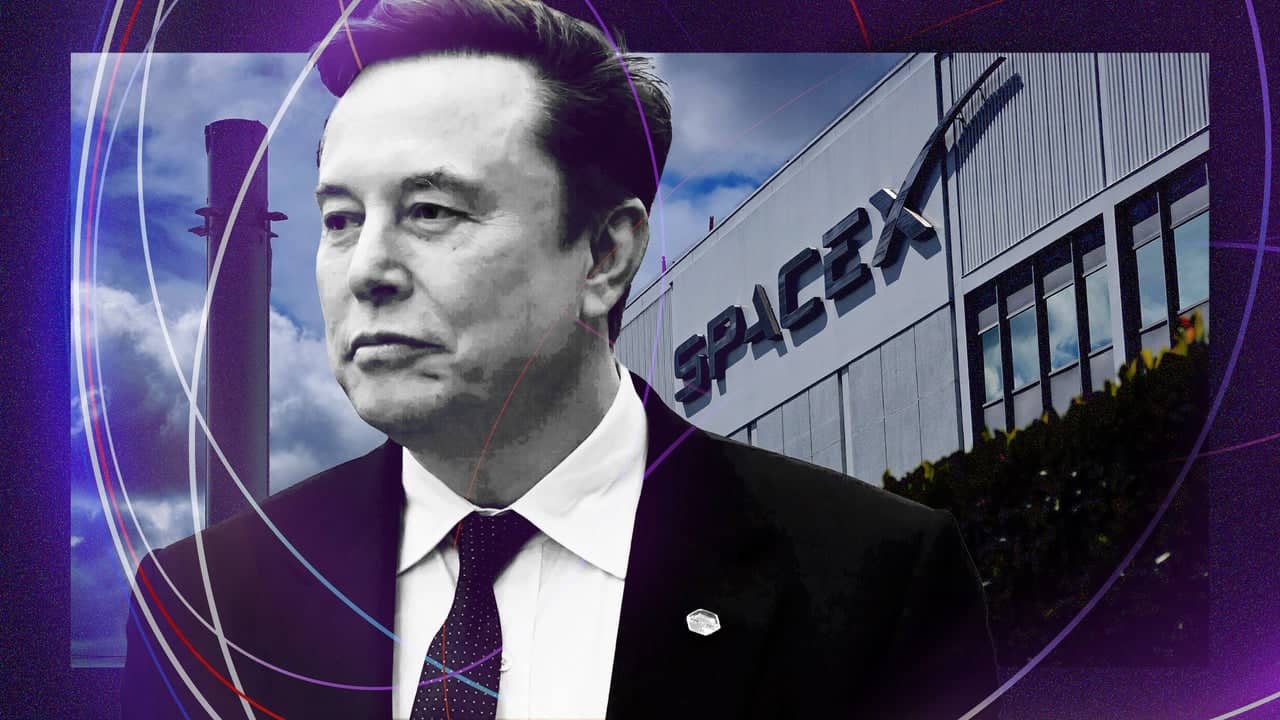
SpaceX’s upcoming initial public offering (IPO) is poised to be a watershed moment, not only for the rapidly evolving space industry but also for global financial markets. The company, which encompasses the world’s leading space-launch business, its largest satellite broadband provider, and an emerging artificial intelligence (AI) division, aims to raise approximately $75 billion. This fundraising effort is projected to value the company at an estimated $1.75 trillion to $2 trillion, positioning it as potentially one of the largest IPOs in history.
The scale of this valuation reflects a significant shift in perception within the industry. James Bruegger, chief investment officer at space-focused Seraphim VC, noted that only a decade ago, concepts such as reusable rockets and low-cost miniaturized satellites were largely seen as curiosities. Today, these innovations are central to a company on the cusp of a record-breaking public offering.
A Grand Vision Versus Current Fundamentals
A substantial portion of SpaceX’s estimated valuation is tied to a grand, long-term vision for the future of space, rather than solely on the fundamentals of its current business operations. In its IPO prospectus, SpaceX articulates a mission statement that extends beyond commercial endeavors, declaring its aim “to understand the true nature of the universe, and to extend the light of consciousness to the stars.”
The company further suggests that its current efforts in space exploration and development could eventually “lead to the emergence of new trillion-dollar markets on the Moon, Mars, and beyond.” This ambitious outlook underpins much of the speculative value attributed to the company, highlighting a forward-looking investment thesis that anticipates significant future expansion into extraterrestrial economies.
Launch Capacity: A Persistent Bottleneck
Despite the expansive vision, the practical realities of space access continue to present significant challenges for the broader industry. Launch capacity remains a massive bottleneck, limiting the frequency and volume of payloads that can be delivered into orbit. The private space era commenced 18 years ago with the maiden flight of SpaceX’s Falcon 1 rocket, inaugurating a new chapter in commercial spaceflight.
Today, outside of state-backed programs in China and Russia, only two entities consistently and reliably deliver payloads into orbit: SpaceX and Rocket Lab. While both companies are pivotal to the commercial space sector, there is an order of magnitude difference in their operational scale and launch frequency.
SpaceX’s Dominance in Orbital Deployments
In 2025, SpaceX demonstrated its overwhelming dominance in orbital launches. The company completed 165 orbital missions, accounting for nearly 51% of all orbital launches worldwide during that year. This extensive launch cadence enabled SpaceX to deploy an estimated 85% of all satellites sent aloft globally in 2025, underscoring its critical role in expanding the world's orbital infrastructure, particularly for its Starlink satellite internet constellation.
In comparison, Rocket Lab conducted 21 successful launches within the same period, encompassing both orbital and suborbital missions. While a significant achievement for a specialized launch provider, Rocket Lab’s output highlights the vast operational gap between it and SpaceX, which has effectively monopolized a substantial portion of the global commercial launch market through its reusable rocket technology and high-cadence operations.