


Rumors of a Corporate Merger Gain Momentum
Talk is growing regarding a potential merger between Tesla and SpaceX, two of Elon Musk’s flagship companies. The speculation has intensified as observers analyze the strategic alignment of the electric vehicle manufacturer and the commercial aerospace firm. However, the prospect of combining these entities is not without significant complications.
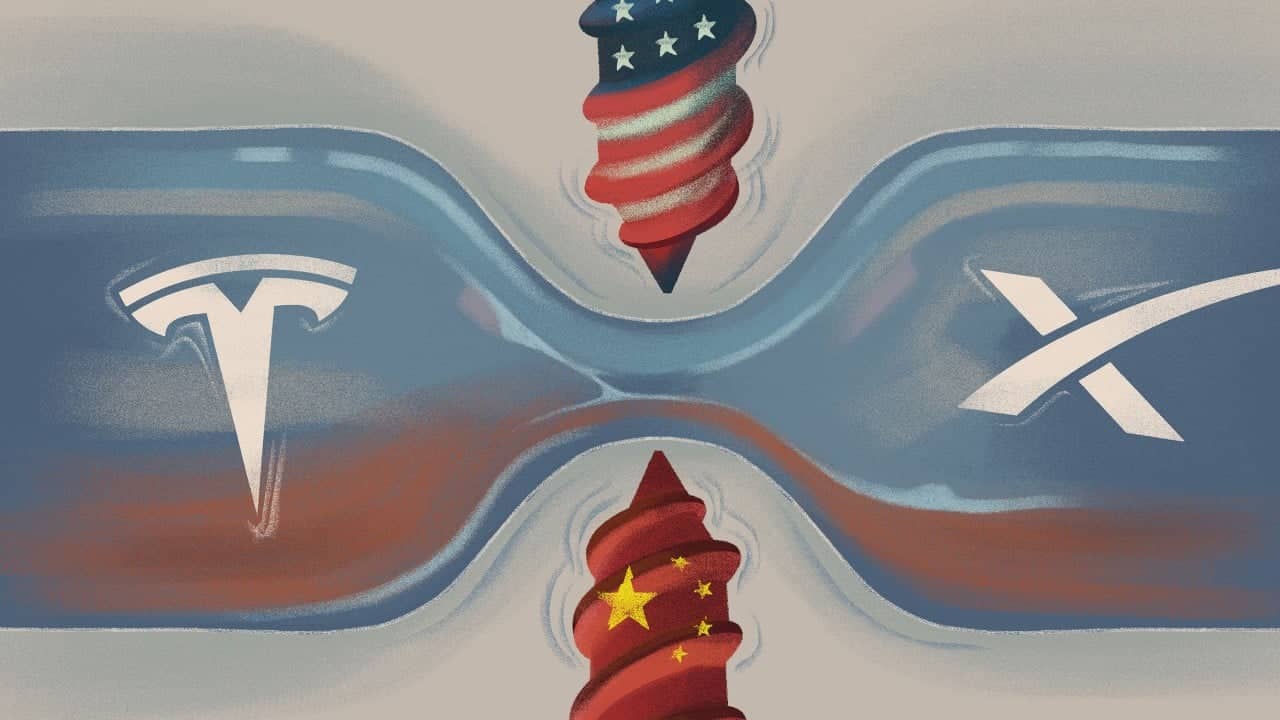
Security concerns in Beijing and Washington could create a "bottleneck" if Musk attempts to combine the two organizations. The geopolitical landscape surrounding both nations presents distinct challenges for any business integration that spans automotive manufacturing and space technology.
Shanghai Gigafactory Exports Reach Record Levels
Tesla’s manufacturing operations in China continue to operate at high capacity, serving as a critical hub for global supply. One by one, Tesla Model Y Ls roll out of the company’s end-of-line inspection bays at its sprawling Gigafactory in Lingang, a coastal area on the far southeastern edge of Shanghai. The vehicles are produced in gleaming finishes of black, white, and gold.
The factory produces a mix of left-hand and right-hand drive vehicles, signaling that the electric vehicles (EVs) manufactured there are destined for ports around the world. The company touts a total assembly time of less than 40 seconds at this facility. From the production line, Tesla states that a finished car can reach the port and be loaded onto a ship within an hour.
Export volumes from Shanghai have set new benchmarks in recent months. In July, one roll-on/roll-off vessel carried 7,738 Teslas out of Shanghai, marking an all-time record for a single shipment of finished vehicles from a Chinese port. The factory delivered 93,579 vehicles that month. As of July, more than half of the cars made there were exported overseas this year.
Supply Chain Dependencies and Global Reach
The efficiency of the Shanghai Gigafactory underscores Tesla’s reliance on China’s supply chain to fulfill global demand for its EV business. This deep integration with Chinese manufacturing capabilities stands in contrast to the geopolitical tensions that often characterize US-China relations.
Geopolitical Vulnerabilities for Musk’s Empire
Because of its location, this highly efficient manufacturing powerhouse could present a vulnerability in Washington for Tesla CEO Elon Musk. His sprawling empire spans multiple sectors, including EVs, autonomous driving, rockets, satellite internet, humanoid robots, artificial intelligence, and brain-computer interfaces.
The dual nature of his business interests creates a complex geopolitical landscape. While his EV business relies heavily on China’s supply chain to meet international orders, Musk’s commercial aerospace company, SpaceX, has become a core national security asset for the United States. This duality places Musk in a position where the operational needs of one company may conflict with the strategic interests of another.
Security concerns in both Beijing and Washington are cited as potential obstacles to any merger. The integration of a company deeply embedded in Chinese manufacturing with a US-based aerospace contractor that supports national defense interests raises questions about regulatory approval and political feasibility in both capitals.
Implications for Future Business Strategy
The speculation regarding a Tesla-SpaceX union highlights the intricate balance Musk must maintain between commercial expansion and geopolitical risk. The record-breaking export numbers from Shanghai demonstrate the current success of Tesla’s Chinese operations, but they also highlight the extent of its exposure to regional dynamics.
As discussions continue about the potential for a merger, the security concerns in Beijing and Washington remain a central point of analysis. Any move to combine these entities would require navigating a landscape where commercial efficiency and national security interests intersect in complex ways.