

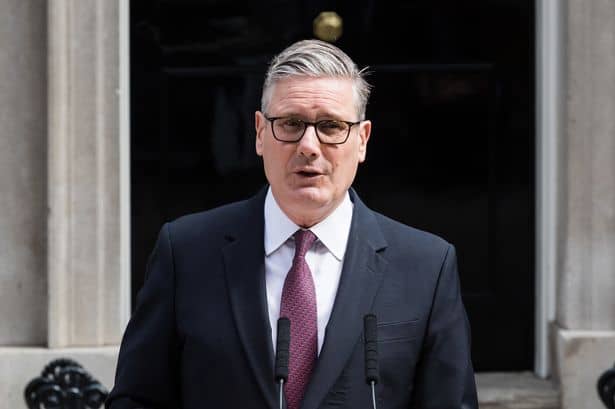

Starmer's call for leadership in national unity
\nKeir Starmer addressed the political landscape by calling on Andy Burnham to lead what he termed a \"battle for the soul of the nation.\" The Prime Minister made these remarks while acknowledging specific shortcomings within his own tenure at No10. According to reports, this interaction took place as part of broader discussions regarding Labour's future direction and internal cohesion.\n\n
The comments emerged from a Substack post titled \"passing on the torch,\" in which Starmer defended his record and offered advice intended for his successor. In this publication, he articulated that one significant failure during his administration was the difficulty faced by the government in setting out what it described as a \"simple and accessible vision for Britain's future.\" This admission highlights an internal assessment of governance challenges regarding communication strategy.\n\n
Starmer emphasized the necessity for Burnham to take up this mantle. The phrase \"battle for the soul of the nation\" suggests a perceived need for renewed ideological clarity or political engagement within the country. By directing these words toward Burnham, Starmer is signaling that the Labour leadership must address specific issues he identified as critical.\n\n
Reflections on administrative failings
\nThe Prime Minister's admission regarding his administration focused heavily on the struggle to articulate a clear future for Britain. He stated explicitly that presenting such a vision was difficult and, by his own account, constituted one of the failings of his time in office.\n\n
This self-assessment appears within the context of defending his overall record while simultaneously critiquing specific policy or communication outcomes. The Post titled \"passing on the torch\" serves as the primary vehicle for these reflections. It allows Starmer to balance defense with critique, a dual approach that characterizes much political commentary upon leaving office.\n\n
The difficulty in presenting a simple vision is attributed directly to the administration's efforts during its term. This suggests that while policy may have been enacted, the narrative surrounding those policies was not as clear or accessible as intended by Starmer and his team. The admission implies a disconnect between government actions and public understanding of their strategic goals.\n\n
The role of Burnham in Labour’s future
\nAndy Burnham is positioned centrally in Starmer's advice for the next phase of political leadership. As the leader of the opposition, he faces the task that Starmer outlined: leading a struggle described as essential to the nation's soul.\n\n
The choice to direct these words at Burnham specifically indicates his status within the party structure and public expectation. He is expected to inherit responsibilities related to national unity and political direction based on this assessment by the outgoing Prime Minister.\n\n
Starmer's defense of his record in the Substack post provides context for why he believes specific changes or leadership qualities are needed from Burnham. The admission of failings serves as a prelude to outlining what is required moving forward, framing the \"battle\" not merely as political maneuvering but as an existential challenge.\n\n
The publication date of these remarks places them in July 2026, according to reporting timelines associated with the Mirror article covering this story. The timing suggests immediate relevance following Starmer's departure or transition period from No10.\n\n
Implications for political strategy
\nThe specific language used by Starmer regarding a \"simple and accessible vision\" points to issues of communication effectiveness. If an administration struggles with accessibility in its messaging, it may impact voter perception regardless of policy substance. This is the core issue Starmer identified.\n\n
By admitting this failure publicly through his Substack post, Starmer engages directly with these criticisms rather than deflecting them. He frames the inability to communicate a clear vision as an administrative failing that must be addressed by future leadership.\n\n
The nature of the \"battle\" for national unity
\nStarmer's description of Burnham's task involves leading a battle, which implies conflict or intense effort in achieving political consensus. The term \"soul of the nation\" elevates this struggle beyond standard policy debates to matters of identity and purpose.\n\n
The Mirror report notes that Starmer said these things while admitting failings during his time at No10. This combination suggests a candid approach from the Prime Minister regarding both strengths and weaknesses observed in his governance record.\n\n
Opposition responses or reactions are not detailed in the provided source context beyond Burnham's expected role as successor figurehead for this mission. The focus remains on Starmer's assessment and advice rather than external rebuttals to these specific claims at this stage of reporting.\n\n
Context of the Substack publication
\nThe \"passing on the torch\" post serves as a formal mechanism for political transition commentary in modern media. It allows outgoing leaders to curate their legacy and offer guidance directly, bypassing traditional press filters or editorial constraints often found in mainstream outlets.\n\n
Starmer used this platform to defend his record while also offering constructive criticism regarding communication strategy. This dual purpose is evident in the structure of his arguments within the post as reported by political correspondents covering the story for publications like The Mirror.\n\n
The specific date provided for these remarks, July 5, 2026, anchors them in a current news cycle where Labour's future direction and internal dynamics are subjects of intense scrutiny. This timing ensures that Burnham faces immediate pressure to respond or act on Starmer's advice as the political landscape shifts.\n\n
Starmer's admission regarding the struggle for clarity sets the stage for what he views as necessary corrections in Labour's approach under new leadership. The \"battle\" is framed as essential, suggesting that without addressing these specific failings identified by the Prime Minister himself, national unity may remain elusive.
"