

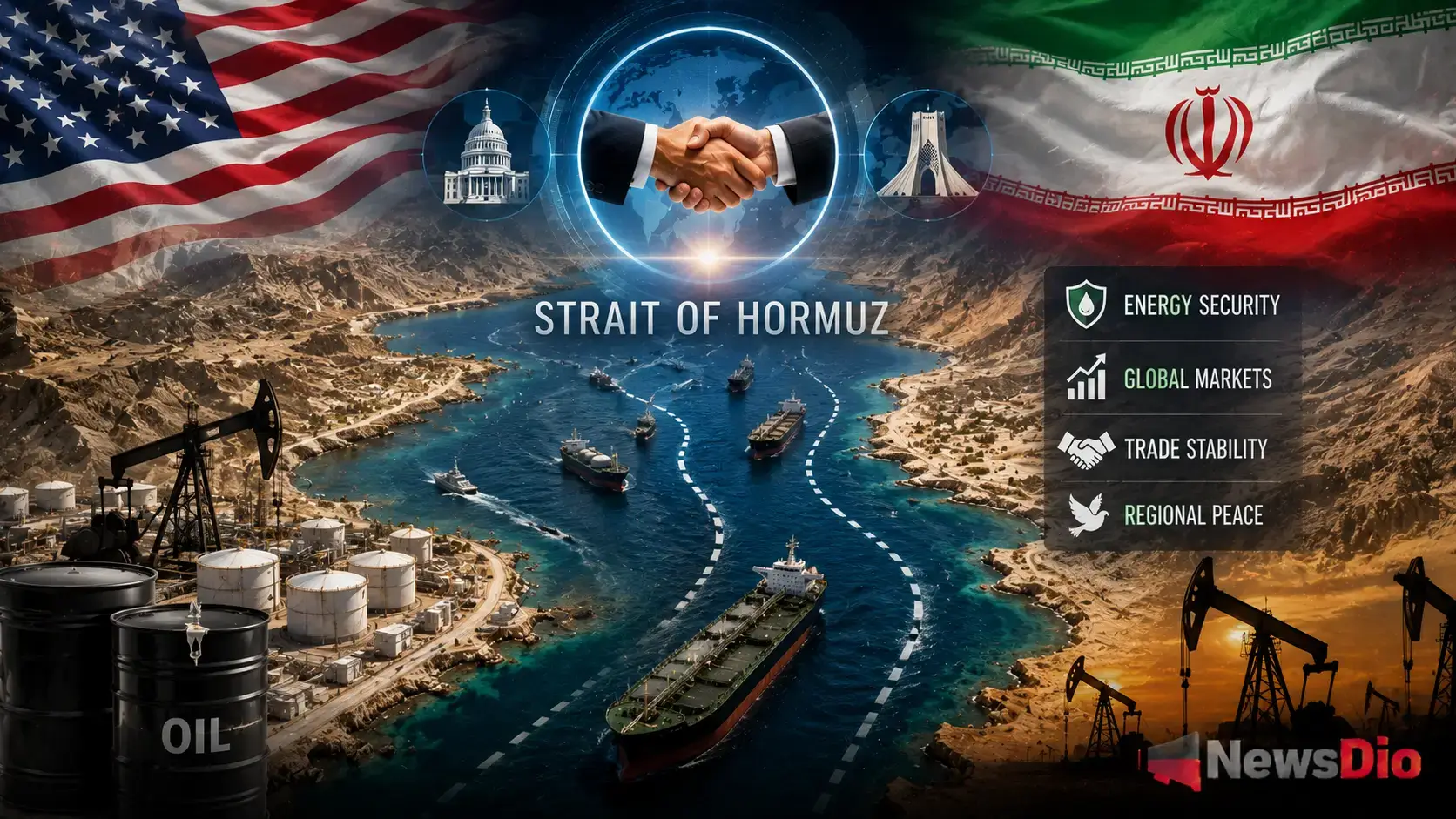

Reported Discussions on Strait of Hormuz Reopening
Recent reports suggest a significant development in the Middle East, indicating that the United States and Iran are reportedly discussing a plan for the Strait of Hormuz to reopen. This potential reopening is anticipated to occur soon after a peace deal between the two nations. Such an agreement aims to end hostilities between the U.S. and Iran, a development that could dramatically change global dynamics and bring hope for stability in a critical region.
The Strategic Importance of the Strait of Hormuz
The Strait of Hormuz is a narrow waterway that connects the Persian Gulf with the Arabian Sea and the Gulf of Oman, ultimately leading to the Indian Ocean. It is one of the world's most critical maritime chokepoints, geographically located between Oman and Iran. At its narrowest point, the Strait is approximately 21 nautical miles (39 kilometers) wide, with the shipping lanes themselves being only two miles wide in either direction.
Economically, the Strait of Hormuz is indispensable for global energy markets. A substantial portion of the world's seaborne oil passes through this waterway. According to various energy information agencies, approximately 20% of the world's total petroleum liquids consumption and about 25% of global liquefied natural gas (LNG) trade transit the Strait. This includes nearly all the crude oil and LNG exports from major producers such as Saudi Arabia, Iran, the United Arab Emirates, Kuwait, Iraq, and Qatar. Any disruption to traffic in the Strait can have immediate and significant repercussions on global energy prices and supply chains, affecting economies worldwide.
Historical Context of U.S.-Iran Tensions and the Strait
Relations between the United States and Iran have been marked by decades of political and military tension, frequently impacting the security of the Strait of Hormuz. These tensions have often escalated due to disputes over Iran's nuclear program, regional proxy conflicts, and economic sanctions imposed by the U.S. on Iran.
Throughout various periods, Iran has issued threats to close the Strait of Hormuz in response to perceived external pressures or sanctions, particularly those targeting its oil exports. Such threats have consistently prompted strong reactions from the international community and the U.S., which maintains a significant naval presence in the region and has repeatedly affirmed its commitment to ensuring freedom of navigation through the waterway. Incidents involving tanker attacks, naval confrontations, and heightened military exercises by both sides have underscored the Strait's vulnerability and its role as a flashpoint in U.S.-Iran relations.
Reported Path to a Potential Peace Deal
The current reports indicate that discussions between the U.S. and Iran are focused on a broader peace deal, of which the reopening of the Strait of Hormuz would be a significant outcome. The primary aim of this potential agreement is to end the long-standing hostilities between the two nations. While specific details of the reported negotiations have not been publicly confirmed by both governments, the discussions are understood to encompass a range of issues beyond maritime access, likely including security assurances, economic normalization, and possibly aspects related to regional stability and nuclear safeguards.
The conditionality emphasized in the reports—that the Strait's reopening would occur "soon after" a peace deal—suggests that freedom of navigation through this vital chokepoint is seen as a key component and a tangible benefit of any comprehensive agreement reached between Washington and Tehran.
Potential Economic Implications
Should a peace deal materialize and the Strait of Hormuz reopen without the shadow of hostilities, the economic implications could be far-reaching. Global energy markets would likely experience a reduction in the geopolitical risk premium currently factored into oil and gas prices. This could lead to more stable and potentially lower energy costs for consumers and industries worldwide. Shipping insurance premiums for vessels transiting the Persian Gulf region, which have historically been elevated due to security concerns, could also decrease, reducing overall shipping costs.
Regionally, a de-escalation of tensions could foster increased trade and investment across the Persian Gulf. For Iran, an end to hostilities and the potential lifting of some sanctions, coupled with secure maritime access, could facilitate greater integration into the global economy, boosting its oil exports and overall trade volumes. This stability could also benefit other Gulf economies by reducing uncertainty and encouraging foreign direct investment.
Potential Geopolitical Shifts
A peace deal between the U.S. and Iran, leading to a secure Strait of Hormuz, would represent a significant geopolitical shift. It could usher in an era of greater regional stability, potentially reducing the intensity of proxy conflicts in areas such as Yemen, Syria, and Iraq, where U.S. and Iranian interests have often clashed. Such a development might prompt a re-evaluation of alliances and security arrangements across the Middle East, potentially opening new diplomatic avenues for resolving long-standing regional disputes.
For Iran, moving away from isolation could lead to a more constructive role in regional and international affairs. For the U.S., it could mean a recalibration of its military footprint and diplomatic engagement in the Middle East, focusing more on cooperation rather than confrontation. International relations with major global powers like China and Russia, who also have significant energy interests tied to the Strait of Hormuz, would also be impacted by a more stable and predictable regional environment.
Security and Naval Presence
The implementation of a peace deal would likely lead to a re-evaluation of military deployments and naval presence in the Persian Gulf. A reduction in hostilities could result in a de-escalation of military postures by both the U.S. and Iran, potentially leading to fewer naval exercises and a reduced risk of accidental confrontations in the Strait. Instead of focusing on deterrence and containment, future security efforts could shift towards cooperative maritime security initiatives, such as joint efforts against piracy or smuggling, benefiting all nations reliant on the Strait for trade.
Any agreement would necessitate verifiable mechanisms to ensure the continued freedom of navigation and the safety of commercial shipping through the Strait of Hormuz, providing confidence to the international community that this vital artery of global trade will remain open and secure.