

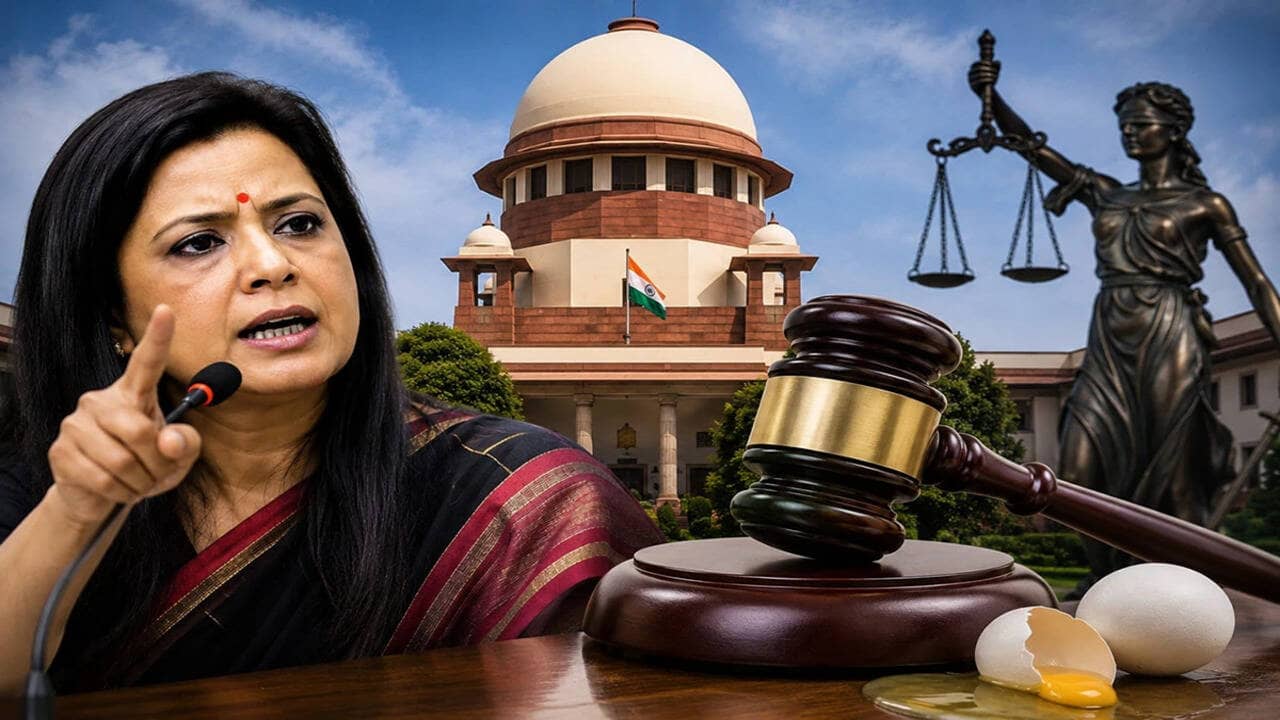

Rejection of Virtual Appearance Request
The Supreme Court on Tuesday denied a request by Member of Parliament Mahua Moitra to appear before the police through a video conference link. The ruling addresses the procedural requirements for public officials involved in active investigations, emphasizing that digital alternatives are not automatically granted when physical presence is mandated.
Moitra had approached the apex court seeking permission to participate in the police investigation remotely. Her legal team argued that her physical attendance posed significant risks due to potential hostile reactions from the public. The court's decision effectively requires the MP to appear in person, rejecting the argument that virtual participation was a sufficient or safe alternative under the circumstances.
By denying the petition for a video hearing, the Supreme Court has clarified the standard for virtual appearances in criminal investigations involving elected representatives. The judgment underscores that while safety concerns are valid, they do not inherently exempt public figures from the standard procedure of physical cooperation with law enforcement agencies.
Origins in Controversial Social Media Post
The legal proceedings stem from an allegedly inflammatory post made by Moitra on social media. The content of the post triggered a police investigation, leading to the current dispute over how the MP should interact with investigators. The nature of the post has been described as inflammatory, though specific details of the text were not elaborated upon in the immediate ruling context.
The incident highlights the complex intersection of free speech, political accountability, and legal procedure in India. As a sitting Member of Parliament, Moitra is subject to both the protections afforded by her office and the legal obligations applicable to all citizens. The investigation into the post has proceeded with the assumption that the content violated certain legal standards, necessitating her cooperation.
Safety Concerns and Egg-Throwing Allegations
Central to Moitra's petition was the assertion that her physical appearance would expose her to dangerous protests. She specifically cited concerns about potential egg-throwing incidents during her travel or at the police station. These allegations of targeted violence were presented as evidence that a virtual hearing was the only viable option to ensure her safety.
The Supreme Court did not explicitly rule on the validity of the egg-throwing threats but focused instead on the procedural obligation of the MP. The court's refusal to grant a video hearing suggests that the judiciary prioritized the integrity of the investigation process over the specific safety claims raised by the defense, at least in this initial phase.
Interim Protection and Legal Obligations
Despite the Supreme Court's denial of the virtual appearance request, Moitra retains certain legal protections. The Madras High Court had previously granted her interim protection from coercive action. This prior order ensures that she is not subjected to arrest or other aggressive measures while the investigation continues, provided she complies with other conditions set by the lower court.
The Supreme Court's decision does not overturn the High Court's interim protection but adds a layer of procedural requirement. The apex court emphasized that political figures must face public scrutiny and cooperate fully with investigations. This statement reinforces the principle that elected officials do not enjoy immunity from standard legal processes, including physical appearances before law enforcement.
The ruling serves as a reminder of the legal obligations of public officials in India. While politicians may face heightened risks due to their visibility, the judiciary has indicated that these risks must be managed through security arrangements rather than by altering fundamental legal procedures such as mandatory physical presence.
Implications for Ongoing Investigation
The denial of the video hearing request sets a precedent for how similar cases involving public figures might be handled in the future. It signals that courts are unlikely to accept safety concerns as a blanket excuse for avoiding physical interaction with police, unless extraordinary circumstances are proven.
As the investigation proceeds, Moitra must now arrange for her physical appearance before the police. The outcome of this cooperation, and the subsequent handling of the allegedly inflammatory post, will likely influence public discourse on political accountability and judicial process in India. The case remains active, with no final judgment on the merits of the underlying complaint against the MP.