Full story
Assembly Verbal Exchanges Escalate Into Public Discourse
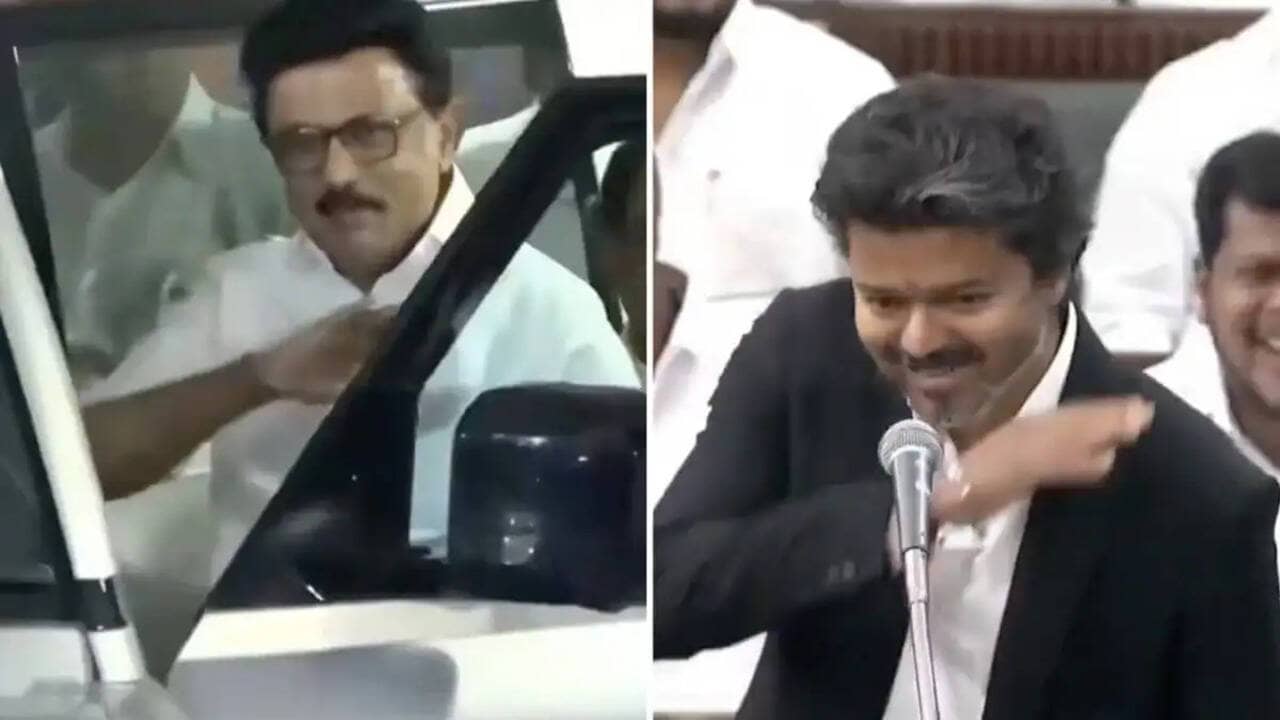
A political rivalry between Tamil Nadu Chief Minister Vijay and Dravida Munnetra Kazhagam (DMK) leader MK Stalin has intensified, evolving from verbal exchanges within the legislative assembly to broader public discourse. The confrontation highlights changing dynamics in the state's political landscape, with both leaders adopting distinct strategies to appeal to their respective bases.
The conflict began as a series of verbal exchanges in the Tamil Nadu legislative assembly. These interactions have since expanded beyond the confines of the chamber, becoming a focal point in the state's political narrative. The escalation marks a significant shift in how political opposition is manifested and consumed by the public in Tamil Nadu.
Strategic Divergence: Cinematic Appeal Versus Historical Legacy
The two leaders are employing different methods to consolidate support as the political environment heats up. Vijay is leveraging his cinematic persona to appeal specifically to younger voters. This strategy capitalizes on his status as a prominent figure in the film industry, aiming to connect with a demographic that may be less engaged with traditional political structures.
In response, MK Stalin is defending his party's historical legacy as a counter-strategy. By emphasizing the DMK's long-standing role in Tamil Nadu politics, Stalin aims to reinforce the party's credibility and institutional strength against the rising influence of Vijay's brand of politics. This approach underscores the traditional power dynamics within the state, where established political families and parties have historically dominated.
Electoral Implications for 2026
The confrontation between Vijay and Stalin is considered to have significant implications for future elections. The changing dynamics of Tamil Nadu's political landscape suggest that the strategies employed by both leaders will play a crucial role in determining electoral outcomes.
Contextual indicators related to source material reference upcoming electoral events, including the Tamil Nadu Assembly Election 2026. This election is situated within a broader pre-election environment that also includes regional elections in West Bengal and Assam, scheduled for 2026. The timing of these electoral events suggests that the current political clash is part of a larger national and regional political maneuvering phase.
The Tamil Nadu Assembly Election 2026 remains a key focal point for observers analyzing the state's political trajectory. The rivalry between Vijay and Stalin is viewed as a critical factor in shaping the competitive landscape leading up to this vote. As both leaders navigate this heated political environment, the strategies they adopt to mobilize voters will likely influence the broader political discourse in South India.
Broader Political Landscape
The intensification of this rivalry reflects the complex interplay between cinema and politics in Tamil Nadu. Vijay's approach represents a modernization of political campaigning, utilizing his fame to bypass traditional party structures. Conversely, Stalin's defense of legacy highlights the enduring importance of historical political identity in the region.
Observers note that the public discourse surrounding this clash is becoming increasingly prominent. The verbal exchanges in the assembly have served as a catalyst for wider debate on the future direction of Tamil Nadu politics. The competition between these two figures is not just a personal rivalry but a contest over the ideological and strategic future of the state's governance.
As the 2026 elections approach, the strategies of Vijay and Stalin will be closely monitored. The ability to effectively communicate their respective messages—Vijay through his cinematic appeal and Stalin through historical legacy—will determine their success in mobilizing support. The outcome of this political contest is expected to have lasting effects on the political alignment of Tamil Nadu.
The current phase of tension underscores the volatility of the pre-election period. With multiple regional elections scheduled for 2026, including those in West Bengal and Assam, the political dynamics in Tamil Nadu are being watched as part of a larger national trend. The clash between Vijay and Stalin serves as a microcosm of these broader shifts, illustrating how individual leaders and parties are adapting to new electoral realities.
The focus remains on how these strategies will translate into voter support. The verbal exchanges in the assembly have set the stage for a prolonged period of political engagement. As the election date draws nearer, the intensity of this rivalry is expected to increase, further shaping the political narrative in Tamil Nadu.