


A New Government Inherits a Fractured Regional Landscape
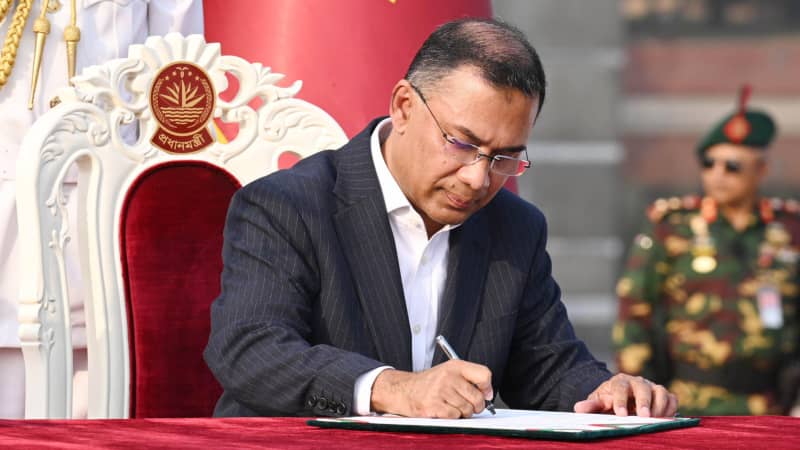
Tarique Rahman assumed the role of Prime Minister of Bangladesh following a decisive electoral victory by his party, the Bangladesh Nationalist Party (BNP). The BNP secured approximately two-thirds of the parliamentary seats in the election held on February 12, 2026, marking a significant mandate for the new administration. This result brought an end to an eighteen-month period of interim governance that had been led by Nobel laureate Muhammad Yunus, setting the stage for a new political era.
Six months into his premiership, Prime Minister Rahman is overseeing what has been described as the most consequential recalibration of Bangladeshi foreign policy in a generation. The new administration inherited a complex diplomatic environment, characterized by a unique configuration of regional and international challenges that previous governments had not faced simultaneously. This intricate landscape includes a relationship with India that has been significantly fractured since the fall of former Prime Minister Sheikh Hasina in 2024, demanding immediate and careful diplomatic attention.
Simultaneously, Bangladesh’s relationship with China deepened dramatically during the interim period under Yunus, creating new strategic considerations for Dhaka. The government also faces the implications of a newly signed and notably contested trade pact with Washington, which introduces another layer of complexity to its economic and diplomatic strategies. Domestically, there are significant political pressures, including a resurgent Islamist opposition that is closely monitoring the government’s actions and policy decisions, particularly those concerning New Delhi. Furthermore, on the security front, the situation in neighboring Myanmar has shifted dramatically, with Rakhine State no longer being fully governed by the country's military, presenting potential regional instability and humanitarian concerns for Bangladesh.
The ‘Bangladesh First’ Doctrine as a Strategic Framework
In response to these multifaceted and intricate challenges, Prime Minister Rahman’s government has organized its foreign policy approach around the concise yet potent phrase “Bangladesh First.” This terminology has been utilized consistently across various platforms, underscoring its central role in the new administration’s vision. Its prominence was evident from the BNP’s election manifesto, signaling its foundational importance, and has been reiterated in parliamentary remarks delivered by the Prime Minister himself following a high-profile visit to Beijing, demonstrating its continued relevance in diplomatic discourse.
While some observers might initially dismiss the slogan as mere campaign branding or political rhetoric, analysts are closely examining whether ‘Bangladesh First’ can function as an actual, actionable governing doctrine. The application of this framework is explicitly intended to define Bangladesh's strategic position within the Bay of Bengal, a critical maritime region that is currently contested by major global and regional powers, including China, India, and the United States. This strategic reorientation aims to assert Bangladesh's sovereign priorities and interests amidst the competing influences of these powerful nations.
The ‘Bangladesh First’ approach has been articulated through four major interpretations, though specific operational mechanics and detailed policy implementations remain under development. The doctrine is designed to navigate the delicate balance required to manage these competing regional interests effectively, ensuring that Bangladesh's national interests are prioritized and protected. This involves a careful assessment of alliances, trade agreements, and security partnerships to maximize benefits for Bangladesh while minimizing risks in a volatile geopolitical landscape.
Geopolitical Balancing Act in the Bay of Bengal
The strategic room available to Bangladesh is increasingly constrained by the overlapping interests and assertive postures of global and regional powers. The relationship between China and Dhaka, for instance, has grown significantly during the recent interim period, fostering new dependencies and opening up new economic and strategic opportunities. This deepening engagement with Beijing requires careful management to ensure it aligns with the 'Bangladesh First' doctrine without creating undue imbalances.
Meanwhile, the fractured ties with India, a historically crucial neighbor, require particularly careful diplomatic management. This is especially pertinent given the intense scrutiny from domestic political groups, including the resurgent Islamist opposition, which closely monitors the government’s actions toward New Delhi. The administration must navigate this relationship to restore stability and cooperation while addressing internal political sensitivities.
The newly signed and contested trade pact with Washington adds another significant layer of complexity to the government's economic and diplomatic strategies. The administration must now determine how to effectively integrate this new agreement into its broader foreign policy goals, ensuring it serves Bangladesh’s interests without inadvertently alienating other key partners or exacerbating existing regional tensions. Furthermore, the evolving situation in Rakhine State, where Myanmar’s military no longer holds full governance, presents a complex regional security challenge that Bangladesh must factor into its foreign policy calculations, particularly regarding border stability and humanitarian concerns.
As Prime Minister Rahman continues to refine and implement the ‘Bangladesh First’ doctrine, the international community is closely watching to see if this strategic slogan translates into concrete, impactful policy shifts. The outcome of this ambitious recalibration will likely define Bangladesh's role and influence in South Asian geopolitics for years to come, shaping its trajectory in an increasingly interconnected and contested region.