

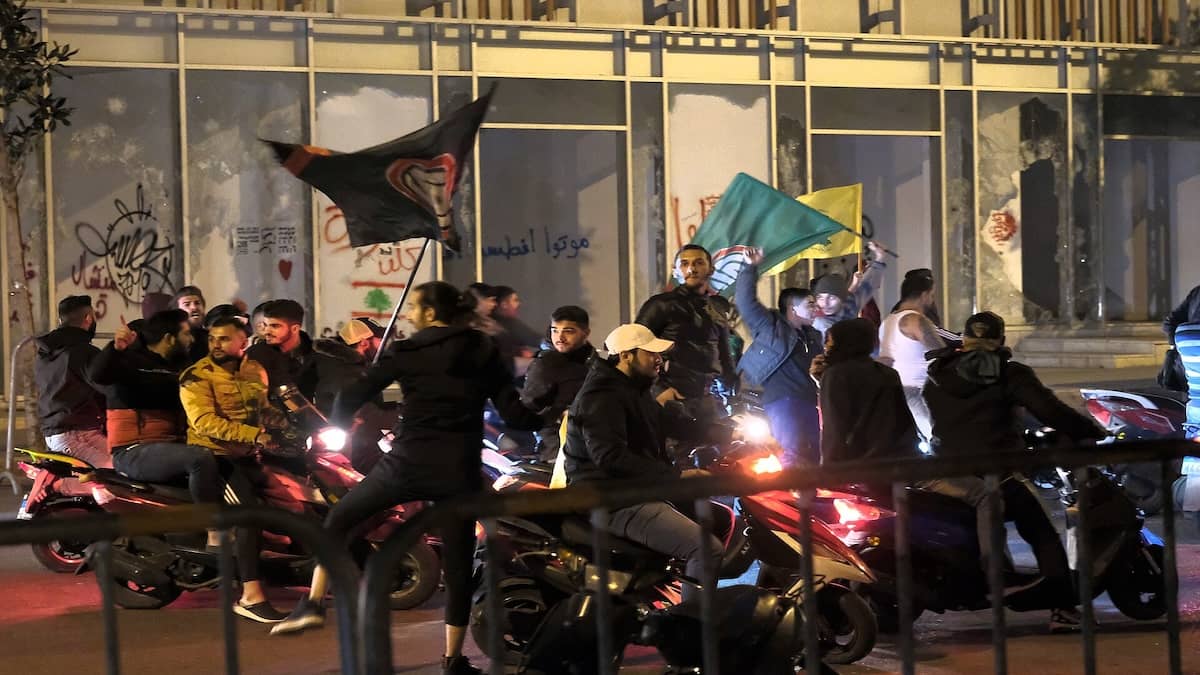


Hezbollah's Multifaceted Operational Model
Hezbollah operates simultaneously as a formidable military force, a domestic political entity deeply embedded within Lebanon's governmental structure, an extensive provider of social welfare programs, and a sophisticated facilitator for cross-border commerce. This multifaceted structure defines the organization's unique and complex position within the region, making it far more than a conventional state or non-state actor.
The group functions not merely as separate institutions but integrates these distinct roles into a cohesive operational framework. It maintains robust paramilitary capabilities that allow it to act as a militia, capable of engaging in armed conflict and asserting control over specific territories. Concurrently, it actively participates in political discourse, holding seats in Lebanon's parliament and influencing cabinet decisions, thereby shaping national policy from within. Beyond its military and political arms, Hezbollah delivers essential social services to communities, including healthcare, education, and infrastructure development, fostering a base of popular support and legitimacy. Furthermore, it manages intricate smuggling operations across borders, generating significant revenue and extending its influence through illicit trade networks.
This inherent complexity presents specific and profound challenges for external actors attempting to engage with the group or impose restrictions upon it. Leaders, particularly those in American and Lebanese policy circles, must recognize that addressing one aspect of Hezbollah's activities—such as its military wing—without considering its integrated nature and its political, social, and economic dimensions, may result in incomplete, counterproductive, or ultimately ineffective policy responses. A fragmented approach risks overlooking the interconnectedness that underpins the organization's power and resilience.
Diplomatic Overtures Amidst Regional Tensions
Representatives from Lebanon and Israel have engaged directly in a series of significant diplomatic encounters, meeting openly for the first time in decades to discuss critical security arrangements and political matters. These discussions have unfolded against a backdrop of ongoing regional tensions, even as various truces were being extended between the two nations, highlighting a cautious but persistent effort towards de-escalation.
The Framework for De-escalation
In June 2026, a pivotal U.S.-sponsored trilateral framework was established, bringing together these parties. The primary objective of this agreement is explicitly stated as ensuring the sovereignty and security of both Lebanon and Israel within their respective territories. This framework aims to provide a structured channel for dialogue, addressing long-standing border disputes and security concerns that have historically fueled instability in the Levant. The involvement of the United States underscores the international community's recognition of the critical need for a stable and secure environment in the region, which is inextricably linked to the actions and influence of organizations like Hezbollah.
Alongside this trilateral structure, a conditional ceasefire has remained in place, serving as a crucial mechanism to prevent immediate escalation of hostilities. This arrangement specifically requires a complete cessation of armed engagements between Israeli forces and Hezbollah operatives along the volatile border regions. The conditions attached to this ceasefire reflect the delicate balance required to maintain a fragile peace, emphasizing the need for strict adherence by all parties to prevent localized incidents from spiraling into wider conflicts. The ongoing nature of this ceasefire, despite underlying tensions, points to a shared, albeit often grudging, recognition of the catastrophic potential of renewed large-scale conflict.
The Risks of Ineffective Agreements
If leaders fail to adopt an integrated approach that accounts for all facets of Hezbollah's existence—its military, political, social, and economic roles—they risk creating conditions where agreements, no matter how well-intentioned, prove fundamentally ineffective. For instance, an agreement focused solely on military disarmament might be undermined by the group's political influence or its ability to sustain itself through its social services and illicit financial networks. Such failures could lead to new conflicts emerging in the Levant region, as unresolved issues or unaddressed capabilities of Hezbollah continue to pose threats, potentially triggering renewed cycles of violence and instability.
Furthermore, a lack of comprehensive understanding and strategy could lead to significant missed opportunities for diplomatic progress. True and lasting stability, economic cooperation, and humanitarian advancement in the region become elusive if the unique challenges posed by this hybrid organization are not fully grasped and addressed through a holistic, multi-pronged strategy. Ignoring any one dimension of Hezbollah's operations leaves a critical vulnerability that can be exploited, thereby perpetuating the cycle of conflict and hindering any genuine movement towards long-term peace.
The Limits of Conventional Engagement
Hezbollah has consistently demonstrated a remarkable ability to resist various forms of dialogue attempts initiated over time, often leveraging its multifaceted structure to deflect or absorb external pressure. The group has also survived repeated and targeted attacks directed against its positions or leadership structures throughout recent years, showcasing an enduring operational continuity and a capacity for rapid reconstitution.
This profound resilience significantly complicates efforts by American, Lebanese, and other international leaders who seek to manage the organization's activities through traditional diplomatic channels or military pressure alone. Conventional state-to-state diplomacy often struggles to engage effectively with an entity that operates simultaneously as a non-state armed group and a legitimate political party. Similarly, purely military interventions, while potentially degrading certain capabilities, often fail to dismantle the underlying social and political support structures that enable Hezbollah's persistence and resurgence.
The persistence of these challenges strongly suggests that standard engagement models may require significant adaptation. Policymakers must grapple with the intricate question of how an entity can function effectively across multiple domains—military, political, social, and economic—while maintaining operational continuity under sustained external scrutiny. Acknowledging this hybrid reality is the first step towards developing a more nuanced and potentially more effective strategy, one that moves beyond a singular focus and embraces an integrated approach to address the entirety of the Hezbollah predicament.